

Introduction
Conversion Rate Optimization is the process of getting more of your existing website visitors to take a specific action, such as filling a form or booking a call, without spending extra money on traffic. Most websites lose the majority of their visitors before they ever become a lead. This guide breaks down what causes that drop-off and gives you a practical plan to fix it.
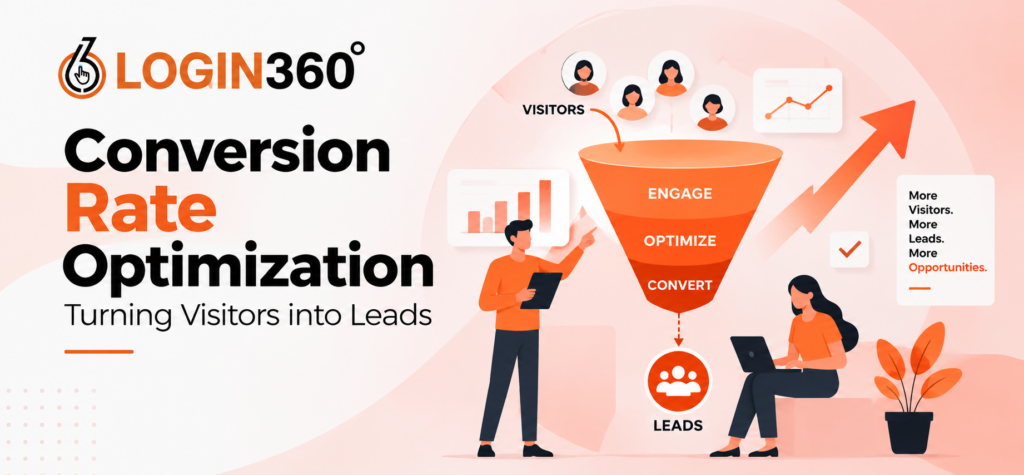
What Is Conversion Rate Optimization?
Conversion Rate Optimization, often shortened to CRO, means improving the percentage of visitors who complete a goal on your website. That goal could be a form submission, a WhatsApp enquiry, or a course sign-up. The formula is simple: conversions divided by total visitors, multiplied by 100.
A site pulling in 10,000 visitors a month with 100 leads has a 1% conversion rate. Push that to 2% through better copy, faster pages, and clearer calls to action, and you double your leads with the same traffic. That is the core promise of Conversion Rate Optimization — growth without a bigger ad budget.
Why Most Website Visitors Never Become Leads
Traffic is rarely the real problem. Visitors usually arrive, get confused or distracted, and leave. A few culprits show up again and again:
- Unclear value proposition. Visitors can’t tell what you offer or why it matters within the first five seconds.
- Too many form fields. Every extra field is one more reason to abandon the page, especially on mobile.
- Slow load times. A page that takes more than three seconds to load pushes visitors back to search results.
- Weak or buried calls to action. If the CTA is generic or hard to find, intent fades fast.
- No trust signals. Missing reviews, certifications, or contact details make visitors hesitate before sharing information.
Because these issues compound, fixing even two or three of them often produces a noticeable lift in conversions within weeks.
Conversion Rate Optimization Techniques That Actually Move the Needle
Here are practical, testable tactics you can apply this month.
1. Rewrite your headline around a single outcome. Instead of describing your product, state the result the visitor gets. “Learn Job-Ready Digital Marketing Skills in Kochi” outperforms “Digital Marketing Training” because it answers the visitor’s real question immediately.
2. Cut your form to the essentials. Name, phone number, and one qualifying field is usually enough for a first touchpoint. As a result, completion rates climb because the commitment feels smaller.
3. Use one primary CTA per page. Competing buttons split attention and reduce clicks on both. Pick the single action you want and repeat it consistently in wording and color.
4. Add proof near the point of decision. A short testimonial, a placement number, or a trust badge placed right beside the form reduces hesitation exactly when it matters most.
5. Run A/B tests, not guesses. Change one variable at a time, such as the CTA text or hero image, and measure the difference over a fair sample size before rolling out the winner.
6. Speed up your pages. Compress images, remove unused scripts, and lean on a caching plugin. Because attention spans are short, even a one-second delay measurably hurts conversions.
7. Match the landing page to the ad or search intent. If someone clicks a Python course ad, they should land on a Python-specific page, not a generic homepage. Consequently, relevance goes up and so does the conversion rate.
How to Measure and Track Your Conversion Rate
Vanity metrics feel good but rarely tell you whether Conversion Rate Optimization is working. Focus on the numbers below instead.
| Metric | What It Tells You | Good Starting Benchmark |
|---|---|---|
| Conversion rate | Percentage of visitors completing your goal | 2%–5% for most lead-gen sites |
| Bounce rate | Visitors leaving without interacting | Under 55% |
| Form completion rate | Visitors who start vs. finish a form | Above 60% |
| Average time on page | Engagement depth on key pages | 60+ seconds on landing pages |
| Cost per lead | Marketing spend divided by leads generated | Should trend down over time |
Track these weekly rather than daily. Short-term swings are normal, but a steady downward trend in conversion rate over a month signals a page or offer that needs attention.
Common Conversion Rate Optimization Mistakes to Avoid
Even well-intentioned CRO efforts go wrong in predictable ways. Watch out for these:
- Testing too many changes at once, which makes it impossible to know what actually worked
- Optimizing for clicks instead of qualified leads, which inflates numbers without improving revenue
- Ignoring mobile visitors, who often make up more than half of total traffic
- Ending tests too early, before results are statistically meaningful
- Treating CRO as a one-time project instead of an ongoing habit
Build Your CRO Skills With a Digital Marketing Course in Kochi
Conversion Rate Optimization is a core skill inside modern digital marketing, sitting alongside SEO, paid ads, and analytics. If you want to move from reading about CRO to actually running tests, tracking dashboards, and optimizing real landing pages, structured training helps you get there faster than trial and error alone.
Login360’s digital marketing course in Kochi covers SEO, social media, PPC, and conversion-focused landing page practices through hands-on projects, with placement support once you complete the program. Courses start at ₹4,999, making it accessible for students and working professionals who want practical, job-ready skills rather than theory alone.
Key Takeaway
Conversion Rate Optimization is not about chasing more traffic — it is about getting more value from the visitors you already have. Start with your biggest leak, whether that is a slow page, a long form, or a weak CTA, fix it, measure the result, and move to the next one. Ready to build these skills professionally? Talk to Login360’s Kochi team about the digital marketing course and start turning visitors into leads with a real strategy behind you.