
Intoduction
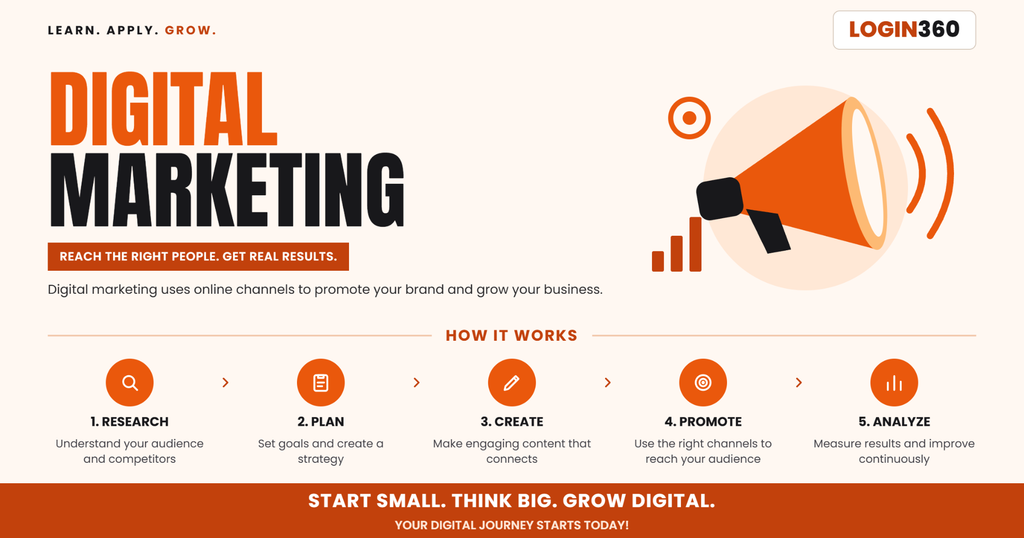
Digital marketing is a powerful way for businesses to showcase the products or services they offer and highlight how they can solve real problems for their customers. Whether you are launching a new startup or looking to strengthen relationships with existing clients, having a solid online presence is the key to connecting with the right people.Success in the digital space doesn’t happen by chance—it follows a structured approach. By building a deep understanding of your audience, putting a clear plan in place, providing valuable content, targeting the right channels, and learning from your data, you can turn casual visitors into loyal customers.Analysis, planning, and creativity are all part of digital marketing. Digital Marketing skills for beginners , These seven abilities might be a good place to start, regardless of the focus—social media, websites, or advertising, for example.
1. SEO
SEO can help people find your website through search. Ensure your pages are readable by search engines and provide value to your readers. Carry out keyword research, optimise your content and improve any issues on your website. You cannot guarantee to rank number one in search results but by thoughtfully working on your website it can help improve clarity and relevancy.Firstly, you should know what your audience is searching for. By carrying out keyword research you can see what phrases and questions they are using. Think about their search intent – are they looking for information, comparing products or are they ready to convert? Use your keywords throughout your content but don’t overdo it. It can make your content sound clumsy.Ensure each of your pages is easy to read. Ensure you have a clear heading, use subheadings to help organise your information, include links to other relevant pages and ensure you are answering their main question. Provide accurate, original and scannable content. It can also be helpful to go back through old pages and update the information.Technical SEO can help ensure your website is easy to reach by people and search engines. Ensure key pages are easy to find, load quickly, are mobile-friendly and are linked clearly together. Using Google Search Console can help you see if your pages are being indexed and what searches are taking people to your website.SEO takes time so it is good to keep track of your progress and make improvements.
2. Content Writing
Content writing is used to help your business communicate with your audience about what your business offers. As a digital marketer, you may be writing content for social media, email, blogs, web pages, product descriptions and advertising. Each form of content will work slightly differently, so think about how to present your content.Think about who will be reading your content and what you want them to take away from it. A blog can be quite lengthy so make sure you fully cover the topic. However, a social post will usually only contain one key message and a short call to action. Your emails should be concise and your web pages should make it easy for your audience to find what they are looking for. All while keeping the tone of your content aligned with your brand.Do a little research and plan your ideas. Using simple language, helpful subheadings, short paragraphs and relevant examples will make your content easy to read. If you are including keywords to assist with SEO, include them within your content.When you have written up your content, read through it again. Ensure there are no repeating points, facts and spelling are correct and your audience knows what to do next. The more you practise the easier it will become to create content that sounds clear, helpful and engaging.
3. Social Media Marketing
Social media marketing is about deciding where to interact with customers and what to post.Know your objective. Are you looking to increase brand awareness, provide useful information, drive traffic to your website or generate inquiries? This will help you create posts with a clear purpose.Know your audience. What do they like and what social media platforms are they using? You don’t need to be active on every social media platform. Focus on the platforms that will best serve your audience and objectives. Create a content calendar. This will help you plan your ideas. Include different types of posts such as useful tips, product-related posts, behind-the-scenes content and answering common questions. Keep your messages clear and tailored to the chosen platform.Social media is an interactive platform, so responding to comments and questions will help you gain an understanding of what your audience cares about and develop relationships. Check useful metrics such as reach, engagement, website traffic and inquiries to see what type of content your audience is responding to.Practice by choosing a sample business, identifying who they want to target and developing a week’s worth of posts. Check if your ideas are supporting the business’s objective.
4. Paid Advertising
Paid advertisements can be used by a business to target people who may be interested in their offerings. They can be targeted through search engines, social media or other websites. When creating these, you will need to decide what you want to achieve as part of your campaign. This could be more visitors to your website, more enquiries or increasing interest in your offer. You will need to choose the audience you want to target. Then, decide where you want to place your ad. Your ad needs to be clear and have an easy call to action. Decide the budget and when you want the ad to run. Once running, you can track how many people are clicking or taking action. You can also check how much is being spent on your campaign. If the figures aren’t great, you can change your audience, message and/or budget.
5. Analytics and Data Analysis
Analytics will give the marketer a clearer insight into how users are interacting with their site and how they’re responding to campaigns. Rather than just guessing, they’ll be able to see how many people are visiting, where the traffic has come from, how many clicks, engagement and enquiries they’ve had. Depending on your campaign objective, you may want to focus on different metrics. If you’re trying to increase brand awareness, you may want to look at reach. If you’re trying to gain more leads, looking at how many form submissions you’re getting would be a better metric. Marketers can also look for trends and think about what might have caused those trends to see how to improve their content, audience targeting and budget. social media marketing skills can use analytics tools to draw actionable insights from the data.
6. Email Marketing
E-mail can be a great way to keep in touch with those who have signed up for your updates. You can send them updates, tips, event invitations or offers. Think about what you want to achieve by sending the e-mail, and what you want your reader to do. Keep your subject line clear so they know what it will be about. Keep your e-mail concise and easy to scan through, and ensure the tone matches your audience. Finish with an easy call to action such as directing them to a page or replying. Once you have sent your e-mail, look at how many people have opened, clicked and replied to it. This will help you work out what was useful for your audience and what you could change next time.
7. Communication & Flexibility
Digital marketing is often completed as a team. Having clear communication will ensure that everyone involved understands the aims of a campaign, who is being targeted and what needs to be done. Be open to ideas from others and listen to their suggestions. By asking questions early on, you can avoid confusion.There may not always be a set plan. Goals of the campaign may change and there may be new tools available. Being open to changes will make it easier to adapt your message, try a new way of doing things and improve your knowledge of new platforms. Be curious, use feedback to improve and continue to enhance your skills.
Find out areas that interest you by doing a practical project. Choose a sample business, decide on your target audience and aim. From here you can produce a basic piece of content (blog), create a campaign, schedule a week’s worth of social media or do some keyword research, write an advert or look at your data.This will give you the chance to actually apply your knowledge. If you do keyword research you will find out if SEO interests you. If you write content you will get a taste for content marketing. If you plan your posts you will gain experience in social media. Looking at your results will show you if analytics is a good area for you. Make a list of what interested you, what was difficult and what you would change next time.Try to keep examples of your work and why you did things. Having a mini case study of your aims, choices and results can be useful. This doesn’t need to be professional but shows you have had a go. Over time this can help you figure out what you want to progress with. It can also help you figure out what skills you need to improve. Overall it can help show what role you want to move into, such as SEO Executive, Content Marketer, Social Media Coordinator, Digital Marketing Analyst etc.
Conclusion
Login360 provides Digital Marketing Course covering SEO, Google Ads skills, Social Media Marketing, Content Marketing and Analytics with Practical Projects.