

Table of Contents
Introduction
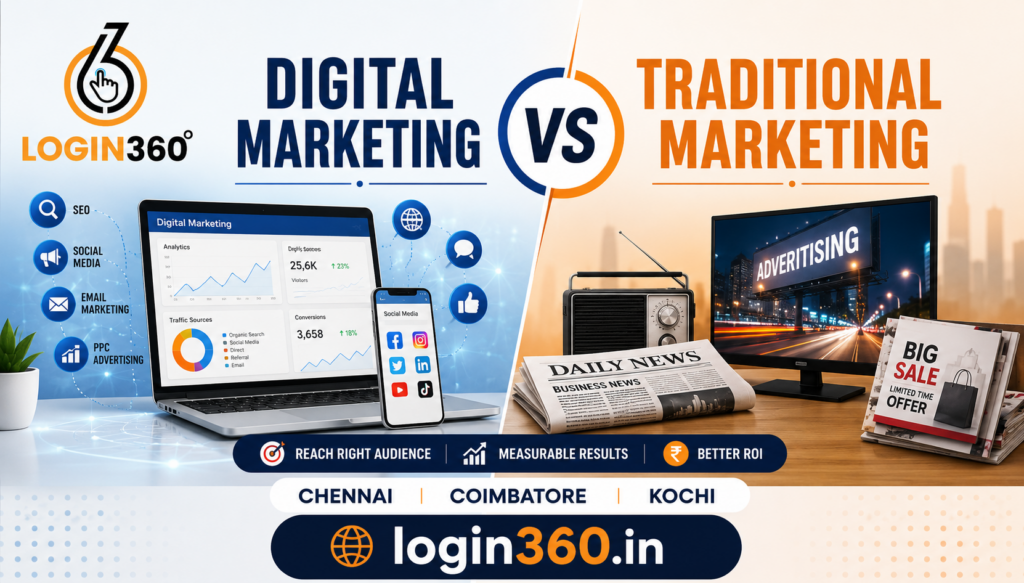
Marketing plays a vital role in helping businesses promote their products, build brand awareness, and connect with customers. Today, businesses can choose between digital marketing vs traditional marketing, each offering unique advantages. Traditional marketing uses offline channels such as television, newspapers, radio, and billboards, while digital marketing relies on online platforms like search engines, social media, email, and websites. Both approaches help businesses reach their target audience, but they differ in cost, reach, targeting, and performance measurement. This article compares digital marketing vs traditional marketing, highlighting their key differences, advantages, disadvantages, and helping you determine which strategy best suits your business goals.
What is Digital Marketing?
Digital marketing is the practice of promoting products, services, or brands through online channels such as search engines, social media, websites, email, and mobile apps to reach and engage customers.
Types of Digital Marketing
- Search Engine Optimization (SEO): Improves a website’s visibility in search engine results to attract organic (free) traffic.
- Search Engine Marketing (SEM): Uses paid advertisements on search engines to increase website visibility and generate traffic.
- Social Media Marketing (SMM): Promotes products or services through social media platforms like Facebook, Instagram, LinkedIn, and X.
- Email Marketing: Sends personalized emails to customers to promote products, share updates, and build long term relationships.
- Content Marketing: Creates and shares valuable content such as blogs, videos, and infographics to attract and engage a target audience.
- Pay-Per-Click (PPC) Advertising: A paid advertising model where advertisers pay each time a user clicks on their online ad.
- Affiliate Marketing: Partners with affiliates who earn a commission for promoting products and generating sales or leads.
- Influencer Marketing: Collaborates with social media influencers to promote products and increase brand awareness among their followers.
- Video Marketing: Uses videos on platforms like YouTube and social media to educate, entertain, and promote products or services.
- Mobile Marketing: Reaches customers through smartphones and tablets using mobile apps, SMS, push notifications, and mobile friendly websites.
What is Traditional Marketing?
Traditional marketing is the promotion of products or services through offline channels such as print media, television, radio, outdoor advertising, and direct mail to reach potential customers.
Types of Traditional Marketing
- Television advertisements: Promote products or services through commercials broadcast on television channels.
- Radio commercials: Advertise products using audio messages aired on radio stations.
- Newspaper advertisements: Display promotional content in newspapers to reach local or regional audiences.
- Magazine advertisements: Feature advertisements in magazines to target readers based on specific interests or industries.
- Billboards: Use large outdoor displays placed in high-traffic areas to increase brand visibility.
- Posters: Promote events, products, or services through printed posters displayed in public places.
- Flyers: Distribute printed leaflets to provide information about products, services, offers, or events.
- Direct mail: Send promotional materials such as letters, catalogs, or postcards directly to customers’ mailboxes.
- Brochures: Provide detailed information about a company’s products or services in a printed booklet or pamphlet.
- Event sponsorships: Increase brand awareness by sponsoring events, exhibitions, sports competitions, or community programs.
Comparison Table: Digital Marketing vs Traditional Marketing
| Feature | Digital Marketing | Traditional Marketing |
|---|---|---|
| Platform | Online | Offline |
| Cost | Lower | Higher |
| Audience Targeting | Highly specific | Broad audience |
| Performance Tracking | Real time | Limited |
| Customer Interaction | Two way communication | One way communication |
| Speed | Immediate | Slower |
| Global Reach | Yes | Mostly regional |
| Flexibility | High | Limited |
| ROI Measurement | Easy | Difficult |
| Campaign Changes | Instant | Expensive and time consuming |
What Are The Advantages and Disadvantages of Digital Marketing vs Traditional Marketing
Advantages of Digital Marketing
- Cost Effective: Digital campaigns require lower budgets compared to television or newspaper advertisements, making them ideal for startups and small businesses.
- Global Reach: Businesses can reach customers across different countries without opening physical locations.
- Better Targeting: Marketers can target users based on demographics, interests, purchasing behavior, and geographic location.
- Measurable Results: Tools like website analytics help businesses measure traffic, conversions, engagement, and sales.
- Higher Engagement: Customers can interact with businesses through comments, reviews, emails, and social media messages.
- Faster Campaign Optimization: Marketing campaigns can be modified instantly based on performance data.
Advantages of Traditional Marketing
- Strong Brand Recognition: Television commercials, billboards, and print advertisements often leave a lasting impression.
- Wider Local Reach: Local businesses can effectively attract nearby customers through newspapers, radio, and outdoor advertising.
- Higher Credibility: Many consumers perceive print advertisements and television commercials as more trustworthy than online ads.
- Less Digital Competition: Traditional media generally contains fewer advertisements compared to crowded digital platforms.
- Effective for Older Audiences: Older generations often consume newspapers, television, and radio more frequently than digital media.
Disadvantages of Digital Marketing
- High competition across online platforms.
- Frequent algorithm updates on search engines and social media.
- Requires continuous optimization and monitoring.
- Privacy regulations affect customer data collection.
- Online advertisements may be blocked by ad blockers.
Disadvantages of Traditional Marketing
- High advertising costs.
- Limited audience targeting.
- Difficult to measure campaign performance.
- No immediate customer interaction.
- Updating advertisements requires additional expenses.
- Limited global reach.
Cost Comparison
- Digital marketing: offers flexible spending options. Businesses can start with small daily budgets for social media ads, email campaigns, or search engine advertising. Campaigns can be paused or adjusted anytime.
- Traditional marketing: usually requires significant upfront investment. Television commercials, magazine advertisements, newspaper placements, and billboards involve production and placement costs that may exceed the budgets of small businesses.
Target Audience and Reach
- Age: Businesses can target customers based on specific age groups, such as teenagers, adults, or senior citizens.
- Gender: Marketing campaigns can be tailored to reach male, female, or other gender specific audiences.
- Income: Advertisements can target people based on their income level to promote products within their purchasing power.
- Interests: Businesses can reach users based on their hobbies, preferences, and online interests, such as fitness, travel, or technology.
- Shopping behavior: Marketers can target customers based on their previous purchases, browsing history, and buying habits.
- Geographic location: Campaigns can focus on audiences in specific countries, states, cities, or even neighborhoods.
- Device usage: Businesses can target users based on the devices they use, such as smartphones, tablets, or desktop computers.
Measurement and Performance Tracking
- Website visitors: Measures the number of people who visit your website during a specific period.
- Click-through rate (CTR): Shows the percentage of users who click on an advertisement or link after seeing it.
- Conversion rate: Measures the percentage of visitors who complete a desired action, such as making a purchase or filling out a form.
- Bounce rate: Indicates the percentage of visitors who leave a website after viewing only one page without taking any action.
- Return on Investment (ROI): Calculates the profit earned from a marketing campaign compared to the amount spent on it.
- Cost per Click (CPC): Represents the amount an advertiser pays each time someone clicks on their online advertisement.
- Customer Acquisition Cost (CAC): Measures the average cost of acquiring a new customer through marketing and sales efforts.
Real Life Examples
- Local Bakery: A bakery distributes flyers and places newspaper advertisements while also promoting products on social media with online ordering options. Combining both approaches increases local visibility and online sales.
- E-commerce Store: An online electronics retailer invests heavily in SEO, Google Ads, email marketing, and influencer partnerships to attract customers worldwide.
- Automobile Company: A car manufacturer launches a national television campaign while simultaneously running YouTube ads, social media promotions, and online lead generation campaigns.
Which Marketing Strategy is Better?
There is no one size fits all answer in the Digital Marketing vs Traditional Marketing debate. The best marketing strategy depends on your business goals, target audience, and budget. Digital marketing is ideal for businesses looking for cost effective campaigns, precise targeting, and measurable results, while traditional marketing is effective for building brand awareness and reaching local or offline audiences. For many businesses, combining digital and traditional marketing creates the best results by increasing brand visibility, customer engagement, and overall return on investment.
Conclusion
The comparison between digital marketing vs traditional marketing shows that both approaches have unique strengths and limitations. Digital marketing excels in affordability, audience targeting, performance tracking, flexibility, and global reach. Traditional marketing remains effective for building trust, increasing local visibility, and creating memorable brand experiences. Rather than viewing these methods as competitors, businesses should consider them complementary. A balanced strategy that combines online and offline marketing can maximize brand awareness, customer engagement, and sales. As consumer behavior continues to evolve, companies that adapt and integrate both marketing approaches will be better positioned for long term success.

[…] such as search engines, social media platforms, websites, email, and mobile applications. Unlike traditional marketing, digital marketing allows businesses to reach a global audience, track campaign performance, and engage with customers […]
[…] such as search engines, social media platforms, websites, email, and mobile applications. Unlike traditional marketing, digital marketing allows businesses to reach a wider audience, measure campaign performance, and engage with […]