

Introduction
Imagine trying to work out ‘why customers are going to our competitors’, ‘which products will be popular in the next month’ or ‘how we can improve sales’. This can often take many hours to work out manually using excel and research. However, with the rise of Artificial Intelligence (AI) these tasks can be completed quicker and efficiently.
Every day businesses collect vast amounts of data. This could be from websites, mobile apps and online stores. However, this data will only be useful if they know how to use it.
This is where having knowledge of Data Analytics with AI is becoming more important. Combining traditional Data Analytics with intelligent tools, professionals can gain insight into patterns, identify customer behaviours and help make decisions.
For students, freshers and working professionals, learning about AI powered analytics will help you make a start with building your career around technology. Knowing the tools, skills and gaining experience will help you to get started.
What is Data Analytics with AI?
Data Analytics is the process of analysing data. This can help us to find useful patterns.
Artificial Intelligence is computer systems which can complete tasks such as identifying patterns, understanding language and predicting.
By combining AI with Data Analytics, professionals can analyse data more efficiently.
For example, a Supermarket may have a large amount of customer transactions. Using traditional Data Analytics we could find out which products generated the most revenue. However, using AI powered analytics we can find out useful customer patterns and predict what they may buy next.
Sometimes you don’t need to use advanced machine learning, using a simple spreadsheet with AI assistance can help an analyst organise their data and find out what the issue may be.
The main aim is to make the data more meaningful using technology.
Why is AI becoming important in Data Analytics?
There is increasing amounts of data being generated by businesses. Manually analysing this can become an issue, especially if there are millions of records.
AI can help analysts with this.
1. Faster Data Analysis
As Data Analysts, we often have to spend a lot of time organising our data.
Using AI assisted tools can help find duplicates, missing values and recommend ways to clean data.
For example, if the company receives customer data from various sources, AI can help identify possible duplicates.
The analyst can then look at the suggestions and create a more reliable dataset.
2. Better Business Predictions
Often businesses will need to make decisions before knowing exactly what will happen.
Using AI and machine learning we can predict what may happen using historical data.
For example, a Retail company may analyse how much stock they should keep using past sales, seasonal trends and customer demand.
This can help with planning but won’t always be completely accurate.
3. Customer Insights
Understanding your customers is very important for almost every business.
AI can help us analyse customer interactions, purchases, feedback and browsing habits.
For example, an online business may find out which customers often purchase a certain category of products. This can help improve recommendations and marketing.
4. Easier Reporting
AI assistants can explain the findings of your analysis in simple terms.
Rather than looking through a complicated report, a manager can ask an AI assistant to summarise the key changes.
This can help those without technical knowledge to understand the data.
However, it is always good to check the AI explanations with the actual data.
Key AI Tools for Data Analytics
Learning about the right tools will help you become a Data Analytics professional. Understanding the different AI Tools for Data Analytics will allow you to pick the correct tools for your projects.
Microsoft Excel
Microsoft Excel is a great place to start for beginners.
This allows you to organise data, carry out calculations, identify trends and create reports.
Key features include:
- PivotTables & PivotCharts
- IF function, SUMIFS & COUNTIFS
- VLOOKUP & XLOOKUP
- Filter & Sort
- Charts & Dashboards
Using AI assisted tools can help you to understand formulas, explore your dataset and identify potential patterns.
This is a great tool for beginners to learn the basics.
SQL
Structured Query Language (SQL) is used to extract data from databases.
Many businesses will have large databases with all their customer data, product info, sales and operation details.
Data Analysts will use SQL to extract the data they need.
For example, calculating monthly revenue, identifying best selling products and comparing customer activity between regions.
AI assistants can suggest queries however you will still need to understand SQL to confirm the query gives the correct result.
Python
Python is a popular programming language. It can be used for data analysis, automation and machine learning.
Using Data Analytics with Python allows professionals to analyse large amounts of data, complete repetitive tasks and analyse data more advanced.
Popular libraries include:
- Pandas
- NumPy
- Matplotlib
- Seaborn
- Scikit-learn
Using AI tools can help beginners understand the code, identify errors and learn about programming.
With regular practice, Python can become a valuable skill for more advanced analytics.
Power BI
Power BI is a business intelligence tool. It helps professionals turn raw data into interactive reports and dashboards.
Businesses will use Power BI to analyse their sales, customer activity, marketing and operations.
Key features include:
- Power Query
- Data Modelling
- DAX Calculations
- Interactive Visualisations
Using AI can help you explore your data and gain insights by asking questions.
Learning Power BI can be helpful if you’re interested in reporting, business intelligence or becoming a data analyst.
Tableau
Tableau is another popular data visualisation tool.
This can be used to create charts, dashboards and interactive reports to help understand complex data.
For example, comparing sales between regions or identifying changes in customer demand.
Being able to visualise data is important so that the business team can understand the outcome of the analysis without looking at each individual record.
ChatGPT / AI Assistants
AI assistants can help you throughout your analysis.
They can help you understand concepts, suggest formulas, create code, summarise findings and give ideas on how to explore your data.
This can help beginners to learn.
However, sometimes there may be errors in the information provided. You should understand the methods you are using and confirm your results are accurate.
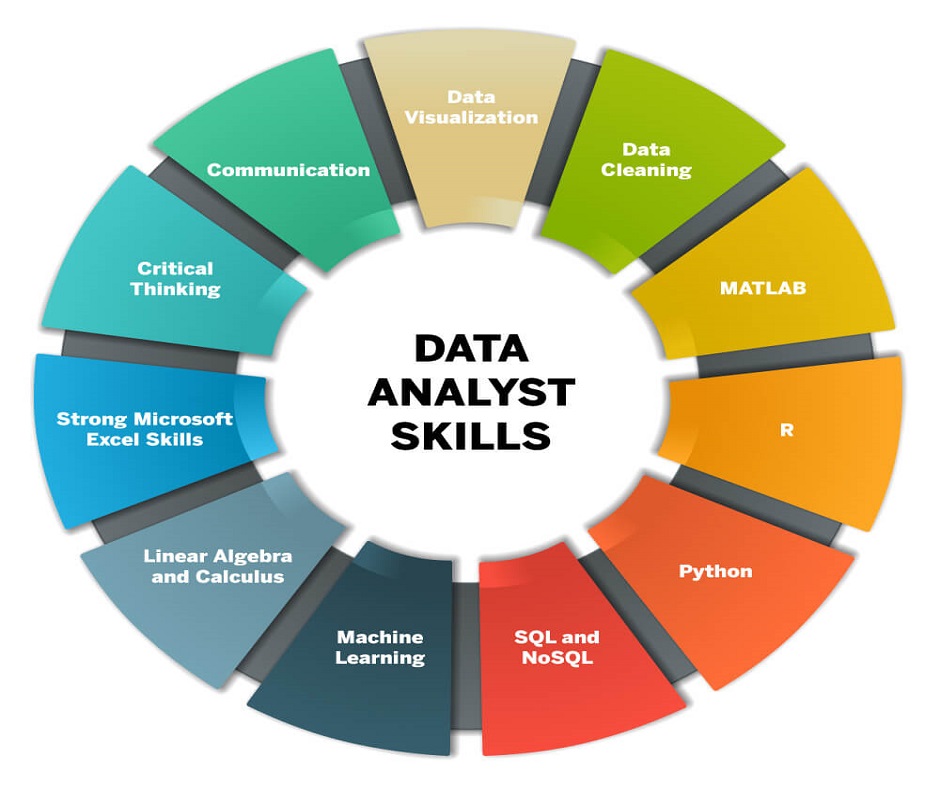
Key Skills for Data Analytics with AI
Whilst knowing different tools is useful, becoming a successful analyst requires you to develop your Data Analytics Skills so that you can confidently work with data to solve business issues.
Analytical Thinking
Having analytical thinking will help you to understand problems and identify what data you need.
For example, if a company’s website traffic has dropped you should investigate why. This could be due to less advertising, changes to how visible they are in searches and less customers engaging.
Often asking the right questions is more important than using advanced tools.
Data Cleaning
Raw data is often not perfect.
You will need to know how to deal with missing values, duplicates, formatting issues and check data quality.
Having reliable data will give you reliable analysis.
Basic Statistics
Understanding statistics will help you to identify patterns and meaningful comparisons.
As a beginner you should learn about averages, percentages, probability, correlation and standard deviation.
This will help you understand data correctly.
Programming & Databases
Having knowledge of SQL and Python can be very useful.
SQL can help you extract data from databases whilst Python can help you manipulate data.
As a beginner you can start with some basic concepts and work your way up.
Communication & Problem Solving
As a Data Analyst you will need to communicate your findings.
For example, stating sales have dropped by 10% is not enough. You should look into why sales have dropped and explain what the business can do next.
Having good communication skills will help you turn your findings into useful decisions.
Opportunities in Data Analytics with AI
With businesses becoming more data reliant, having Data Analytics Skills can open up a range of opportunities.
Data Analyst
A Data Analyst will gather, clean and analyse data to help businesses understand their performance.
Typical duties include creating reports, identifying trends, creating dashboards and presenting findings.
Excel, SQL, Power BI, Python and basic statistics are often useful skills.
This can be a good starting point for freshers.
Business Intelligence Analyst
A Business Intelligence Analyst focusses on turning business data into meaningful reports and dashboards.
They will help management teams understand their performance and areas to improve.
Power BI, Tableau, SQL and business knowledge are important.
Data Scientist
A Data Scientist will use programming, statistics and machine learning to solve complex problems.
They may create predictive models, analyse large datasets and create systems to aid automated decisions.
This role will require more maths and programming knowledge compared to an entry level Data Analyst.
Marketing Data Analyst
A Marketing Data Analyst will analyse campaign performance, website activity, customer engagement and conversion.
For example, they may compare Google Ads and Meta Ads campaigns to see which is generating more valuable leads.
Having knowledge of Google Analytics, Excel, SQL and Power BI can be useful.
AI & Data Analytics Specialist
- These professionals will use AI assisted analytical tools to improve processes within the business.
- They may create automated reports, analyse complex datasets and support data driven solutions.
- The requirements will depend on the organisation and the role.
How to Get Started With Data Analytics with AI As A Beginner
Starting a new technical topic can seem daunting, especially if you have no programming knowledge.
However, taking a structured approach will help.
Learn the basics of Excel – Understand how to use spreadsheets, formulas, pivot tables and basic data cleansing.
Learn SQL – Practice extracting data, filtering, joining tables and calculating totals.
Learn Power BI/Tableau – Create dashboards.
Explore Data Analytics with Python – Learn some basic programming and practice using Pandas.
Understand AI Tools – Explore AI Tools for Data Analytics to analyse datasets, understand code and improve your analysis.
Create some practical projects – Apply your knowledge to real datasets.
Practice regularly.
Practical Projects to Improve Your Analytics
Projects can help beginners understand how concepts work in real life.
Sales Analysis Project – Use Excel/Power BI to analyse revenue, product performance, monthly sales and customer orders.
Customer Behaviour Project – Explore customer purchase data to identify buying patterns, repeat buyers and customer segments.
AI Assisted Marketing Analysis – Use Data Analytics with Python/Excel to analyse advertising data. Use an AI assistant to explore trends and explain findings. Confirm your findings independently.
This can help you show your practical knowledge in interviews and give you more confidence.
Conclusion
Data Analytics with AI is transforming how businesses understand their data. Using AI powered tools can help professionals to analyse data quickly, find patterns and create better reports.
However, having analytical thinking, problem solving, business knowledge and communication skills are still key to successful Data Analytics.
As a beginner learning Excel, SQL, Power BI and Data Analytics with Python will give you a solid foundation. Exploring AI Tools for Data Analytics and completing practical projects will help improve your knowledge.
If you’re a student, fresher or working professional wanting to change careers there are a range of opportunities in data analytics.
With regular practice and a positive attitude to learning, you can gain the Data Analytics Skills needed to build a career in this ever evolving field.
