
Table of Contents
Introduction
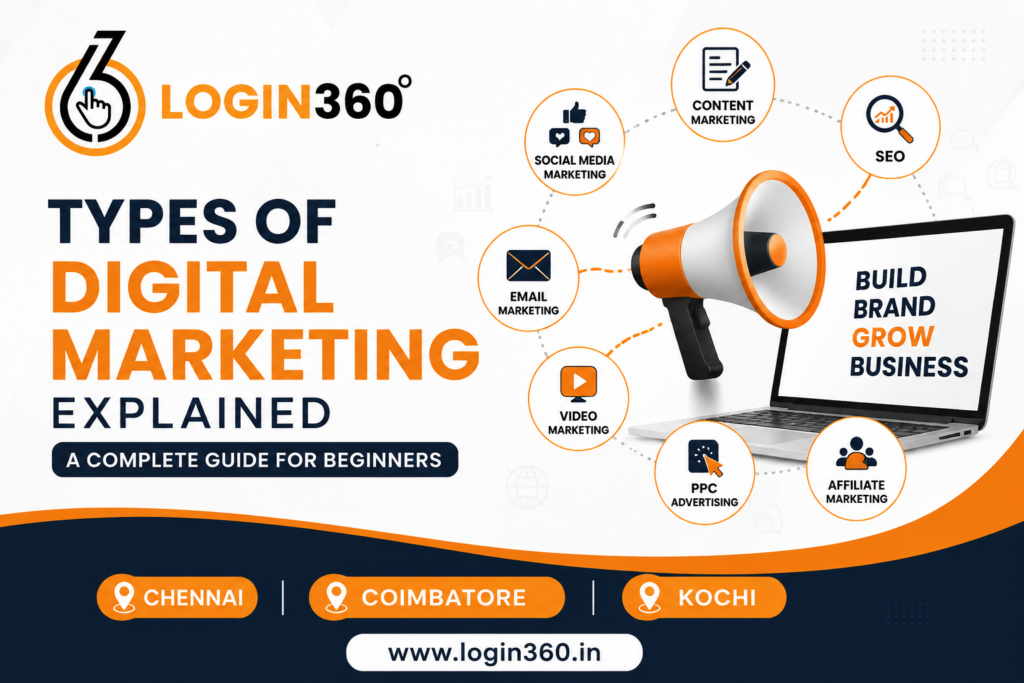
Digital marketing has transformed the way businesses connect with their customers. Whether you’re promoting a startup, running an online store, or building a personal brand, understanding the different types of digital marketing is essential. In this guide, we’ll explain the major types of digital marketing, how they work, and when to use them to achieve the best results.
What is Digital Marketing?
Digital marketing is the process of promoting products, services, or brands using digital channels such as search engines, social media platforms, websites, email, and mobile applications. Unlike traditional marketing, digital marketing allows businesses to reach a global audience, track campaign performance, and engage with customers in real time. Today, businesses of all sizes use digital marketing to increase brand awareness, generate leads, improve customer relationships, and boost sales.
Why is Digital Marketing Important?
Digital marketing has become one of the most effective ways to grow a business in today’s competitive market. It allows companies to reach their target audience without the high costs associated with traditional advertising.
Benefits of Digital Marketing
- Reaching a Global Audience: Digital marketing helps businesses connect with customers across the world without geographical limitations.
- Cost Effective Marketing Campaigns: It allows businesses to promote their products and services at a lower cost compared to traditional marketing methods.
- Better Customer Engagement: Businesses can interact with their audience through social media, email, websites, and other digital channels.
- Measurable Campaign Performance: Digital marketing tools provide detailed analytics to track campaign performance and measure return on investment (ROI).
- Higher Conversion Rates: Targeted marketing strategies help convert more website visitors into leads and paying customers.
- Improved Brand Visibility: A strong online presence increases brand awareness and helps businesses reach a wider audience consistently.
Search Engine Optimization (SEO)
Search Engine Optimization (SEO) is the process of improving a website’s visibility on search engines like Google. The primary goal of SEO is to increase organic (non paid) traffic by helping webpages rank higher in search results. SEO involves optimizing website content, improving page speed, building quality backlinks, and using relevant keywords. When done correctly, SEO helps businesses attract visitors who are actively searching for their products or services.
Benefits of SEO
- Generates Long Term Organic Traffic: SEO helps attract consistent website visitors without relying on paid advertisements.
- Builds Brand Credibility: Higher search rankings increase trust and credibility among potential customers.
- Reduces Advertising Costs: Organic traffic reduces the need for continuous spending on paid marketing campaigns.
- Improves User Experience: Optimized websites load faster, are easier to navigate, and provide a better browsing experience.
- Delivers Sustainable Business Growth: Consistent SEO efforts support long term online visibility and business success.
Search Engine Marketing (SEM)
Search Engine Marketing (SEM) is a paid marketing strategy that promotes websites through search engine advertisements. Businesses bid on keywords so their ads appear at the top of search engine results pages. Unlike SEO, which takes time to produce results, SEM can generate website traffic almost immediately after launching a campaign.
Benefits of SEM
- Instant Website Visibility: SEM places your website at the top of search results almost immediately.
- Highly Targeted Audience: Ads are displayed to users actively searching for related products or services.
- Flexible Advertising Budget: Businesses can set and adjust their advertising budget based on campaign goals.
- Fast Lead Generation: Paid campaigns quickly drive qualified traffic and potential customers.
- Easy Performance Tracking: Campaign metrics help measure clicks, conversions, and return on investment.
Social Media Marketing (SMM)
Social Media Marketing (SMM) involves promoting a business through platforms such as Facebook, Instagram, LinkedIn, X and Pinterest. It helps businesses build brand awareness, engage with customers, and drive website traffic. A successful social media strategy includes creating valuable content, interacting with followers, running paid advertisements, and analyzing campaign performance.
Benefits of Social Media Marketing
- Increases Brand Awareness: Social media helps businesses reach a larger audience and improve brand recognition.
- Builds Customer Relationships: Regular interaction strengthens trust and loyalty with customers.
- Generates Website Traffic: Social media posts can drive visitors to your website or landing pages.
- Supports Lead Generation: Targeted campaigns help capture potential customers and generate leads.
- Improves Customer Engagement: Likes, comments, and shares encourage meaningful interactions with your audience.
Content Marketing
Content Marketing is the strategy of creating and sharing valuable content to attract, educate, and engage a target audience. Instead of directly promoting products or services, businesses focus on providing useful information that helps customers solve problems or answer their questions. Content can be published in various formats, including blog posts, articles, videos, infographics, case studies, podcasts, and eBooks. High quality content not only builds trust with potential customers but also supports SEO by improving search engine rankings and driving organic traffic.
Benefits of Content Marketing
- Builds Brand Authority: Valuable content positions your business as an industry expert.
- Improves SEO Performance: Quality content helps improve search engine rankings and organic visibility.
- Generates Quality Leads: Informative content attracts users who are genuinely interested in your offerings.
- Increases Customer Trust: Helpful and reliable content builds confidence in your brand.
- Supports Long Term Business Growth: Evergreen content continues attracting traffic and leads over time.
Email Marketing
Email Marketing is a digital marketing strategy that involves sending emails to customers and subscribers to promote products, share updates, or build long term relationships. Despite the growth of social media, email remains one of the most effective marketing channels because it provides direct communication with the audience. Businesses use email marketing for newsletters, promotional offers, product launches, event invitations, and customer retention campaigns. Personalized emails often achieve higher engagement and conversion rates than generic messages.
Benefits of Email Marketing
- Strengthens Customer Relationships: Personalized emails help maintain long term customer connections.
- Generates Repeat Sales: Regular email campaigns encourage existing customers to make additional purchases.
- Cost Effective Marketing Solution: Email marketing delivers excellent results with minimal investment.
- Delivers Personalized Communication: Businesses can send tailored messages based on customer preferences.
- Provides Measurable Campaign Results: Email analytics track open rates, clicks, and conversions.
Affiliate Marketing
Affiliate Marketing is a performance based marketing strategy where businesses reward individuals or partners for generating sales or leads through referral links. Affiliates promote products using blogs, websites, YouTube channels, or social media platforms and earn a commission for every successful conversion. This marketing method allows businesses to expand their reach without paying upfront advertising costs, making it a popular strategy for e-commerce companies and online businesses.
Benefits of Affiliate Marketing
- Low Marketing Investment: Businesses pay affiliates only when desired results are achieved.
- Performance Based Payment Model: Marketing costs are directly linked to successful sales or leads.
- Expands Brand Reach: Affiliates promote products to wider and more diverse audiences.
- Increases Online Sales: Referral marketing helps generate additional revenue through trusted partners.
- Builds Partnerships with Content Creators: Businesses collaborate with bloggers, influencers, and publishers to grow their reach.
Influencer Marketing
Influencer Marketing involves collaborating with social media influencers or content creators who have established credibility within a specific niche. Businesses partner with influencers to promote products or services to their followers through authentic and engaging content. Depending on the campaign, influencers may create product reviews, tutorials, unboxing videos, live sessions, or sponsored posts. Since followers often trust influencer recommendations, this strategy can significantly improve brand awareness and customer engagement.
Benefits of Influencer Marketing
- Builds Consumer Trust: Influencer recommendations often feel more authentic than traditional advertisements.
- Increases Brand Awareness: Influencers introduce brands to large and engaged audiences.
- Reaches Targeted Audiences: Businesses can connect with specific customer groups through niche influencers.
- Improves Customer Engagement: Influencer content encourages conversations and audience interaction.
- Supports Product Launches: Influencers help create excitement and visibility for new products.
Video Marketing
Video Marketing is the use of video content to promote products, educate customers, or increase brand awareness. Platforms such as YouTube, Instagram Reels, Facebook and LinkedIn have made video one of the most effective forms of digital communication. Businesses create product demonstrations, tutorials, customer testimonials, interviews, and educational videos to attract and engage viewers. High quality videos often generate more engagement than text or image based content.
Benefits of Video Marketing
- Higher Audience Engagement: Videos capture attention more effectively than text or images.
- Better Brand Recall: Visual content makes it easier for audiences to remember your brand.
- Increased Website Traffic: Engaging videos encourage viewers to visit your website.
- Improved Conversion Rates: Product videos help customers make informed purchasing decisions.
- Stronger Customer Trust: Demonstrations and testimonials build confidence in your products or services.
Mobile Marketing
Mobile Marketing focuses on reaching customers through smartphones and tablets. Since most internet users now browse websites, shop online, and consume content on mobile devices, mobile marketing has become an essential part of digital marketing. Common mobile marketing strategies include SMS campaigns, mobile applications, push notifications, location based marketing, and mobile friendly websites. Optimizing websites for mobile devices also improves user experience and search engine rankings.
Benefits of Mobile Marketing
- Reaches Users Anytime and Anywhere: Mobile marketing connects with customers wherever they use their smartphones.
- Increases Customer Engagement: Mobile notifications and messages encourage immediate interaction.
- Supports Personalized Marketing: Businesses can deliver customized offers based on user behavior and preferences.
- Improves Local Marketing Efforts: Location based campaigns help attract nearby customers.
- Enhances User Experience: Mobile friendly websites and apps provide a smoother browsing experience across devices.
Conclusion
Digital marketing offers businesses multiple ways to connect with their target audience and achieve sustainable growth. From SEO and SEM to content marketing, email marketing, influencer marketing, and mobile marketing, each strategy serves a unique purpose and contributes to overall business success. Rather than relying on a single marketing method, businesses should combine multiple digital marketing channels to create a well rounded strategy. Understanding the strengths of each type of digital marketing will help you choose the right approach, improve customer engagement, and achieve long term marketing success.