
introduction:
AI in digital marketing becomes a crucial tool, companies actively seek talent trained through a hands-on digital marketing course in Chennai that covers AI-powered analytics, prompt engineering, and performance marketing. Prior to using AI in digital marketing, marketers would have had to make many assumptions about different demographics, and make many manual changes to advertising bids. Similarly, marketers would have manually segmented email marketing lists, and taken many hours to analyse spreadsheet data. Now, machine learning models, NLP models, and generative models can process huge amounts of user data. This allows for marketers to accurately predict user intent, personalise content, and optimise ROI with little to no manual input.
Ai in Digital Marketing:
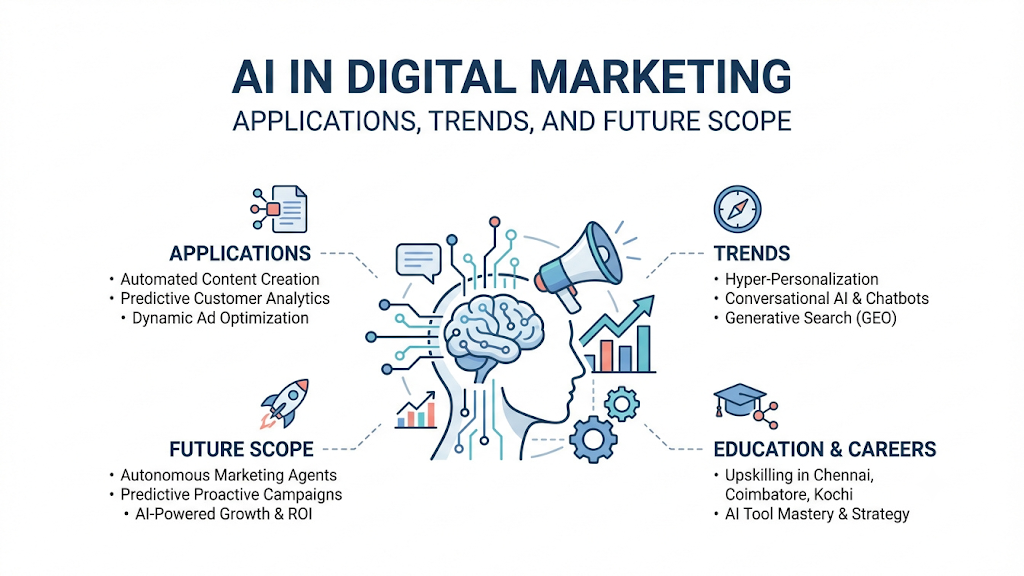
- Content Creation-With Generative AI, marketers can quickly create content for blogs, landing pages, social media, videos, and emails. Writers can ask AI to create content outlines, provide ideas, try different headings, and convert lengthy articles into short social media posts. However, human oversight is still required to maintain brand tone and ensure accuracy.
- SEO Optimisation-With AI powered SEO tools, marketers can analyse top ranking content within searches. They can determine the best keywords to use based on semantic grouping, understand areas to improve upon, and understand search intent. Marketers can be advised on what subheadings to include, internal links to include, how to improve readability, and optimise meta descriptions. This helps to increase the rankings of pages, and provide better results to user searches.
- Programmatic Advertising-Within platforms such as Google Ads and Meta Ads, deep learning models facilitate programmatic advertising. Instead of individually adjusting max cost per click within dozens of adverts, marketing teams can enter a campaign objective and conversion data. Then, AI will automatically distribute the budget across the best performing placements, audience types, and creatives.
- Personalised Marketing-Recommendation algorithms can recommend products, based on the user’s browsing history, previous purchases, time spent on certain products, and real-time data. Within streaming platforms, online stores and SaaS platforms, users will see the most relevant products, articles or discounts based on their browsing habits.
- Chatbots-Using NLP, marketing platforms now have complex chatbots on their websites. These chatbots can understand meaning and understand the sentiment within user messages. Therefore, they can provide answers to queries, qualify leads, assist with purchases, and escalate complicated queries to real people.
- Predictive Analysis-By assessing data from CRM’s, website interactivity and purchasing behaviour, prediction models can predict sales figures, predict customer lifetime values, and determine which accounts may be at risk of churn. With automated lead scoring, sales and marketing teams can easily prioritise high intent leads, therefore reducing wasted efforts targeting cold leads.
- Design & Video Creation-With computer vision and generative media technologies, marketers can create bespoke product designs, different aspect ratios for banner ads, create audio, create subtitles in multiple languages, and edit short promotional videos. This can be done extremely quickly without full professional production.
- Impact on Paid Marketing-AI has been very influential in paid digital marketing. Previously, marketers would create targeted groups based on age, location, job title and interests, however often these assumptions did not reflect real buyer behaviour. Trends in AI within Digital Marketing
From SEO to Generative Engine Optimisation:
- “As autonomous AI processes become standard and marketing tools grow more self-directed, enrolling in a hands-on digital marketing course in Coimbatore helps professionals learn how to guide automated campaigns and maximize ROI. AI can plan, perform, and adjust processes with very little human input. These AI’s can detect abnormalities in campaigns, stop underperforming adverts, run split tests, send follow up emails, and produce reports with little human input.
- Zero Party Data & First Party Data-Due to the deprecation of third party data tracking cookies, and stricter global privacy laws, brands are using AI to gain insight from zero party data and first party data. This data is gained through user interaction with quizzes, preferences and loyalty programmes.
- Multimodal & Voice Searches-There is an increasing trend in users searching using voice, taking photos on their mobile phone, and short videos. AI aided tools are enabling brands to optimise visual content, long tailed speech searches, and multi-lingual voice searches in different regions to reach these audiences efficiently.
- Avoiding Generic AI Content-As generic AI content is beginning to dominate social media and search results, having authentic human content in marketing content will be rewarded by audiences and search engines. Using unique case studies, content from founders, and behind the scenes content can give content a genuine feel.
- Identifying Micro Influencers using AI-Companies are moving away from influencer marketing based on vanity metrics, and instead using AI tools to ensure authenticity. These AI tools can verify authenticity of audiences, detect fake followers, assess sentiment within comments, and find niche creators whose audiences closely match high converting buyer personas.
Impact on Content Strategy and Search:
The combination of AI and content marketing has drastically changed the way brands can gain authority and increase organic traffic. In the past to increase content volume, large numbers of writers, editors and SEO experts would be employed to create many pieces of content per month. However, with AI in use, a small number of focused marketers can do in-depth research on topics, find content gaps in competitors and create detailed content briefs in very little time. However, simply producing non edited content using AI will not benefit a brand. It will be disregarded by search engines and audiences due to it being very generic. Top performing teams utilise AI in a way to support Content Strategy.
Challenges within AI Marketing:
- Privacy Concern-Due to the large volumes of data required to train predictive marketing models, not adhering to data consent, minimisation, and privacy laws within different regions can pose serious legal and reputational risks.
- Bias in Algorithms-As machine learning models require historical data to train, bias within data can result in bias in marketing. This could mean that certain demographics receive biased ad content, offers, or credit related promotions. Regular human checks are needed to prevent this.
- Incorrect Information-Generative image and text models can create incorrect information. If not thoroughly checked by humans, statistics can be incorrect, product details can be incorrect, and content may be out of brand.
- Lack of Brand Identity-If businesses use identical AI prompts and templates, similar content will be generated for competitive businesses. This can cause a lack of brand identity and lose customer confidence.
- Over automation-If all human interactions are replaced with poorly set up bots, customers may become frustrated especially if they have a complicated or urgent issue.
Future of AI in Digital Marketing:
As AI becomes deeply integrated into digital marketing in a predictive and proactive manner over the next five years, joining a hands-on digital marketing course in Kochi helps marketers stay ahead with real-world training in analytics, automation, and AI strategy.” Marketing teams will be able to work with specific AI colleagues. These AI’s will be able to combine marketing tools such as CRM’s, advertising platforms, content management systems and revenue analysis to form one decision making system. Businesses will be able to make decisions in real time, therefore simulating different market scenarios, predicting demand changes in particular seasons, and changing prices, promotional offers and advertising creatives before consumer demand peaks.
Conclusion:
Artificial Intelligence has dramatically changed digital marketing. Artificial intelligence content marketing It has helped companies better understand their audience, create content, manage paid advertising, and create meaningful customer relationships. AI allows for repetitive tasks in SEO, and programmatic advertising to be completed quickly. It allows for extremely personalised customer journeys, and autonomous marketing processes. However, just using AI will not guarantee success in digital marketing. Companies who will succeed in the next few years will be those that carefully balance AI use with human creativity. While AI should be used to reduce inefficiencies, and gain deep insights from data, human creativity, Ethical Considerations and authentic content will be key to gaining true customer confidence.