

Table of Contents
Introduction
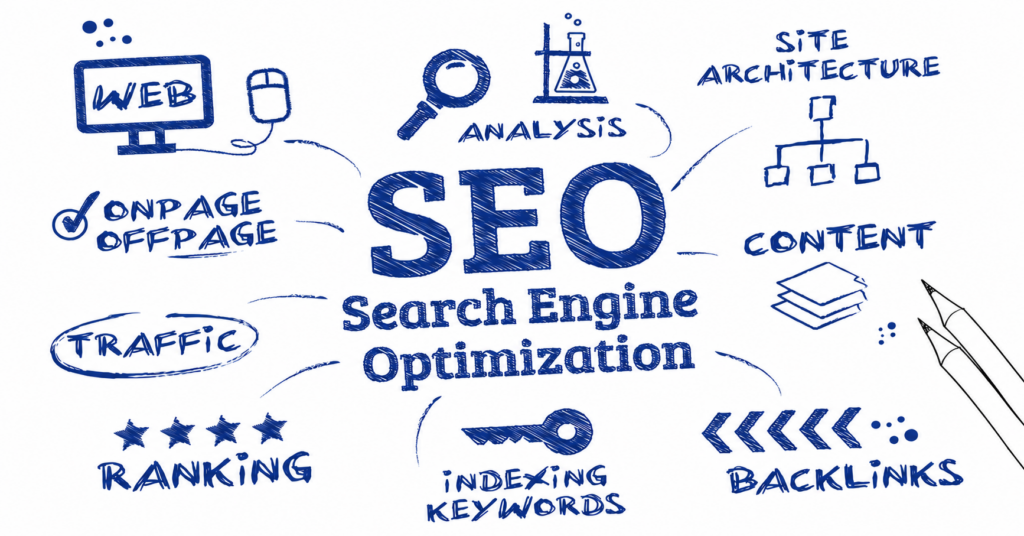
Search engine optimization (SEO ) has evolved well beyond guesswork. Google’s ranking decisions are shaped by hundreds of interconnected factors, and no marketer can realistically track them all by hand. This is where SEO tools step in they turn raw, scattered data into clear, actionable insight, showing exactly what’s working, what isn’t, and where the next opportunity is hiding before a competitor gets there first. Whether you’re managing a single website or juggling multiple client campaigns at once, the right toolkit saves hours of manual effort while dramatically improving accuracy and consistency. Manual tracking simply can’t keep pace with how often algorithms and rankings shift.
Why SEO Tools Are Important for Digital Marketing
Search engines assess websites using complex and constantly changing algorithms. Trying to keep up with these changes by hand is not practical. SEO tools provide marketers with a real-time view of how a site is performing, what competitors are doing, and where technical problems might be quietly affecting rankings. These tools save time and improve efficiency. Tasks that used to take days, such as reviewing hundreds of pages, checking backlink quality, or tracking keyword positions, now take mere minutes. This efficiency allows marketers to focus more on strategy and content quality rather than manual data gathering. There’s also a financial aspect to consider. Without proper tools, businesses risk wasting ad and content budgets on keywords that won’t convert.
Types of SEO Tools Every Marketer Should Know
- Keyword research tools : Identify what people are searching for, how often, and how competitive those terms are.
- On-page optimization tools : Analyze content, meta tags, headings, and internal linking on individual pages.
- Technical SEO tools : Crawl websites to find issues like broken links, slow load times, or indexing errors.
- Backlink and link-building tools : Track who links to a site and assess the quality of those links.
- Rank tracking and competitor analysis tools : Monitor keyword positions over time and compare them to rivals.
Keyword Research Tools for Better Search Visibility
- Keyword research is where every SEO strategy begins. It answers a key question: what are people actually searching for when they want what you offer? Getting this wrong means creating content that no one searches for, no matter how well it’s written.
- Modern keyword tools go beyond basic search volume. They reveal search intent, difficulty scores, seasonal trends, and even specific questions people ask in forums and voice searches.
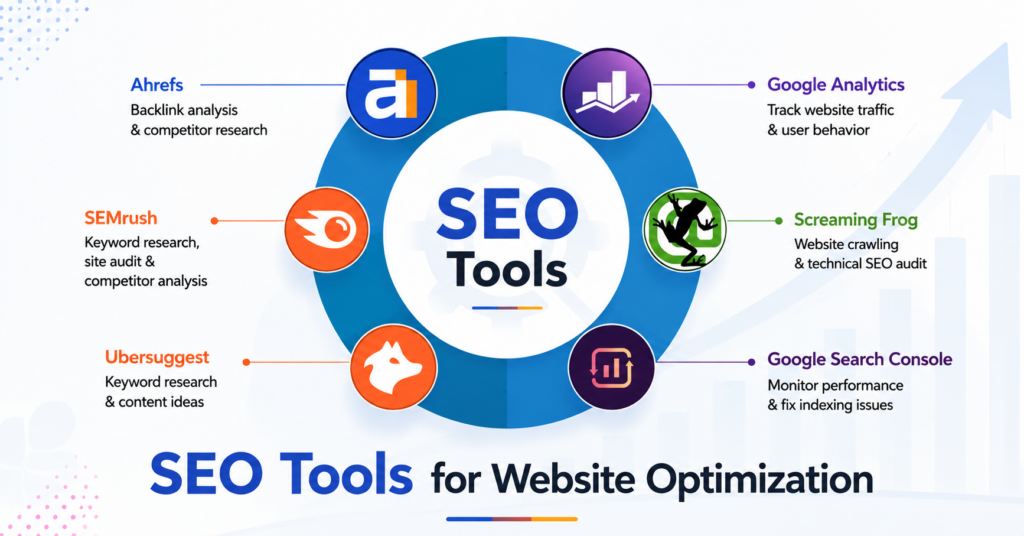
- Tools like Google Keyword Planner, Ahrefs Keyword Explorer, and Ubersuggest each present a different view of the same data, which is why many marketers check multiple sources before committing to a content plan.
- The real value comes from grouping related keywords by intent. This approach helps build topic authority and captures a broader range of long-tail traffic that is often easier to rank for.
On-Page SEO Tools to Optimize Website Content
Content optimization checkers
Content optimization checkers compare your draft directly against top-ranking competitors, checking keyword usage, readability, and content structure. They highlight gaps in topic coverage so your page has a real shot at outranking what’s already performing well.
Meta tag analyzers
Meta tag analyzers scan your entire site to flag missing or duplicate title tags and meta descriptions. Catching these early prevents search engines from struggling to understand or accurately display your pages in results.
Internal linking tools
Internal linking tools identify orphan pages that have no links pointing to them and suggest relevant pages to connect. Stronger internal linking improves site structure and helps search engines discover and rank content more effectively.
Readability scorers
Readability scorers evaluate sentence length, passive voice, and overall clarity to match your content to your audience’s reading level. Clearer, more digestible writing keeps readers engaged and reduces bounce rates.
Schema markup generators
Schema markup generators add structured data to your pages, helping search engines understand context and display rich snippets. This can improve click-through rates by making your listing stand out with extra details like ratings or FAQs.
Technical SEO Tools for Website Performance and Health
- Even the best written content won’t rank if the underlying website has technical issues. Technical SEO tools crawl a site like a search engine bot, revealing problems that are otherwise invisible.
- Common issues these tools find include slow page speed, broken redirects, duplicate content, missing alt text, and wasted crawl budget on unnecessary pages.
- Tools like Screaming Frog, Google Search Console, and Sitebulb are widely used because they produce detailed crawl reports that point out exactly which URLs need attention. Maintaining site health isn’t a one time task.
- Regular technical audits, ideally monthly or quarterly, catch new issues introduced by content updates or other changes before they negatively impact rankings.
Backlink Analysis and Link Building Tools
Link profile analyzers
Link profile analyzers show the total number of referring domains pointing to your site along with their authority scores. This gives a quick snapshot of how strong and trustworthy your overall backlink profile is.
Toxic link detectors
Toxic link detectors identify low quality or spammy backlinks that could be dragging your rankings down. Flagging these early lets you disavow harmful links before they cause lasting damage.
Competitor backlink gap tools
Competitor backlink gap tools reveal sites that link to your competitors but not to you, exposing clear outreach opportunities. This helps you target realistic, relevant link-building prospects instead of guessing.
Anchor text checkers
Anchor text checkers ensure your backlink anchor text looks natural and varied rather than overly optimized. A balanced anchor text profile helps avoid triggering search engine penalties for manipulation.
New link alert systems
New link alert systems notify you whenever a new backlink appears, whether it’s a positive addition or a potentially harmful one. Staying on top of these alerts means you can act quickly in either direction.
Rank Tracking and Competitor Analysis Tools
- Knowing your current rank matters, but tracking how that position changes over time is essential. Rank tracking tools monitor keyword positions daily or weekly across desktop and mobile, often for different geographic locations.
- Competitor analysis takes this further by showing both your movement and how rivals are faring for the same terms. This helps identify whether a drop in traffic is due to your own site problems or if a competitor is outranking you with better content or links.
- Tools like SEMrush, Moz Pro, and AccuRanker are commonly used for ongoing visibility tracking. Combining rank data with traffic and conversion metrics provides a clearer picture.
- A keyword moving up isn’t helpful if it isn’t attracting qualified visitors who take action.
How to Choose the Right SEO Tools for Your Business
- Define your priority : first, since a local business with a handful of pages has very different SEO needs than an enterprise site managing thousands of URLs. Understanding your scale and goals upfront helps you avoid paying for features you’ll never actually use.
- Check the learning curve : before committing to a tool, as some platforms are built for complete beginners while others assume advanced SEO expertise. Picking a tool that matches your team’s skill level prevents wasted time and underused features.
- Compare data accuracy : by cross verifying keyword volumes and backlink counts across a couple of different platforms rather than trusting a single source. No tool is perfectly accurate, so this comparison helps you make more informed, reliable decisions.
- Factor in budget : carefully, since free tools like Google Search Console already cover a surprising amount of ground before paid upgrades become necessary. Starting free and upgrading only when you hit real limitations keeps costs aligned with actual need.
- Look for integration : with your existing CMS or reporting dashboard, since seamless connections save significant setup and maintenance time. Tools that fit naturally into your current workflow are far more likely to actually get used consistently.
Conclusion
In digital marketing SEO tools are never a substitute for strategy, but they’re what make strategy measurable, testable, and repeatable over time. Without them, marketers are left guessing whether their efforts are actually working. From keyword research to technical audits and backlink tracking, each category plays a distinct role in building visibility that lasts rather than visibility that fades after one algorithm update. Businesses that achieve the strongest long term results aren’t necessarily the ones running the most tools or the most expensive subscriptions. They’re the ones that genuinely understand what each tool is telling them and take consistent, deliberate action based on that data, rather than collecting reports that never get acted on. The smartest approach is to start small, identify the category addressing your biggest gap today, whether that’s technical health, content quality, or link building, and master it first.