

Table of Contents
Introduction
In marketing, content, SEO and social media are three key elements of a successful online strategy. Each element has its purpose but they perform best when combined. Good content provides information to people. SEO helps people locate content through search engines. Social media spreads content to an audience. When content, SEO and social media are linked correctly a business can boost visibility, attract more visitors, build trust and generate more customers. The content must be valuable enough to keep people interested. This is why understanding the connection between content, SEO and social media is important for digital marketing.
What Is Content Marketing?
Content marketing is the process of creating and sharing information to attract and engage a target audience. Content can be created in different formats, including blog posts, videos, images, social media posts, infographics, guides, case studies, emails and more. The main purpose of content marketing is not simply to sell a product or service. Instead it focuses on providing information and solving problems for the audience. When people consistently receive content from a brand they are more likely to trust that brand.
What Is SEO?
SEO stands for Search Engine Optimization. It is the process of improving a website and its content so that search engines can understand it and users can discover it through search results. When people search for something on Google they usually use words or phrases. These are called keywords. SEO helps businesses create content that is relevant to these searches. It includes activities such as keyword research creating useful content optimizing titles and headings improving website structure building backlinks and improving the user experience.
What Is Social Media Marketing?
Social media marketing involves using platforms such as Instagram, Facebook, LinkedIn, YouTube and other social networks to communicate with an audience and promote a brand. Social media allows businesses to reach people directly. A business can share posts, videos, customer experiences, offers, announcements and other content.
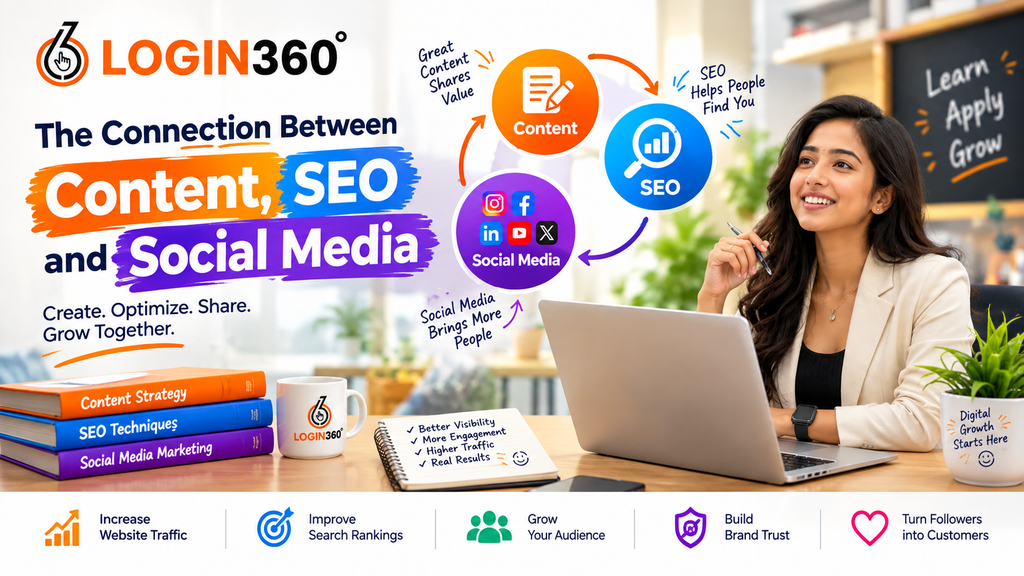
How Content, SEO and Social Media Work Together
Content, SEO and social media should not be treated as three separate activities. They can support each other. Create a strong digital marketing system. Think of content as the message. SEO helps people discover that message through search engines while social media helps distribute the message to an audience.
Content Supports SEO
SEO needs content. Search engines need information to understand what a website is about and whether it can provide answers to users. A website with relevant content can target different search queries. Businesses can create blogs, landing pages, service pages, FAQs, guides and other useful resources. SEO Helps Content Reach the Right Audience. Creating content is only one part of digital marketing. People also need to find it.
Social Media Gives Content Reach
Even after publishing a great blog, businesses need ways to promote it. Social media can help distribute content. A single blog post can be converted into social media formats. Different people prefer types of content. Some may enjoy reading blogs while others may prefer watching videos or viewing images. Repurposing content allows a business to reach people through channels.
Social Media Can Support SEO
Social media activity and traditional search rankings are not the same thing. Social shares are not simply a ranking factor that guarantees higher Google rankings. However social media can still support SEO indirectly. When useful content is shared on platforms more people may discover it. Some of those people may visit the website, mention the content on websites linked to it or search for the brand later. Social media can therefore help increase content visibility and create opportunities for online discovery.
One Content Idea Can Become Many Marketing Assets
One of the advantages of connecting content, SEO and social media is that marketers do not always need to create completely new content for every platform. A single strong topic can be transformed into different formats. The main idea remains the same. The format changes according to the platform. This saves time. Helps maintain consistency across different marketing channels.
Keyword Research Connects Content and SEO
Keyword research is a link between content and SEO. Before writing content marketers can find out what their audience is searching for. Keyword research can then guide content topics and page optimization. Longer specific phrases are useful for focused content because they show the users topic or intention clearly. Repeating the keyword too many times makes content hard to read. The goal is always to give information while naturally covering relevant search topics.
Building Trust Through Consistent Content
Content, SEO and social media can help businesses build trust. Imagine a person finds a company on Google. They visit the website. Find helpful blogs, detailed service information, useful guides and customer‑focused content. Then they find the company on Instagram or LinkedIn and see regular educational posts and videos. This creates an online presence.
Measuring the Performance
Digital marketing should be measured regularly. Businesses can use metrics to see how content, SEO and social media perform.
For content and SEO marketers can monitor :
- Organic traffic
- Search impressions
- Click‑through rate
- Keyword performance
- Engagement
- Time spent on pages
- Conversions
For media marketers can monitor:
- Reach
- Impressions
- Likes
- Comments
- Shares
- Saves
- Video views
- Profile visits
- Link clicks
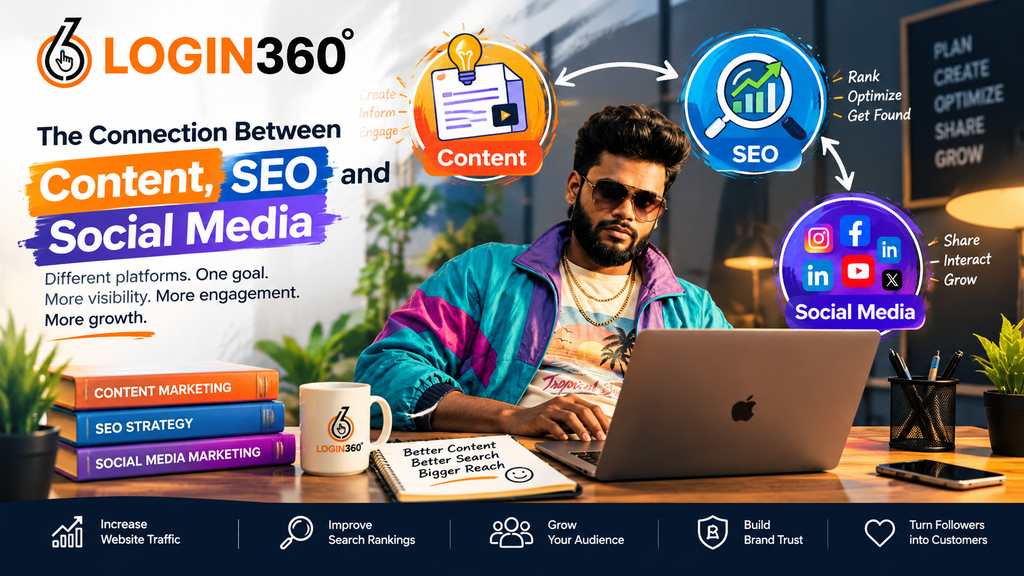
A Simple Strategy to Connect All Three
Businesses can follow a process to connect content, SEO and social media.
Step 1: Understand the audience
Identify who the target audience is, what they need and what questions they commonly ask.
Step 2: Research keywords
Find keywords and search topics related to the audiences interests.
Step 3: Create content
Create a blog, video, guide or other content that answers the audiences questions.
Step 4: Optimize for SEO
Use keywords naturally create clear headings optimize the title and URL add internal links and make the content easy to read.
Step 5: Promote on media
Turn the main content into different social media posts, videos, carousels and other formats.
Step 6: Measure the results
Check traffic, engagement, clicks, conversions and other relevant metrics.
Step 7: Improve the strategy
Use the data to understand what worked well and create content in the future.
Conclusion
Content, SEO and social media are connected parts of digital marketing. Content gives value to the audience SEO helps people find that content through search engines and social media helps share it with an audience. Of treating these activities separately businesses can build a connected strategy where each activity supports the others. The important point is to focus on the audience. Create content, optimize it naturally for search, share it through the right social platforms and measure the results. With effort the connection between content, SEO and social media can help businesses build visibility, trust, engagement and long‑term online growth.
CONTACT For More LOGIN360