

Table of Contents
Introduction
Have you ever wondered how long it takes to become a full stack developer? The answer depends on your learning approach, consistency, and career goals. In 2026, full stack development remains one of the most sought-after technical skills as businesses continue to build web applications, e-commerce platforms, SaaS products, and mobile-friendly websites. Companies are actively looking for developers who can handle both front-end and back-end technologies, making full stack development an excellent career choice.
If you’re planning to build a successful career in software development, understanding how long does it take to learn full stack development is an important first step. While some learners become job-ready within a few months through structured training, others may take over a year depending on their learning pace and practical experience.
Why Full Stack Development Is One of the Best Career Choices in 2026
Technology continues to reshape every industry, from healthcare and finance to education and retail. Every business needs websites, customer portals, online payment systems, and cloud-based applications. Behind these digital products are skilled full stack developers who manage both the user interface and the server-side functionality. Unlike developers who specialize in only one area, full stack developers understand the complete application lifecycle. They can design attractive interfaces, build APIs, manage databases, and deploy applications to production servers. This versatility makes them valuable assets for startups, software companies, and multinational organizations.
As artificial intelligence, cloud computing, and automation continue to evolve, businesses prefer professionals who can quickly adapt to changing technologies. Learning full stack development today opens doors to numerous career opportunities with competitive salaries and long-term growth. Another major advantage is flexibility. Many full stack developers work remotely, freelance, or even launch their own software products. With businesses investing heavily in digital transformation, the demand for skilled developers is expected to remain strong for years to come.
Who Should Learn Full Stack Development?
Full stack development is an excellent career choice for individuals from a wide range of educational and professional backgrounds. Whether you’re a student preparing for your first IT job, a recent graduate looking for in-demand skills, or a working professional planning a career switch, learning full stack development can open the door to exciting opportunities. It is also ideal for front-end developers who want to expand their expertise into back-end technologies, back-end developers aiming to become complete software engineers, entrepreneurs who want to build their own web applications, and freelancers looking to offer end-to-end web development services. Even if you don’t have a computer science background, you can become a successful full stack developer by following a structured learning path, practicing consistently, and building real-world projects.
The Login360 Advantage: Learn Full Stack Development the Smart Way
At Login360, we believe quality education should be practical, affordable, and career-focused. Our Full Stack Development training program is designed according to current industry requirements, helping students develop the technical and problem-solving skills employers expect in 2026. Instead of focusing only on theory, our curriculum emphasizes hands-on learning through real-time projects, coding assignments, portfolio development, and interview preparation. Students receive guidance from experienced mentors who have worked on real-world software projects.
Our affordable training programs, placement assistance, updated curriculum, and practical learning approach make Login360 an excellent choice for aspiring full stack developers. Whether you’re a beginner or someone looking to upgrade your technical skills, our structured learning path helps you become job-ready with confidence.
How Long Does It Take to Learn Full Stack Development?
One of the most frequently asked questions by beginners is how long does it take to learn full stack development. The answer varies depending on several factors, including your previous technical knowledge, learning schedule, and commitment.
1. Learning the Fundamentals
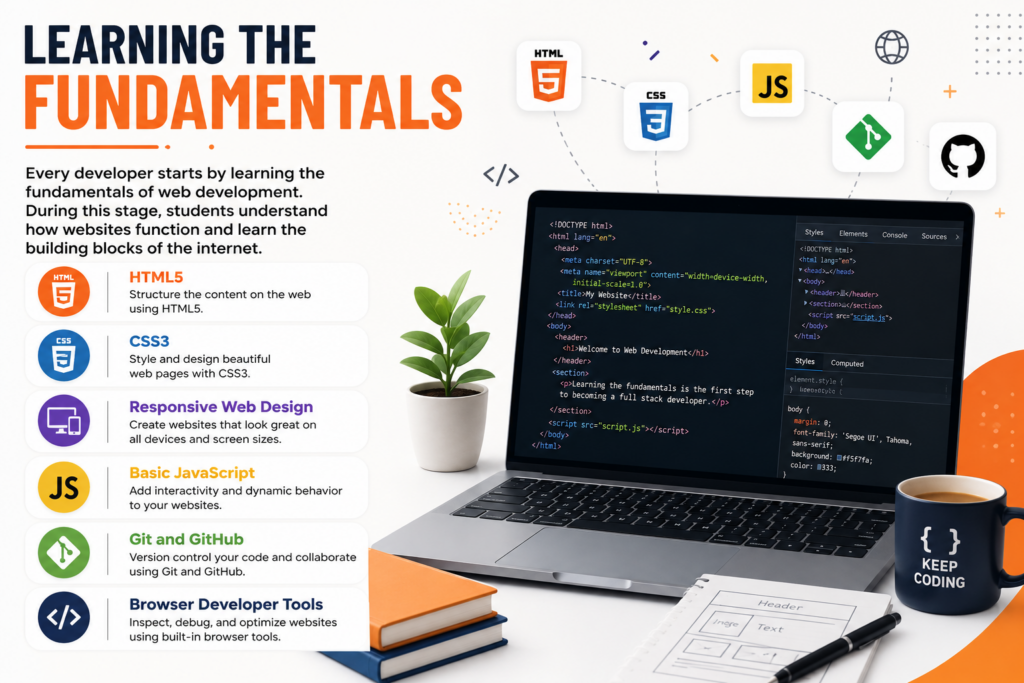
Every developer starts by learning the fundamentals of web development. During this stage, students understand how websites function and learn the building blocks of the internet.
- HTML5
- CSS3
- Responsive Web Design
- Basic JavaScript
- Git and GitHub
- Browser Developer Tools
2. Front-End Development
- Advanced JavaScript: Learn modern JavaScript concepts to build dynamic and interactive web applications.
- ES6 Features: Understand ES6 syntax, including arrow functions, promises, modules, and destructuring.
- DOM Manipulation: Learn how to access and modify web page elements using JavaScript.
- React.js: Build fast, responsive, and reusable user interfaces with the React library.
- StateManagement: Manage application data efficiently using React state and state management techniques.
- API Integration: Connect applications with external services by working with REST APIs.
- Responsive Design Techniques: Create websites that adapt seamlessly to desktops, tablets, and mobile devices.
3. Back-End Development
- Node.js: Learn to build fast and scalable server-side applications using Node.js.
- Express.js: Create web applications and APIs efficiently with the Express.js framework.
- REST APIs: Develop APIs that enable communication between the front end and back end.
- Authentication: Implement secure user login and identity verification in web applications.
- Authorization: Control user access and permissions based on roles and privileges.
- Session Management: Manage user sessions to provide a secure and seamless login experience.
- Security Best Practices: Protect applications from common security threats using industry-standard practices.
4. Database Management
- MongoDB: Learn to store and manage application data using the MongoDB NoSQL database.
- MySQL: Understand how to create, manage, and query relational databases with MySQL.
- PostgreSQL: Build reliable and scalable applications using the PostgreSQL database system.
- CRUD Operations: Perform Create, Read, Update, and Delete operations to manage application data.
- Database Relationships: Learn how different tables and collections are connected to organize data efficiently.
- Data Validation: Validate user input to ensure accurate, secure, and reliable data storage.
Factors That Affect Your Learning Speed
Not everyone learns at the same pace. Several factors influence how long does it take to learn full stack development.
- Previous Technical Knowledge: Students with programming experience often progress faster than complete beginners because they already understand coding logic and problem-solving techniques.
- Learning Method: A structured training program usually helps students learn more efficiently than relying only on random online tutorials. Guided learning reduces confusion and provides a clear roadmap.
- Daily Practice: Coding consistently is one of the biggest factors affecting progress. Students who practice every day generally become job-ready much faster than those who study occasionally.
- Real-World Projects: Building projects strengthens practical knowledge. Developing websites, dashboards, e-commerce platforms, and portfolio applications helps reinforce concepts and prepares students for technical interviews.
- Mentor Support: Experienced mentors provide valuable guidance, review code, solve doubts quickly, and help students avoid common mistakes. This significantly reduces the overall learning time.
5. Building Real-World Projects
Learning programming concepts alone isn’t enough to secure a job. Employers look for candidates who can apply their knowledge by building practical applications. This is why project development is one of the most important stages in becoming a full stack developer. During this phase, students combine front-end, back-end, and database technologies to create complete web applications. These projects demonstrate technical skills, problem-solving abilities, and an understanding of real-world software development.
Some common projects include:
- E-commerce websites
- Student Management Systems
- Hospital Management Applications
- Online Banking Portals
- Food Delivery Platforms
- Task Management Applications
- Portfolio Websites
6. Deployment and Version Control
Developing an application is only part of the process. Developers must also know how to deploy applications so users can access them online. During this stage, learners understand how to publish applications using modern deployment platforms and collaborate with teams using version control systems.
- Git and GitHub Collaboration
- Branching and Merging
- Hosting Applications
- Cloud Deployment Basics
- Environment Variables
- Application Maintenance
Can You Learn Full Stack Development Faster?
Many beginners try to learn everything at once by watching random tutorials. While free resources are helpful, they often lack structure, practical assignments, and mentor support. As a result, learners spend months switching between technologies without building complete projects. A structured training program provides a clear roadmap that guides students from basic programming concepts to advanced application development. Regular coding practice, project-based learning, and expert guidance help reduce the learning curve significantly.
Students who dedicate 3–5 hours daily to coding and project work can often become job-ready within 6 to 8 months. Those studying part-time alongside work or college may require 9 to 12 months depending on their schedule. The key is consistency. Practicing every day, solving coding problems, and continuously building projects contributes far more to success than simply completing video tutorials.
Common Mistakes That Slow Down Learning
Skipping the Fundamentals: Some learners jump directly into advanced frameworks without understanding HTML, CSS, or JavaScript properly. A strong foundation makes learning advanced technologies much easier.
Depending Only on Tutorials: Watching tutorials without writing code creates a false sense of understanding. The best way to learn is by building projects independently.
Ignoring Debugging Skills: Errors are a natural part of programming. Learning how to identify and fix bugs is an essential skill that improves with practice.
Not Building a Portfolio: Employers often ask candidates to showcase their work. A strong portfolio with real-world projects increases your chances of getting shortlisted.
Inconsistent Practice: Programming is a practical skill. Long breaks between study sessions make it harder to retain concepts. Daily practice leads to faster improvement.
Career Opportunities After Learning Full Stack Development
After completing a Full Stack Development course, you can explore various career opportunities, including Full Stack Developer, Front-End Developer, Back-End Developer, Web Application Developer, Software Engineer, JavaScript Developer, MERN Stack Developer, Node.js Developer, React Developer, and Software Consultant. These roles offer excellent career growth across startups, software companies, and multinational organizations.
Skills Every Full Stack Developer Should Master
- HTML5
- CSS3
- JavaScript
- React.js
- Node.js
- Express.js
- MongoDB
- SQL Databases
- REST APIs
- Git & GitHub
- Authentication
- Responsive Design
- Cloud Deployment Basics
Why Choose Login360 for Full Stack Development Training?
Selecting the right training institute plays a significant role in how quickly and effectively you learn. At Login360, our Full Stack Development program is designed to bridge the gap between classroom learning and industry requirements.
- Affordable Training Programs: Learn full stack development through cost-effective courses designed for beginners and aspiring developers.
- Experienced Trainers: Get guidance from skilled trainers with real-world experience in software development.
- Updated 2026 Curriculum: Learn the latest tools, technologies, and frameworks used in today’s IT industry.
- Project-Based Learning: Work on real-time projects to improve your practical coding skills and gain hands-on experience.
- Hands-On Coding Sessions: Practice coding regularly through interactive sessions that help build confidence.
- Interview Preparation: Prepare for technical interviews with coding practice, resume support, and mock interview sessions.
- Portfolio Development: Build a strong portfolio with real-world projects to showcase your skills to employers.
- Placement Assistance: Receive career guidance and placement support to help you find suitable job opportunities.
- Supportive Learning Environment: Learn in a friendly environment with continuous support from trainers and mentors.
Conclusion
If you’re wondering how long does it take to learn full stack development, the answer depends on your dedication, learning method, and practical experience. While some students become job-ready within six to eight months, others may take nine to twelve months depending on their schedule and previous technical knowledge. The journey involves much more than learning programming languages. Successful full stack developers understand front-end development, back-end technologies, databases, deployment, version control, and project development. Most importantly, they continuously improve their skills by building real-world applications and staying updated with emerging technologies.
Choosing a structured training program can make this journey smoother and more efficient. With expert mentorship, practical assignments, and career-focused guidance, learners gain the confidence needed to enter the software industry successfully. As businesses continue investing in digital transformation, the demand for skilled developers is expected to remain strong. If you’re ready to build websites, develop applications, and create innovative digital solutions, now is the perfect time to begin your journey in full stack development.