
Table of Contents
Introduction
Digital marketing can feel like a huge field when you’re just getting started, but there’s no need to worry. With the right roadmap, anyone can begin — students, freshers, or even people switching careers. You don’t need a specific IT background or a particular degree to get into this field. What you do need is genuine interest and consistency.
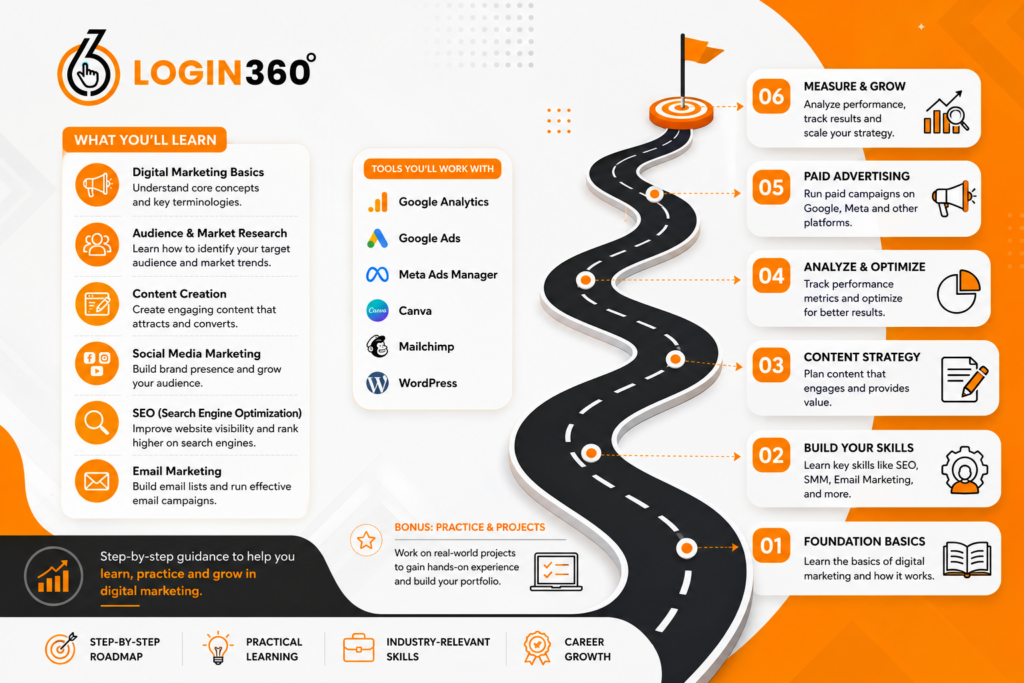
This blog gives you a clear, step-by-step path so you don’t feel lost figuring out where to begin. It covers what each channel in digital marketing actually means, the order you should learn them in, and roughly how long each stage takes.
What Is Digital Marketing?
In simple terms, digital marketing is using online platforms — Google, Instagram, Facebook, YouTube, email — to promote a business or brand. Unlike traditional marketing (TV ads, newspaper ads, pamphlets), it offers precise targeting, real-time results, and much lower costs. With traditional marketing, it’s hard to measure exactly how many people saw or responded to an ad. With digital marketing, every click, view, and sale can be tracked accurately. This is exactly why business owners find digital marketing so appealing — they know precisely where their money is going and what it’s bringing back.
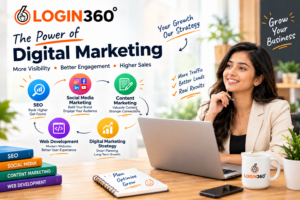
The field includes SEO, social media, content, paid ads, email, and analytics — all these pieces come together to form the full digital marketing ecosystem. Each channel serves a different purpose, but they all work toward one common goal: building brand awareness and generating sales or leads.
Why Digital Marketing Is a Good Career Choice
Digital marketing is one of the fastest-growing career options, offering excellent opportunities across industries such as IT, e-commerce, healthcare, education, real estate, and finance. As businesses continue to expand their online presence, the demand for skilled digital marketers keeps increasing, creating a wide range of job opportunities. One of the biggest advantages of this career is its flexibility. Many companies offer freelance and remote work opportunities, allowing professionals to work from anywhere and collaborate with clients worldwide. It is also a cost-effective career to begin, as a laptop, internet connection, and the right training are often enough to develop job-ready skills.
Another reason to choose digital marketing is its dynamic nature. New technologies, AI tools, SEO updates, and social media trends continuously reshape the industry, making learning an ongoing process and helping professionals stay competitive. Fresh graduates and career switchers can also enter the field without a specific degree, as employers often value practical skills, certifications, and hands-on experience.
Understand the Basics
- Marketing Funnel: Learn the stages of the customer journey—Awareness, Interest, Decision, and Action—and how marketing strategies support each stage.
- Target Audience and Buyer Personas: Understand how to identify your ideal customers based on their demographics, interests, behaviors, and needs.
- Branding Fundamentals: Learn the basics of branding, including creating a consistent logo, brand voice, messaging, and visual identity across all platforms.
- Online vs. Offline Marketing: Explore the key differences between digital marketing channels and traditional marketing methods, along with their advantages and use cases.
- Customer Journey: Understand how customers interact with a brand at different touchpoints, from discovering a product to making a purchase and becoming loyal customers.
Learn SEO
SEO (Search Engine Optimization) is about getting your website to rank higher on Google. It brings free, organic traffic, which makes it extremely valuable for any business. Once a paid campaign ends, the traffic stops — but SEO keeps bringing in visitors day after day.
Topics to learn:
- Keyword research — finding out what customers are actually searching for
- On-page SEO (title tags, meta descriptions, headings, image alt text)
- Off-page SEO (backlinks, guest posting, brand mentions)
- Technical SEO basics (site speed, mobile-friendliness, sitemaps)
- Local SEO (Google Business Profile optimization, local citations)
Social Media Marketing
Planning a Content Calendar: Organize and schedule content strategically to maintain consistency and maximize audience engagement.
Reels and Short-Video Strategy: Create engaging short-form videos that capture attention and increase reach on social media platforms.
Hashtag Research and Trending Topics: Use relevant hashtags and trending conversations to improve content visibility and reach a larger audience.
Engagement and Community Management: Build strong relationships with your audience by responding to comments, messages, and customer interactions promptly.
Basics of Paid Social Ads: Understand how to create targeted advertising campaigns that increase brand awareness, website traffic, and conversions.
Content Marketing
Content marketing is the process of creating and sharing valuable, relevant, and engaging content to attract, educate, and retain a target audience. Instead of directly promoting products or services, it focuses on providing useful information that builds trust and encourages potential customers to take action. Common forms of content marketing include blog posts, videos, infographics, ebooks, case studies, podcasts, and social media content. Since search engines prioritize high-quality and informative content, SEO and content marketing work together to improve website visibility, increase organic traffic, and generate qualified leads. One of the core skills taught in content marketing is blog writing, where learners create informative, well-structured, and easy-to-read articles that answer users’ questions while following SEO best practices. Another important topic is storytelling techniques, which help marketers create content that connects emotionally with readers, making the message more engaging, memorable, and persuasive.
The syllabus also covers content repurposing, a strategy that maximizes the value of existing content by converting a single blog into multiple formats such as short videos, social media carousels, infographics, email newsletters, or podcasts. This helps businesses reach different audiences across multiple platforms without creating entirely new content every time. In addition, students learn copywriting basics, including how to write compelling headlines, engaging introductions, persuasive product descriptions, and effective calls-to-action (CTAs). Strong copywriting encourages users to click, subscribe, download, or make a purchase. Together, these content marketing skills enable businesses to build brand authority, improve customer engagement, strengthen SEO performance, and achieve long-term digital marketing success.
Paid Advertising
Campaign Structure: Organize campaigns with clear objectives, ad groups, and ads to improve performance and campaign management.
Keyword Bidding : Understand how to bid strategically on keywords to maximize visibility while controlling advertising costs.
Audience Targeting : Reach the right audience by targeting users based on demographics, interests, behaviors, and location.
Budget Optimization: Allocate your advertising budget effectively to maximize returns and improve campaign efficiency.
A/B Testing Ads: Compare different ad versions to identify the best-performing creatives, headlines, and calls to action.
Email Marketing
Email marketing is still one of the most effective channels — it has consistently proven to deliver high ROI. And unlike social media, where algorithms keep changing, your email list is an asset you fully own.
- Building an email list — using signup forms and lead magnets
- Newsletter design — clean, mobile-friendly templates
- Automation tools (like Mailchimp or HubSpot) — welcome series, drip campaigns
- Subject line optimization — to improve open rates
- Analyzing open rates and click-through rates — tracking who opened and clicked
Analytics and Tools
You can’t make good decisions without looking at the data. Knowing which campaigns are working and which aren’t makes analytics an essential skill, not an optional one.
- Google Analytics — tracking website traffic and user behavior
- Google Search Console — checking SEO performance and indexing issues
- Meta Business Suite — tracking Facebook and Instagram performance
- SEMrush or Ahrefs (at a basic level) — for competitor research and keyword tracking
- Canva (for basic design) — creating quick graphics
Certifications and Portfolio
There are plenty of free certifications available, and they add real weight to your career. Certifications on a resume give recruiters confidence that you’ve taken the skill seriously and learned it properly.
- Google Digital Garage — a solid starting point for fundamentals
- HubSpot Academy — covers inbound marketing and content strategy
- Google Ads and Analytics certifications — practical and industry-recognized
- Meta Blueprint — specifically for social media ads
Along with certifications, build a small portfolio — sample blogs, mock ad campaigns, or a personal website. A portfolio lets you demonstrate your skills practically in an interview, which carries more weight than simply listing a degree or certificate.
Internships or Freelance Projects
Gaining practical experience through internships or freelance projects is one of the best ways to build confidence and develop real-world digital marketing skills. Beginners can start by offering their services to small businesses, local shops, or startups at a low cost—or even for free—to gain hands-on experience and create a strong portfolio. Freelance platforms also provide opportunities to work on small projects, helping you improve your skills while earning income and building client relationships.
Applying for internships, including unpaid ones, is another effective way to learn from experienced professionals, understand industry workflows, and gain exposure to live marketing campaigns. In addition, creating and managing your own blog, YouTube channel, or Instagram page serves as an excellent personal practice project. It allows you to experiment with SEO, content creation, social media marketing, analytics, and audience engagement while showcasing your abilities to future employers or clients. These practical experiences not only strengthen your resume but also demonstrate your ability to apply digital marketing concepts in real-world situations, making you more competitive in the job market.
Common Mistakes Beginners Make
Many beginners make avoidable mistakes that slow their progress in digital marketing. One of the most common is trying to learn every digital marketing channel at the same time, which often leads to confusion and a lack of focus. Another mistake is spending too much time studying theory without applying the concepts through practical projects, internships, or personal websites. Since digital marketing evolves rapidly, failing to stay updated with the latest trends, AI tools, search engine algorithm changes, and platform updates can make your skills outdated.
Many beginners also apply for jobs without building a portfolio, even though employers typically want to see real examples of campaigns, blog posts, websites, or social media work rather than just certifications. Another common misconception is expecting immediate success, especially with SEO, where meaningful results often take weeks or months of consistent effort. Finally, some beginners rely on assumptions instead of analyzing performance data. Learning to use analytics tools and making data-driven decisions is essential for improving campaigns, measuring results, and becoming a successful digital marketing professional.
Conclusion
Digital marketing is a wide field, but with the right roadmap, it can be mastered step by step. Start with the basics, then gradually work through SEO, social media, content, ads, email, and analytics. Don’t rush to finish every step in a day — take the time to properly practice each topic. Combine certifications with practical projects, then get real experience through internships or freelance work. All of this together makes your resume and portfolio strong enough to stand out in the job market. Stay consistent, and in a matter of months you’ll turn into a confident digital marketer. Learn in the right order, be patient, focus on practical work, and this field has a genuinely good future ahead.