

Table of Contents
Introduction
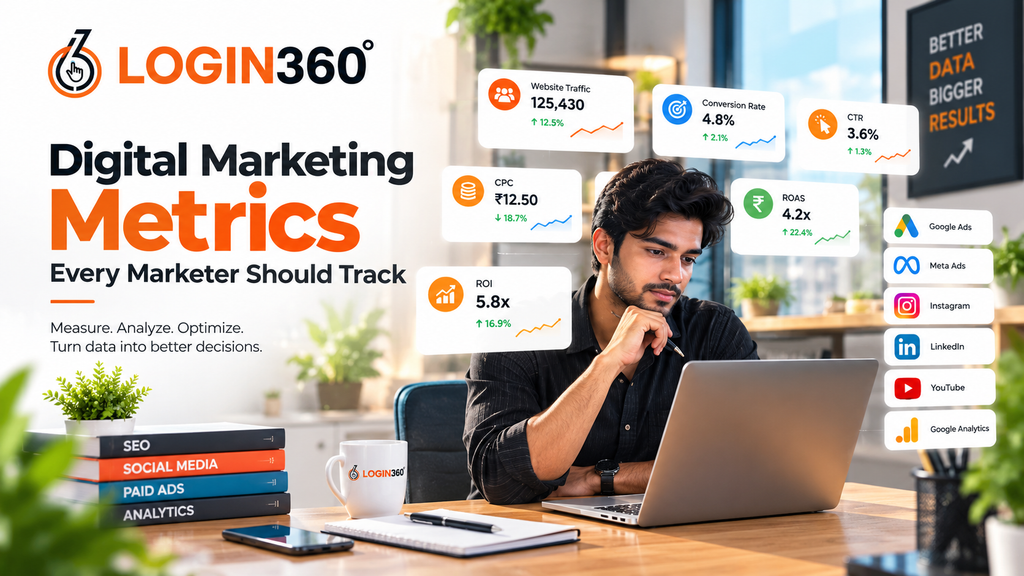
Digital marketing is one of the ways for businesses to connect with customers grow brand recognition and boost sales. Digital Marketing Metrics, Simply launching ads on platforms like Google, Instagram, Facebook, YouTube or LinkedIn does not mean success. Marketers must know how their campaigns are doing. They need to see if the efforts are helping the business reach its goals. This is why digital marketing metrics matter. By tracking the metrics marketers can find what works see where changes are needed use budgets wisely and make decisions based on real data.
What Are Digital Marketing Metrics?
Digital marketing metrics are numbers that show how online marketing activities are performing. These numbers help marketers understand website traffic, how audiences engage, how ads perform, how many people convert and the overall return on investment.
Different types of campaigns need metrics.
1. Website Traffic
Website traffic is one of the basic metrics every digital marketer should keep an eye on. It shows how many people visit a website and gives a clue about how different marketing efforts are working.
Marketers can look at traffic from sources such as:
- Organic search
- Paid advertising
- media
- Direct traffic
- Referral websites
- Email marketing
Tracking where traffic comes from helps businesses see which channels bring the visitors. It also shows where they should put effort.
2. Conversion Rate
It’s good to get visitors to a website.. Turning those visitors into customers leads, sign-ups or other desired actions is even better.
Conversion Rate = (Number of Conversions ÷ Number of Visitors) × 100
Conversion rate can be used to measure:
- Product purchases
- Form submissions
- Course registrations
- App downloads
- Consultation requests
- Newsletter sign-ups
A low conversion rate could mean the landing page is not good the offer is weak the pricing is off the user experience is poor or the call-to-action is not strong.
3. Click-Through Rate (CTR)
Click-through rate shows how many people clicked on an ad, email link, search result or other clickable content after seeing it.
CTR = (Clicks ÷ Impressions) × 100
CTR is especially important for Google Ads, media ads, email campaigns and search engine optimization. A high CTR usually means the headline, image, keyword or message is relevant to the audience. If CTR is low marketers might need to improve the ad copy, visuals, targeting or call-to-action.
4. Cost Per Click (CPC)
Cost Per Click shows how much an advertiser pays, on average for each click on a paid advertisement.
CPC = Total Advertising Cost ÷ Number of Clicks.
A low CPC is not always better. Marketers should also look at the quality of the traffic. Whether those clicks lead to conversions.
5. Cost Per Acquisition (CPA)
Cost Per Acquisition shows the average amount spent to get one customer or one conversion.
CPA = Total Campaign Cost ÷ Number of Acquisitions
CPA is especially useful for performance-based marketing.
6. Return on Investment (ROI)
Return on Investment is one of the important metrics for measuring marketing profitability.
ROI = [(Revenue − Marketing Cost) ÷ Marketing Cost] × 100.
ROI helps businesses know if their marketing money is earning returns.
7. Return on Ad Spend (ROAS)
ROAS focuses on advertising spending. It shows how much revenue comes from every rupee spent on ads.
ROAS = Revenue from Ads ÷ Advertising Cost.
ROAS is very useful for e-commerce. Paid ads because it lets marketers compare different campaigns and ad groups.
8. Bounce Rate and Engagement
Bounce rate gives a look into how visitors use a website after arriving at a page. The name and calculation can change depending on the analytics tool used.
Marketers should also check engagement signals such as:
- Engaged sessions
- engagement time
- Pages viewed
- Landing-page engagement
- Scroll activity
These metrics can help show if website content is interesting and helpful to visitors.
9. Social Media Engagement Rate
Digital Marketing Metrics, Social media engagement measures how audiences interact with content through likes, comments, shares, saves, clicks and other actions. Engagement rate helps marketers see if their content is connecting with their audience not just showing up. High engagement can mean the content is relevant, fun, educational or useful. Marketers should compare types of content to find out what their audience likes.
10. Reach and Impressions
Reach means the number of people who saw the content while impressions mean how many times the content was shown. These metrics are great for brand awareness campaigns.
11. Email Open Rate and Click Rate
Digital Marketing Metrics, For email marketing marketers often track rate and click rate. Open rate tells how many people opened the email while click rate shows how many clicked on links or calls-to-action in the email.
These metrics can help improve:
- lines
- Email content
- Personalization
- Offers
- Calls-to-action
- Sending frequency
Email performance should be judged with conversions and revenue not open rate.
12. Customer Lifetime Value (CLV)
Customer Lifetime Value estimates how much a customer can bring to a business over time. A customer who buys once might seem valuable than one who keeps buying. CLV helps marketers see the long-term benefit of customer acquisition. When CLV is compared with customer acquisition cost businesses can decide how much they should spend to get and keep customers.
13. Customer Acquisition Cost (CAC)
Digital Marketing Metrics, Customer Acquisition Cost shows the cost of getting one new customer.
CAC = Total Sales and Marketing Costs ÷ Number of New Customers
CAC is a business number because it links marketing spending to customer growth. If acquisition costs keep rising while customer value stays low businesses may need to improve targeting, conversions or retention.
14. Organic Search Performance
SEO is a long-term strategy. So marketers should check search performance regularly.
Important SEO metrics include:
- Traffic
- Search impressions
- Search clicks
- Click-through rate
- Keyword rankings
- Conversions from organic search
- Indexed pages
These metrics help marketers see how well their site shows up in search and brings in the visitors.
15. Marketing Qualified Leads (MQLs)
Digital Marketing Metrics, businesses that focus on generation the number of leads does not tell the full story. Marketing Qualified Leads are prospects that meet criteria showing they might be interested or valuable.
Tracking MQLs helps marketing and sales teams see if campaigns are getting prospects, not just more leads.

How to Choose the Right Digital Marketing Metrics
Digital Marketing Metrics, Marketers should avoid tracking every metric just because they’re available. Instead metrics should be linked to campaign goals.
Conclusion
Tracking marketing metrics is essential to understand campaign success and grow sustainably. Metrics like website traffic, conversion rate, CTR, CPC, CPA, ROI, ROAS, engagement, customer acquisition cost and customer lifetime value give marketers insights, into what works and what needs fixing. Of guessing businesses can use these numbers to improve campaigns use budgets better understand their customers and get better results. The best marketers are not those who run campaigns. They are those who measure, analyze, optimize and improve their marketing strategies.
LEARN MORE WITH LOGIN360.