

Introduction
Can Non-Technical Students Build a Career in Full Stack Development? This is one of the most frequent questions that students interested in IT but have studied arts, commerce, management, or humanities ask themselves. The increasing need for web applications and online services makes full stack development a promising career choice for students with various academic backgrounds. Although a technical education may be useful, there are many ways of acquiring necessary skills in order to get into web development.Full stack development presupposes work with frontend and backend technologies when creating web applications. Initially, students without any technical background may find programming alienating, but thanks to proper learning strategies and continuous practice, they can acquire the necessary technical knowledge and problem-solving skills.
Understanding Full Stack Development
To answer the question “Can Non-Technical Students Build a Career in Full Stack Development?”, it is first necessary to know about what full stack development is all about. The idea is to build the frontend and the backend of a web application.The frontend refers to those features that users see and interact with, like pages, buttons, forms, and menus. The tools that are often used to design such interfaces include HTML, CSS, and JavaScript. The backend refers to the processes that run behind the scenes. It controls the application logic, manages databases and authentication processes, and carries out server-side operations. They are implemented via the use of Node.js, Python, Java, and PHP.It is necessary for full stack developers to know how all these processes fit together. For beginners, there is no need to know everything from the very beginning.
Can Non-Technical Students Learn Full Stack Development?
Yes, it is possible for non-technical students to learn full stack development as long as they are ready to dedicate some time to learning about programming concepts and practice consistently. While a technical degree is a great foundation, there is no need for having one in order to learn how to code.Students with a degree in commerce, arts, management, humanities, and other non-technical degrees will obviously be unfamiliar with programming at first. However, this does not mean that they cannot learn how to program, as being unfamiliar with something does not make one incapable of doing that.The key aspect here is the desire to learn. Rather than learning about advanced frameworks right away, beginners should learn about basics such as variables, conditions, loops, functions, data types, and problem-solving.
Begin with the Fundamentals
These are the basics with which beginners could start:
- HTML for structuring web pages
- CSS for styling
- JavaScript for adding interactivity
- Frontend frameworks like React
- Backend technologies such as Node.js
- Databases like MySQL and MongoDB
- Working with APIs and the server
- Version control with Git and GitHub
The list above could change depending on the chosen learning path, but what is important here is to understand the basic concepts and learn how technologies interact with each other.
Learning Programming Through Practical Learning
For those who do not have a technical knowledge base, programming appears difficult initially because of its logical nature. Besides the theoretical part, practice is crucial for students. They can create simple projects by themselves. Thus, they can develop a calculator when they study JavaScript or create a portfolio page with the use of HTML and CSS. With further practice, they can use frontend and backend technologies to make registration or task management apps. Problem solving is another skill required in full stack development since there are always some bugs.
Know How Frontend and Backend Interact
Another important aspect of mastering full stack development and solving the problem Can Non-Technical Students Build a Career in Full Stack Development? is knowing how frontend and backend technologies work together to build web applications. A full stack developer should understand how communication between these technologies makes web applications work.
Consider an online form where a user fills out a registration form. This data is provided by the user in the frontend technology and then passed to the backend using an API. Next, the backend technology processes the request and stores the data in the database. Later on, when the user enters the data to log in, the backend checks this data and responds to the frontend with the necessary information.By understanding this process, non-technical students can understand how different technologies interact with each other, instead of thinking about them separately. By practicing, one can learn all these aspects gradually.
Create Projects for Your Portfolio
The following projects could feature in the portfolio of a beginner:
- Personal portfolio website
- To-do list application
- Blog website
- E-commerce platform
- Student management system
- Expenses tracking system
- Appointment scheduling application
- Basic full stack authentication system
Projects are not supposed to be overly complicated initially. The important thing here is that a student demonstrates his/her understanding of various development concepts and is capable of building working applications.Once skills are improved, the complexity of projects can grow, and projects can incorporate databases, authentication, API, responsive design, etc.
Does It Matter to Have a Degree in Computer Science for Non-Technical Students?
Can Non-Technical Students Build a Career in Full Stack Development? A computer science degree can give one knowledge of algorithms, data structures, operating systems, computer networks, and software engineering. But there are also ways that students can acquire the necessary skills via education or training programs. A technical degree is not the only way to gain the knowledge required for a full-stack development career.
Structure Your Learning Process
While self-learning is flexible, learners who are new to a topic could occasionally find it hard to know what they need to learn. Structured courses help one to progress from basics to advanced levels.An ideal learning path ought to include basics, frontend, backend, databases, API, version control, projects, and deployment.Mentors can guide learners on how to identify errors and complex subjects. Projects can be used to enhance self-belief.The most important thing, however, is not just to go through a course but to practice what you have learned.
Enhance Your Communication and Collaboration Skills
While technical skills are very essential, software development involves collaboration. The developer needs to interact with the designers, project manager, marketer, client, and fellow developers.Even non-technical students have transferable skills that they can apply to professional development. Communication skills, presentation, team work, time management, and critical thinking skills can assist in developing professionally.Acquiring skills of explaining technical concepts can be helpful while working with non-technical professionals.
Challenges Faced by Non-Technical Students
There can be difficulties for some people moving into full stack development. The beginner struggles with new vocabulary, comprehending the program logic, debugging problems, and handling multiple technologies.Some people also struggle because of the tendency to compare themselves to more experienced developers. This puts extra pressure on them.It would help a lot if they focused on making constant progress. It is better to learn one concept correctly than cover many topics and miss out on the important details.Also, making mistakes and debugging them is a normal process.
Career Opportunities in Full Stack Development
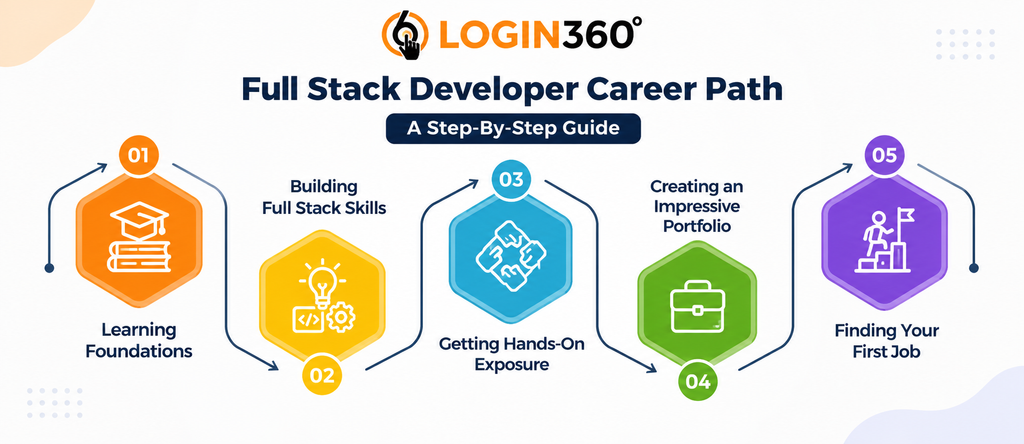
Studying full stack development creates opportunities in a variety of technology-based jobs. Based on skills and expertise, some of the jobs that can be looked into include:
- Junior Full Stack Developer
- Frontend Developer
- Backend Developer
- Web Developer
- Software Developer
- Application Developer
Learners can also apply their knowledge of full stack development to undertake freelance projects, build business sites, make personal applications, or even entrepreneurship.
Conclusion
Thus, Can Non-Technical Students Build a Career in full-stack development? Yes, they can, as long as they approach the topic patiently and consistently enough.Having a non-technical education is associated with the necessity of spending more time on understanding particular things in the very beginning, however, it does not mean that a student will not be able to learn development. By learning how to code from scratch, practicing with small-scale projects, learning frontend and backend technologies in the right order, and creating a portfolio, one can build a solid base of knowledge necessary for a full stack development career.The first and foremost thing to do is to start from the beginning rather than being afraid of the amount of technologies to learn.
Kick Start Your Full Stack Development Career With Login360
Do you want to turn your passion for developing websites into your profession? Then Login360 offers technology courses for career purposes where you can learn the practical aspects of the same with real-world skills. You should try full stack development training at Login360 and build your future in the technology world.