
Table of Contents
Introduction
When you’re learning digital marketing, search engine optimization (SEO) plays an important role in improving website visibility and attracting organic traffic. One of the most important SEO concepts beginners should understand Backlink in Digital Marketing and how it helps websites rank higher on search engines like Google. A backlink is a link from one website to another. When a trusted website links to your content, search engines consider it a signal that your website provides useful and relevant information. High-quality backlinks can improve your website’s credibility, strengthen its authority, and increase its chances of appearing in search results. Understanding Backlink in Digital Marketing helps businesses and website owners develop effective SEO strategies. Backlinks connect different websites and help users discover useful resources across the internet. In this article, we’ll explore the meaning of backlinks, their importance, different types, quality factors, and practical strategies for building strong backlinks.
What Is a Backlink in Digital Marketing?
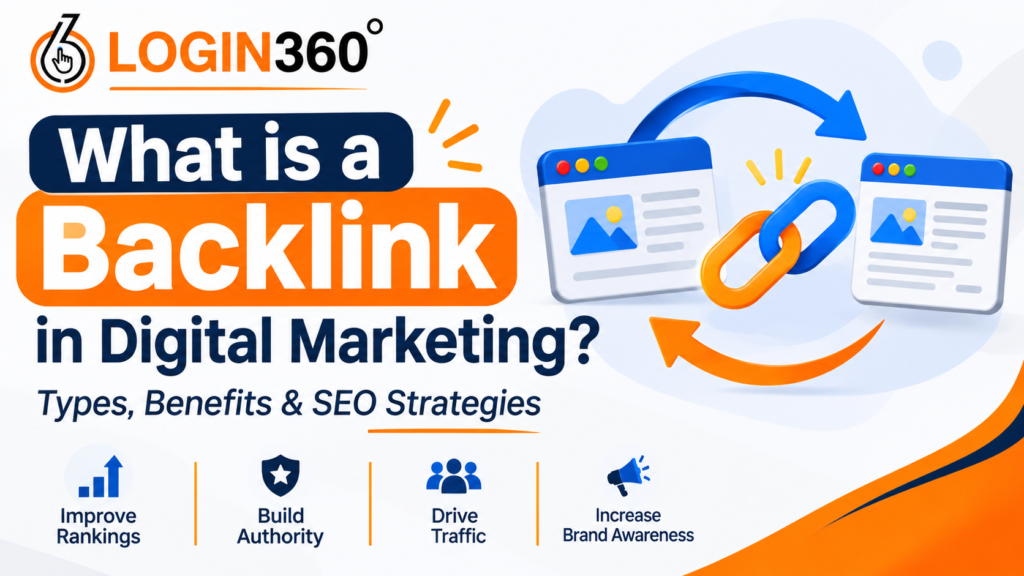
A backlink, also called an inbound link or incoming link, is a hyperlink on one website that points to another website. Backlinks are an important part of search engine optimization because they help search engines discover content and understand connections between different websites. When one website links to another, it provides visitors with an additional resource where they can find useful information. Search engines also use backlinks as one of several signals when evaluating the relevance and credibility of web pages.
What Is a Backlink in Digital Marketing? Simple Example
Let’s say you have a website for a digital marketing training institute. A popular educational website publishes an article about the best digital marketing courses and includes a link to your website. This incoming link is called a backlink. Visitors reading that article can click the link and visit your website. Search engines may also consider this link when evaluating your website’s relevance and credibility. To understand Backlink in Digital Marketing, remember that a backlink connects one website to another and provides users with additional information. It can help visitors discover your website while supporting your overall SEO strategy.
Why Are Backlinks Important in Digital Marketing?
Backlinks are important because they help search engines understand the relationship, relevance, and credibility of websites. Building quality backlinks can support your SEO efforts in several ways. Understanding Backlink in Digital Marketing also helps businesses recognize how external links contribute to online visibility and website growth.
- Improve Search Engine Rankings: High-quality backlinks can help improve your website’s position in search engine results. When relevant and trustworthy websites link to your pages, search engines may consider those links as signals of credibility and usefulness. For example, if two websites publish similar content, relevant and authoritative backlinks may give one page an advantage in search rankings.
- Increase Website Authority: Backlinks from trusted websites can strengthen your website’s credibility and authority. When respected sources refer to your content, visitors may also develop more confidence in your website. Understanding Backlink in Digital Marketing helps businesses recognize why earning relevant links is important for building a trustworthy online presence. Although Domain Authority is a third-party SEO metric rather than a Google ranking factor, earning quality backlinks can help improve your website’s overall link profile.
- Drive Referral Traffic: Backlinks do not only support SEO; they can also bring visitors directly to your website. When users click your website link from another blog, article, or online platform, they generate referral traffic. These visitors may become potential leads, customers, or subscribers if your content matches their interests.
- Faster Search Engine Indexing: Search engine crawlers discover new website pages by following links. When other websites link to your content, search engine bots may discover those pages more easily. This can support the crawling and discovery process, especially for new websites and recently published blog posts.
- Build Brand Awareness: When your website receives links from popular blogs, educational platforms, and industry-related websites, more people get opportunities to discover your brand. Consistent brand mentions and relevant backlinks can help businesses reach new audiences, build recognition, and improve their online presence.
Different Types of Backlinks in Digital Marketing
Not all backlinks provide the same value. Understanding the different types of backlinks helps website owners choose suitable link-building strategies. When learning Backlink in Digital Marketing, it is equally important to understand how different backlink types work and contribute to website visibility.
- DoFollow Backlinks: DoFollow is a commonly used term for standard links that do not contain a link attribute such as nofollow, sponsored, or ugc. These links can pass ranking signals between web pages. For example, when a relevant blog links to your website naturally within its content, search engines can use that link as a signal when evaluating your page.
- NoFollow Backlinks: NoFollow backlinks contain the rel=”nofollow” attribute, which indicates that the website does not want to associate with or endorse the linked page in the usual way. These links can still bring referral traffic, increase brand visibility, and help people discover your website. Google may also treat nofollow as a hint rather than an absolute instruction.
- Editorial Backlinks: Editorial backlinks are naturally earned when another website links to your content because it provides useful information or valuable resources. For example, an industry blog may refer to your research article while explaining a particular digital marketing topic. These naturally earned links can be valuable for building website credibility.
- Guest Post Backlinks: Guest posting involves writing an article for another website and publishing it on that platform. A guest article may include a relevant link to your website when it provides additional value to readers. However, guest posting should focus on useful content and genuine audience value rather than creating links solely to manipulate search rankings.
- Directory Backlinks: Business directories and online listing platforms allow companies to submit their business details, website links, contact information, and services. For example, businesses can register on relevant local directories and industry-specific platforms to improve online visibility and help potential customers discover their services.
- Social Media Backlinks: Social media backlinks are website links shared through platforms such as Facebook, Instagram, LinkedIn, and Pinterest. These links generally do not provide the same ranking signals as traditional editorial links, but they can increase content visibility, attract visitors, and encourage people to share your articles.
What Makes a High-Quality Backlink in SEO?
- Relevant: The website linking to your content should be related to your industry or topic. For example, a backlink from a digital marketing blog is more relevant to a digital marketing website than a link from an unrelated website.
- Authoritative: Links from trustworthy and established websites can provide stronger credibility signals. Focus on websites that publish reliable information and maintain good content standards.
- Traffic-Driving: A useful backlink can attract real visitors from another website. Links placed on pages that receive relevant traffic may help bring potential customers to your website.
- Naturally Placed: Backlinks should appear naturally within relevant content. Links that provide additional information to readers are generally more useful than links placed randomly in footers, sidebars, or unrelated sections.
- With Good Anchor Text: Anchor text refers to the clickable words used in a hyperlink. For example, the phrase “Learn Digital Marketing” can link to a digital marketing course page. Descriptive and relevant anchor text helps readers understand what they can expect after clicking the link. Avoid using the same exact-match keyword repeatedly because unnatural anchor text patterns may create SEO risks.
How Google Evaluates Backlinks
Google uses different systems to understand and evaluate links between websites. Backlinks are one of several signals that can help search engines determine the relevance and usefulness of web pages. Some important factors include:
- Relevance: Whether the linking website and linked content are related.
- Link Quality: Whether the link comes from a trustworthy and useful source.
- Anchor Text: The clickable words that describe the linked page.
- Natural Link Profile: Whether backlinks appear to have been earned naturally.
- Spam Indicators: Whether links are created through manipulative or unnatural practices.
- Linking Domains: The number and quality of different websites referring to your content.
Google aims to reward useful content and natural links rather than websites that try to manipulate rankings through artificial link-building activities.
Bad Backlinks to Avoid
- Spammy and suspicious websites.
- Low-quality and irrelevant directories.
- Private link networks and link farms.
- Websites with automatically generated content.
- Paid link schemes that pass ranking credit.
- Unrelated websites created mainly for link building.
Best Ways to Build Backlinks for Digital Marketing
- Create High-Quality Content: Understanding Backlink in Digital Marketing helps you recognize why creating useful and informative content is one of the best ways to attract natural backlinks. Informative blog posts, detailed industry guides, original research, statistics, infographics, educational videos, and practical tutorials can encourage other websites to link to your content. When your content answers users’ questions and provides valuable information, other websites may naturally refer to it as a useful resource, helping you earn quality backlinks and improve your website’s SEO
- Guest Blogging: Guest blogging is a popular link-building strategy in which you contribute informative articles to relevant websites. Choose websites that have genuine audiences and publish quality content. Write original articles that provide useful information and include relevant references where appropriate. This approach can help you reach new audiences, build industry relationships, and improve brand awareness.
- Business Listings: Submitting your website to trusted business directories can help improve your online presence. Include accurate business information such as your company name, address, phone number, website URL, and services. For local businesses, relevant business listings can also support local SEO and make it easier for potential customers to find them.
- Share Content on Social Media: Promote your blog posts, guides, and articles on social media platforms such as Facebook, Instagram, LinkedIn, and Pinterest. Sharing useful content can increase its reach and encourage other bloggers, businesses, and content creators to discover and reference your website.
- Build Relationships: Connect with bloggers, industry professionals, influencers, and website owners in your niche. You can build relationships by participating in industry discussions, sharing useful resources, collaborating on content, and providing helpful insights. Genuine professional relationships can create opportunities for natural backlinks and long-term business growth.
- Broken Link Building: Broken link building involves finding links on other websites that lead to unavailable or removed pages. First, identify relevant websites that contain broken links. Then, check whether you have useful content that can replace the missing resource. You can contact the website owner and politely suggest your content as an alternative. If they find it useful, they may update the broken link with your resource.
Common Backlink Mistakes
- Buying backlinks from unreliable websites.
- Creating links on spammy platforms.
- Building backlinks from unrelated websites.
- Repeating exact-match anchor text excessively.
- Submitting content to low-quality directories.
- Creating too many artificial links.
- Ignoring website and content quality.
- Using automated backlink-building software.
Backlinks and Local SEO
Backlinks also play a useful role in local SEO by helping businesses improve their online visibility within specific geographical areas. For example, when local newspapers, community websites, educational institutions, and relevant business directories link to your website, more people in your area may discover your business. Businesses that serve specific locations should focus on earning backlinks from relevant local websites, industry platforms, and community resources. Local link-building strategies can also complement Google Business Profile optimization, accurate business listings, and customer reviews.
Future of Backlinks in SEO
- Creating original and helpful content.
- Earning links from relevant websites.
- Improving website user experience.
- Building genuine brand recognition.
- Developing strong industry relationships.
- Following ethical link-building practices.
Conclusion
Understanding Backlink in Digital Marketing is essential for developing a successful search engine optimization strategy. Backlinks help search engines discover website pages, understand connections between websites, and evaluate the relevance and credibility of online content. High-quality backlinks from relevant and trustworthy websites can support better search visibility, increase referral traffic, build brand awareness, and strengthen your website’s online presence. Instead of focusing only on the number of backlinks, prioritize quality, relevance, and natural link-building practices. Create valuable content, build relationships with other websites, and follow ethical SEO techniques to achieve sustainable results. A strong backlink strategy can support your long-term digital marketing goals and help your website reach a wider audience. Learn Digital Marketing with Login360 and develop practical skills in SEO, content marketing, social media marketing, and other essential digital marketing techniques