
Introduction
Technology is continuously advancing, and many companies now develop and use digital products and services such as smartphone applications, e-commerce platforms, online banking systems, and cloud-based solutions.Login360,Full Stack Product Engineering,Chennai have knowledge of frontend and backend development, along with other important areas such as database management, software testing, and deployment. These skills allow them to design, develop, and maintain complete digital products.Students, recent graduates, and aspiring computer scientists can explore this career path to expand their technical knowledge and apply theoretical concepts in practical projects. Full Stack Product Engineering in 2026 also provides opportunities to work on different types of software applications.
What Is Full Stack Product Engineering?
Full Stack Product Engineering in 2026 involves designing, developing, and maintaining complete digital products. It covers frontend development, backend development, database management, software testing, and product requirements.The frontend refers to the visual part of software that users can see and interact with. The backend includes application logic, servers, and databases that support the digital product.Understanding both areas enables Full Stack Product Engineers to develop functional, reliable, and user-friendly digital products.
Why Work in Full Stack Product Engineering in 2026?
1. Growing Demand for Skilled Developers
Businesses across different industries use digital products such as websites, smartphone applications, cloud platforms, and online services. This creates opportunities for skilled developers who understand multiple stages of digital product development.Full Stack Product Engineers can contribute to different parts of a project. As a result, they can explore employment opportunities in startups, IT companies, and established technology organisations.
2. Exposure to Multiple Technologies
One of the major advantages of this career is the opportunity to work with a wide range of technologies.Frontend technologies include HTML, CSS, JavaScript, and React. Backend development involves technologies such as Node.js, Python, and Java.Developers can also gain knowledge of database management, API integration, cloud computing, and software testing.
3. Broad Career Opportunities
Learning Full Stack Product Engineering helps developers understand frontend and backend technologies.Since Full Stack Product Engineers understand different areas of software development, they can explore various career opportunities.Some popular job roles include:
- Full Stack Developer
- Frontend Developer
- Backend Developer
- Software Engineer
- Product Engineer
- Application Developer
These career options allow individuals to choose roles based on their interests, technical knowledge, and professional goals.
4. Integration of Artificial Intelligence
Artificial Intelligence is increasingly influencing software development. In 2026, developers can use AI-powered tools for coding assistance, software testing, debugging, and improving productivity.Professionals with strong programming knowledge can use AI tools effectively and contribute to modern software development projects.Although AI is a useful resource, programming fundamentals, logical thinking, and problem-solving skills remain essential for successful software development.
5. Opportunities to Work on Real-World Projects
Full Stack Product Engineering provides opportunities to develop complete software applications.For example, developers can create an e-commerce platform with product details, user registration, payment integration, database management, and order tracking features.Working on practical projects helps students understand real-world development challenges and build a strong technical portfolio.
6. Suitable for Students and Career Changers
Full Stack Product Engineering in 2026 can be a suitable career option for computer science graduates, IT students, and individuals interested in transitioning into the technology industry.Through structured learning, technical training, and practical project experience, beginners can gradually develop the skills required for entry-level software development roles.
Key Skills Required for Full Stack Product Engineering
Individuals interested in Full Stack Product Engineering should develop technical and problem-solving skills to design, develop, test, and maintain digital products.
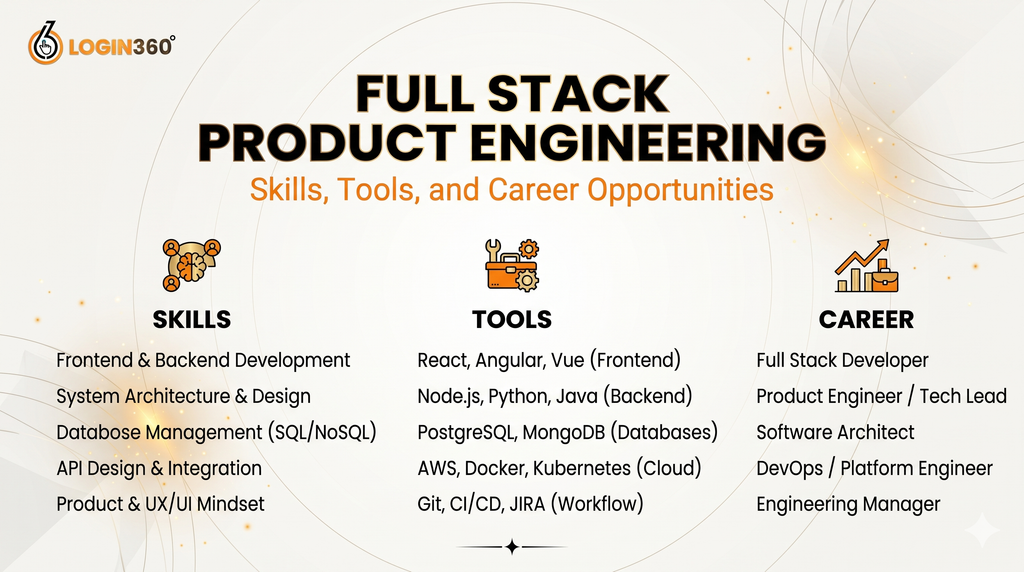
Some essential skills include:
- HTML and CSS: Used to create website structures, layouts, and visual designs.
- JavaScript: Adds interactive features and dynamic functionality to websites.
- React: Helps developers build modern and reusable frontend components.
- Node.js and Python: Used for backend programming and application logic.
- MySQL and MongoDB: Help store, organise, and manage application data.
- Git and GitHub: Support version control and team collaboration.
- API Integration: Connects different applications and software services.
- Software Testing: Identifies and fixes application errors and bugs.
- Cloud and Deployment: Helps host and launch digital products online.
- Problem-Solving: Helps developers identify and resolve technical challenges.
For learners interested in developing industry-ready technical skills, Full Stack Product Engineering Course in Coimbatore.offers training opportunities in software and emerging technologies. Exploring professional training programs can help learners strengthen their programming knowledge and career prospects.
Career Opportunities in Full Stack Product Engineering
As digital technology continues to advance, different job opportunities are becoming available for professionals with Full Stack Product Engineering knowledge.Full Stack Product Engineering offers opportunities to work in software development, web application development, and product engineering.Some common career roles include:
1. Full Stack Developer
Responsible for developing both frontend and backend components of web applications.
2. Frontend Developer
Designs user interfaces and improves the usability and overall experience of digital products.
3. Backend Developer
Works with server-side programming, databases, and application logic.
4. Software Engineer
Designs, develops, tests, and maintains software applications.
5. Product Engineer
Participates in designing and developing digital products based on business requirements and customer needs.Salary packages and job responsibilities depend on technical skills, professional experience, location, and employer requirements.
How to Become a Full Stack Product Engineer
Students and beginners can follow a structured learning approach to develop the skills required for this career.Continuous learning and practical project experience can help beginners prepare for entry-level software development opportunities.
- Learn Programming Fundamentals: Understand variables, data types, functions, loops, and basic programming concepts.
- Develop Frontend Skills: Learn HTML, CSS, JavaScript, and frontend frameworks such as React.
- Understand Backend Development: Practise server-side programming using Node.js, Python, or Java.
- Learn Database Management: Explore SQL, MySQL, and MongoDB to understand how application data is stored and managed.
- Practise Software Testing: Learn how to identify, test, and fix software issues.
- Build Practical Projects: Develop websites and applications to apply your programming knowledge.
- Learn Cloud and Version Control: Use Git, GitHub, and cloud platforms to manage projects, collaborate with teams, and deploy applications.
Commonly Used Tools in Full Stack Product Engineering
Developers use different tools in Full Stack Product Engineering in 2026 throughout the digital product development process.Knowledge of these tools helps developers understand modern software development workflows and industry practices.Developers use various tools in Full Stack Product Engineering to simplify coding, testing, and deployment.
- Visual Studio Code: Used for writing and editing code.
- Git and GitHub: Used for version control and team collaboration.
- React: Used for developing interactive frontend applications.
- Node.js: Used for server-side JavaScript development.
- MySQL: Used for relational database management.
- Postman: Used for API testing.
- Docker: Used for application containerisation.
- Cloud Technology: Used for hosting and deploying digital products.
Future Scope of Full Stack Product Engineering
The future of Full Stack Product Engineering is closely connected to developments in Artificial Intelligence, cloud computing, automation, cybersecurity, and digital transformation.Companies will continue to improve their digital products to enhance customer experiences and deliver business services more efficiently.Emerging technologies such as AI-powered applications, cloud-native development, microservices, and API-based systems are influencing modern software engineering.Developers who continuously update their technical knowledge and adapt to new technologies can explore different career opportunities in the software industry.
Conclusion
Working in Full Stack Product Engineering in 2026 provides individuals with opportunities to learn multiple technologies, develop complete digital products, and explore different software development careers.It can be a suitable career option for students, recent graduates, and aspiring developers who want to build a future in the technology industry.By developing essential programming knowledge, gaining practical project experience, and staying updated with modern technologies, individuals can build a strong foundation for a successful career in Full Stack Product Engineering.Learners looking for structured guidance can also explore the Full Stack Product Engineering Course,Kochi which covers frontend, backend, databases, testing, and AI-aided product development, and check its curriculum and tuition details directly.
Frequently Asked Questions (FAQs)
1. What is Full Stack Product Engineering?
Full Stack Product Engineering is the process of designing, developing, testing, and maintaining complete digital products, including frontend, backend, databases, and deployment.
2. Is Full Stack Product Engineering a good career in 2026?
Yes, Full Stack Product Engineering can be a good career choice in 2026 because businesses continue to invest in digital products, web applications, cloud platforms, and software solutions.
3. What skills are required to become a Full Stack Product Engineer?
Essential skills include HTML, CSS, JavaScript, React, Node.js, Python, database management, API integration, software testing, and problem-solving.
4. Can freshers learn Full Stack Product Engineering?
Yes, freshers can learn Full Stack Product Engineering by starting with programming fundamentals, practising frontend and backend development, and building practical software projects.
5. What are the career opportunities in Full Stack Product Engineering?
Career opportunities include Full Stack Developer, Frontend Developer, Backend Developer, Software Engineer, Product Engineer, and Application Developer.
6. How does Artificial Intelligence help Full Stack Product Engineers?
Artificial Intelligence helps developers with coding assistance, debugging, automated testing, and improving development productivity. However, programming knowledge and problem-solving skills remain important.
7. How long does it take to learn Full Stack Product Engineering?
The learning duration depends on an individual’s background, learning schedule, and practical experience. Beginners may need around 6–12 months of consistent learning and project practice to develop a foundation for entry-level opportunities.