

Introduction:
Many marketing teams use AI within their campaigns to provide insights into customer behaviors and improve efficiency. In 2026, AI can speed up the process of going from researching your audience to testing your campaign.digital marketing training in chennai This has been widely adopted by many marketers. 97% Of those surveyed in a 2026 Canva & Harris Poll survey say they use AI daily in their creative work. 87% Of consumers also feel the best advertising still needs a human touch. However, using AI can help marketers work more efficiently while ensuring that their marketing is still valuable, creative and trustworthy. (1,415 Marketing leaders and 3,547 consumers were surveyed across 7 countries.) [Source: Canva 2026 Report]
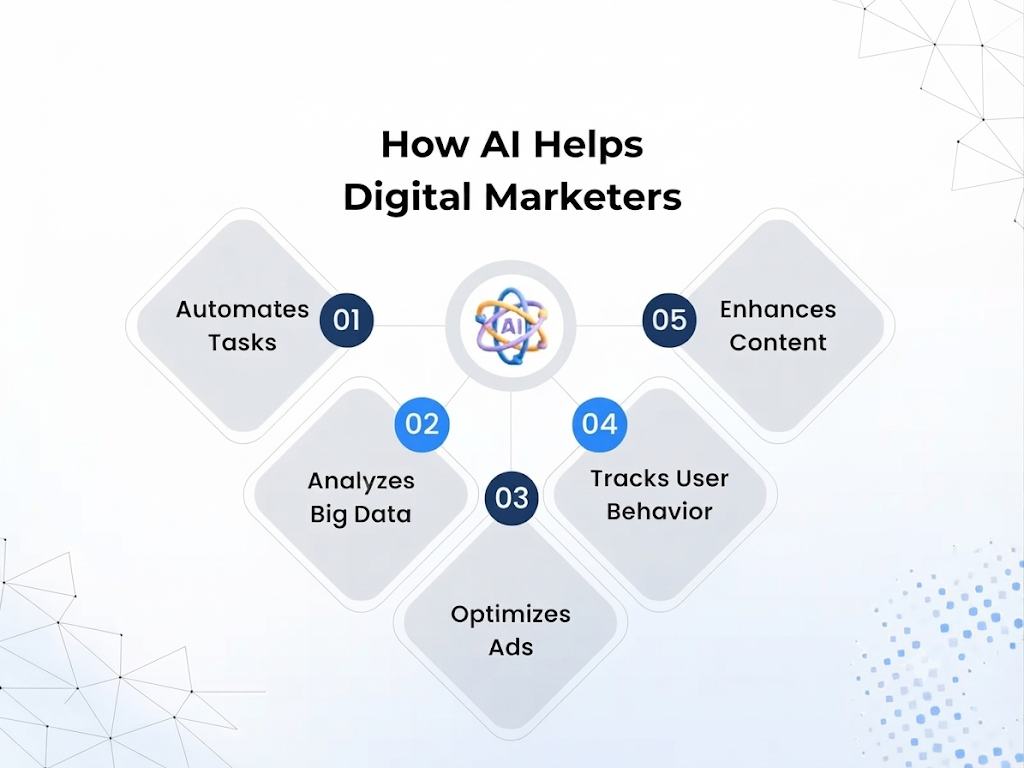
Here are some of the main ways AI is transforming digital marketing.
1. Customer Insights
Marketing teams including those just starting with basic digital marketing skills for beginners, often have a great deal of data to work with. Using AI you can spot trends within customer feedback, website analytics, campaign performance and survey results. This can help give you key takeaways from large amounts of data, segment your customers and show you any changes. You may find that customers who read a specific product guide are more likely to request a consultation. Or you may see from feedback that a certain feature has become more important for a certain audience. This will help with planning your campaign, giving you additional information about your product and creating additional messaging to follow up with them..
AI can help to identify:
- What are customers commenting on most often?
- What messages are performing well in our campaign?
- What are customers asking?
However, we should ensure that this data is being used to drive a decision. Whilst AI can identify there is a correlation between two pieces of data, it won’t necessarily tell us why this is happening or whether these data points are representative of the overall audience. You should always ensure you’re using the correct data and using your knowledge of your customers to determine the best action to take.
2. Personalized Content
AI can help you tailor your message to your audience. It can help you provide relevant examples, product information, calls to action and follow-up content based on where your customer is in their buyer journey. New customers may receive onboarding content, whereas existing customers may receive tips on how to use your product better. This can make your marketing feel more helpful and tailored to their interests. It can also help you customize your approved content to suit different regions, languages or audiences .However, there are some issues with this: 52% Of consumers said they felt invaded by personalized advertising in their 2026 Canva & Harris Poll survey, where the advert knew what they were going to buy before they even searched for it. Yet 68% said they didn’t mind using AI in advertising if it makes the ads more helpful. This shows that it’s important to ensure your content is relevant but not over the top. Always ensure you’re being open about how you’re using data, respecting any consent and preferences.
3. Efficient Content Creation
AI can help with many aspects of content creation. It can help you come up with headline ideas, provide an overview for articles, draft different email variations, provide visual ideas or customize your approved content for social media. This can be particularly useful when creating multichannel campaigns or testing different messages to specific audiences.However, AI won’t know your brand’s customers, product information or tone of voice. It may provide generic content, not include important context or provide misleading information confidently. You should ensure you’re guiding the AI and ensuring the content is reviewed before publishing.
A thoughtful process may include:
- Using AI to come up with headline or email subject line ideas.
- Using approved article content to create draft social media posts.
- Providing alternative messages for your campaign to test.
- Creating an overview to be developed by a subject-matter expert.
Ensure the content is fact-checked, tone of voice is correct, original and provides value. Add in any information that the AI wouldn’t know, such as expert knowledge, customer stories, original research or personal experience. Google states that AI can be a useful tool for researching and organizing your information, however if you’re creating large amounts of content without providing value to your reader, this can go against their policy on abusing scaled content. They also advise publishers to ensure their AI-generated content is fact-checked. [Source: Google Search Central] This shows it’s important to only create more content if it’s helping your audience.
4. Optimizing for AI search
Customers are using search tools which have natural language capabilities. This is an important change for beginners learning Google Ads skills. Customers are providing much more information with their searches. They might give background information on a situation, personal preferences and further questions. Brands need to understand what the actual question is and provide clear and reliable answers. In 2026 Google reported that on average searches using AI Mode in the US were 3x longer. This shows that some customers are using AI search tools to ask more detailed questions.
Ensure your content is easy to understand by:
- Having clear headers to explain the content.
- Answering common questions.
- Keeping your product, pricing and service information up to date.
- Providing original knowledge.
Whilst no brand can guarantee their page will be included in an AI response, it’s a good idea to monitor how you’re being discovered across multiple channels. This includes organic search, referral, social media, email and direct traffic. This way you can ensure you’re a valuable and memorable source of information.
5. Paid Media Testing
AI can help with paid media by providing variations, analyzing performance and helping you decide what to test. best digital marketing course in coimbatore This can help you identify what is working well with your audience by testing different headlines, images, offers or calls to action. Whilst this can speed up the process of creating variations, there should be a clear purpose behind the testing.
AI can help you:
- Create multiple variations of an ad based on one benefit.
- Identify trends from performance data.
- Organize ideas for your next creative test.
- Summarize what audiences/messages need to be reviewed.
Only make small changes. If you’re changing your audience, offer, creatives and landing page it can be hard to understand why your performance has changed. You’ll also need to have knowledge of Google Ads to ensure you’ve got the right objectives set up, understand your targeting, budgets and whether the AI suggestions are helping your business. Just looking at clicks won’t tell you if your ad is successful. Ensure you’re looking at quality leads, conversions, customer retention and costs. All statements in the creatives should be accurate.
6. Quick Response
AI chatbots and assistants can help provide quick responses to common questions, provide customers with helpful resources and offer basic support outside of office hours.
This can help with:
- Answering common questions.
- Providing links to relevant support.
- Explaining basic steps to get started.
- Gathering information.
Ensure the chatbot has accurate approved information and knows when to refer to a person. Some queries such as billing issues, sensitive queries and unusual product issues may require a human to provide judgement and empathy. Ensure you’re monitoring the chatbot conversations to see if there are any inaccuracies, regular questions and areas that aren’t helpful. This can help you provide clearer FAQs, product pages or customer emails.
7. Measuring Performance
Using AI won’t automatically improve your marketing. Whilst you may be saving time creating copy, you’ll need to ensure that your campaign—especially when leveraging social media marketing skills—is helping increase sales, improve retention, or reduce customer acquisition costs. Ensure you’re setting clear objectives and measuring something that relates to your objective.
Things you could measure include:
- How long it takes to create and approve your campaign.
- Cost per qualified lead/purchase.
- Customer satisfaction after using the support assistant.
- Completion rate of onboarding process.
Ensure you’re measuring how you’re performing currently so you can see how the new process is affecting you. Campaign performance can be affected by many factors including seasonality, budget and competition, so ensure you’ve got someone responsible for interpreting the changes. Having clear measurements will help you identify what AI you’re using that would be good to improve or expand.
8. Upskill Marketers
Using AI will change how much time marketers are spending on certain tasks. As AI can help with repetitive tasks such as research, writing and analysis, you can focus on strategic, creative direction and understanding your customers. Having skills such as clear writing, research, analysis and creative judgement will help ensure you’re guiding and evaluating the AI output.
Some skills you could train your team on include:
- Writing clear instructions.
- Fact-checking.
- Protecting customer and business information.
- Knowing when to refer to an expert.
- Ensuring brand voice is used.
Ensure you’re agreeing on what tools you can use, what information you shouldn’t include and who is responsible for reviewing the content. Having a short policy will help, but staff will also need time to practice. If your marketing includes sensitive information, it’s important to have human review.
Getting Started
Start with one simple task that is commonly used. This could include summarizing campaign feedback or creating draft social media posts. Decide what you want to achieve, what you’re going to measure and how you’ll review the output. If your output isn’t accurate or the quality isn’t good, improve your process.Once you have a reliable process, look at any related tasks. This could include using queries from your support assistant to help create an FAQ, which can then help with an email or campaign. Ensure you’re considering data quality, privacy, consent and brand standards.best digital marketing course in kochi
Conclusion:
AI is transforming digital marketing by helping teams analyse data, personalise content, create campaign assets, improve search visibility and provide quicker responses. This can free up marketers to focus on strategy. However, ensure you’re measuring if it’s helping.Technology won’t make your brand stand out. The best marketing will always come from creative ideas, accurate information, looking after your customers and building trust. In 2026, using AI to speed up processes and human judgement will help you work more efficiently and create relevant and distinctive experiences.
