

Table of Contents
Introduction
Technology is evolving rapidly, and businesses today need professionals who can handle both the front-end and back-end aspects of web development. This growing demand has made full stack development one of the most valuable skills in the IT industry. A full stack developer can build complete web applications, manage databases, create user-friendly interfaces, and ensure smooth communication between different parts of a software system. As organizations continue their digital transformation, companies are increasingly looking for developers who can contribute across multiple stages of a project. Learning full stack development not only improves technical expertise but also opens doors to better job opportunities, higher salaries, and long-term career growth.
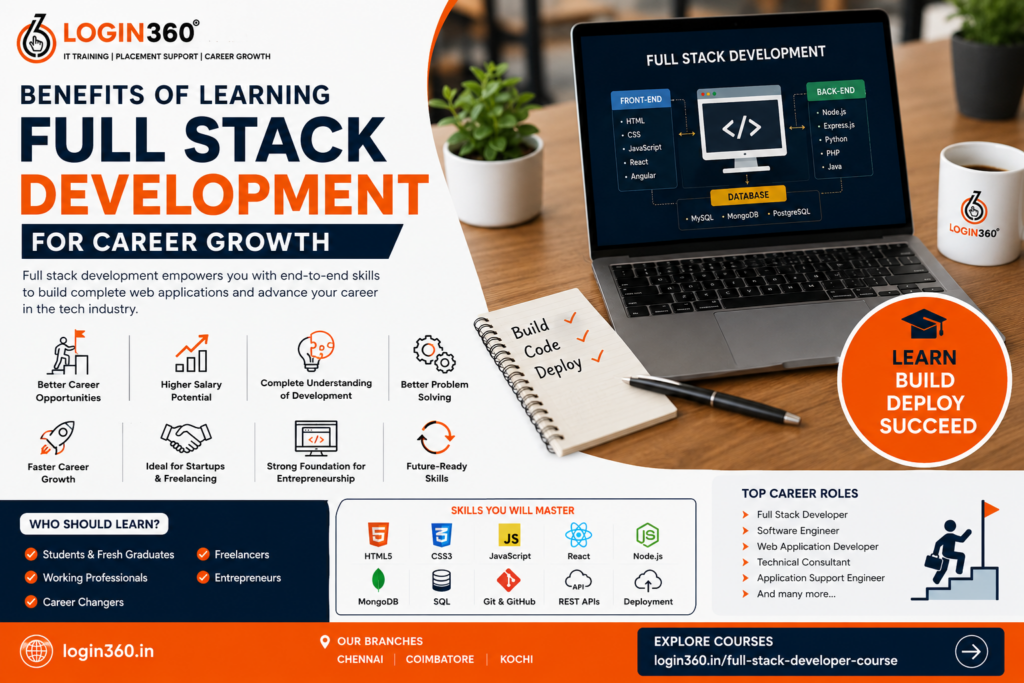
Why Full Stack Development Is in High Demand
The demand for full stack development continues to rise as businesses adopt digital technologies, cloud computing, and web-based applications. Companies prefer professionals who can handle both front-end and back-end development because they simplify project management, reduce development costs, and improve overall efficiency. Full stack developers can build complete applications, manage databases, integrate APIs, and ensure smooth communication between different system components. Their versatility makes them valuable to startups, which need multi-skilled professionals, as well as large enterprises seeking faster development and better collaboration. As digital transformation accelerates across industries, full stack developers remain among the most sought-after professionals in the modern technology job market.
Why Companies Prefer Full Stack Developers
- Can work on both front-end and back-end development
- Reduce hiring and operational costs
- Speed up software development and deployment
- Adapt quickly to changing project requirements
- Improve collaboration across development teams
- Offer complete technical solutions for web applications
Top Benefits of Learning Full Stack Development
Learning full stack development offers much more than just the ability to create websites. It equips you with the knowledge to develop complete web applications by working on both the front-end, which users interact with, and the back-end, where the application’s logic, databases, and servers operate. This comprehensive understanding allows developers to handle every stage of the software development process, making them highly valuable in today’s technology-driven industries.
One of the biggest advantages of becoming a full stack developer is versatility. Instead of specializing in only one area, full stack professionals can switch between different tasks depending on project requirements. They can design responsive user interfaces, build secure server-side applications, manage databases, integrate APIs, and deploy applications to cloud platforms. This flexibility enables businesses to complete projects more efficiently while reducing the need for multiple specialists. Another significant benefit is improved career opportunities. Companies across industries actively seek professionals who possess a broad range of technical skills because they can contribute to various aspects of software development.
Whether working in a startup, multinational company, or as a freelancer, full stack developers have access to a wide variety of job roles and career paths. Their diverse skill set also makes it easier to transition into leadership positions, software architecture, or technical consulting as they gain experience.
Key Benefits of Learning Full Stack Development
- Better Employment Opportunities: Full stack developers are highly sought after because they can handle multiple aspects of software development.
- Higher Salary Potential: Companies offer competitive salaries to full stack developers due to their versatile technical expertise.
- Strong Problem-Solving Abilities: Working across the entire development stack helps developers identify and resolve complex technical issues efficiently.
- Flexibility to Work on Complete Projects: Full stack developers can build and manage applications from the user interface to the database.
- Opportunities for Freelance and Remote Work: Their broad skill set allows them to work independently with clients or secure remote positions worldwide.
- Faster Career Advancement: Versatile technical knowledge helps professionals move into senior, leadership, and specialized roles more quickly.
- Ability to Build Personal Projects and Startups: Full stack developers can independently create websites, web applications, and digital products from start to finish.
Essential Skills Every Full Stack Developer Needs
Becoming a successful full stack developer requires a combination of technical knowledge, practical experience, and strong professional skills. While learning programming languages is an important first step, developers must also understand how different technologies work together to build complete web applications. This includes creating responsive user interfaces, developing secure back-end systems, managing databases, integrating APIs, and deploying applications to live environments. A well-rounded understanding of the entire development process enables full stack developers to build scalable, efficient, and user-friendly solutions. In addition to technical expertise, soft skills are equally important for long-term success.
Full stack developers often work closely with designers, project managers, testers, and other developers, making effective communication and teamwork essential. Strong problem-solving abilities, logical thinking, adaptability, and a willingness to continuously learn new technologies help developers stay competitive in the rapidly evolving IT industry. By mastering both technical and interpersonal skills, aspiring full stack developers can confidently handle complex projects and build a successful career in software development.
Essential Full Stack Development Skills
- HTML, CSS, and JavaScript: Build responsive, interactive, and user-friendly web pages using the core technologies of web development.
- Front-End Frameworks: Learn frameworks like React or Angular to create dynamic, scalable, and modern user interfaces.
- Back-End Technologies: Master Node.js, Java, or Python to develop secure server-side applications and business logic.
- Database Management: Work with MySQL or MongoDB to efficiently store, retrieve, and manage application data.
- REST APIs and API Integration: Develop and integrate APIs to enable seamless communication between different software systems.
- Git and Version Control: Use Git and platforms like GitHub to manage code changes, collaborate with teams, and track project history.
- Problem-Solving and Debugging: Analyze, troubleshoot, and resolve application issues to improve performance and reliability.
- Communication and Teamwork: Collaborate effectively with developers, designers, testers, and stakeholders to deliver successful software projects.
Career Opportunities After Learning Full Stack Development
Learning full stack development opens up diverse career opportunities in the IT industry by equipping professionals with expertise in both front-end and back-end technologies. This broad skill set enables developers to work on complete web applications and contribute throughout the software development lifecycle. From startups to multinational companies, organizations actively seek full stack developers for their versatility, problem-solving abilities, and adaptability. With continuous learning and practical experience, professionals can enjoy stable careers, competitive salaries, and multiple pathways for long-term career growth.
- Software Development Roles: Work as a Full Stack Developer, Front-End Developer, Back-End Developer, Software Engineer, or Web Application Developer across various technology companies.
- Leadership and Specialized Positions: With experience, advance to roles such as Senior Developer, Technical Lead, Software Architect, Engineering Manager, or Technical Consultant.
- Freelance and Entrepreneurship Opportunities: Take on freelance projects, secure remote jobs, build SaaS products, launch startups, or develop independent web applications for clients worldwide.
Popular Career Paths
- Full Stack Developer
- Front-End Developer
- Back-End Developer
- Software Engineer
- Web Application Developer
- Technical Consultant
- DevOps Engineer
- Software Architect
- Freelance Developer
- Startup Founder
Full Stack Developer Salary and Growth Potential
Full stack development is widely recognized as one of the most rewarding career paths in the IT industry because it offers excellent salary packages, strong job security, and long-term professional growth. Since full stack developers possess expertise in both front-end and back-end technologies, they can handle multiple responsibilities within a software development project, making them highly valuable to employers. Organizations are willing to pay competitive salaries for professionals who can design user interfaces, build server-side applications, manage databases, integrate APIs, and deploy scalable web solutions.
Salary levels vary depending on factors such as experience, technical skills, certifications, location, company size, and the technologies a developer specializes in. Entry-level full stack developers receive attractive starting salaries, while experienced professionals with expertise in cloud computing, DevOps, AI integration, and modern JavaScript frameworks often earn significantly higher compensation. The demand for skilled developers continues to grow as businesses across industries accelerate digital transformation, invest in cloud-based applications, and adopt advanced technologies.
- Experience and Technical Expertise: Developers with hands-on project experience, strong programming skills, and knowledge of modern frameworks like React, Angular, Node.js, and cloud platforms typically receive higher salary packages.
- Industry Demand and Location: Salaries vary based on industry, company size, and geographic location. Technology hubs, multinational companies, and product-based organizations generally offer better compensation and faster career advancement.
- Continuous Learning and Certifications: Keeping up with emerging technologies, earning industry-recognized certifications, contributing to open-source projects, and building an impressive portfolio can significantly improve both salary potential and long-term career growth.
Industries Recruiting Full Stack Developers
- Information Technology: Build software applications, enterprise solutions, and cloud-based platforms.
- E-commerce: Develop secure online stores, payment systems, and customer shopping experiences.
- Banking and Financial Services: Create secure financial applications, digital banking platforms, and fintech solutions.
- Healthcare: Build hospital management systems, telemedicine platforms, and healthcare applications.
- Education Technology: Develop e-learning platforms, virtual classrooms, and online assessment systems.
- Digital Marketing Agencies: Create business websites, marketing platforms, and customer engagement applications.
- Manufacturing: Develop automation software, inventory management systems, and production monitoring tools.
- Media and Entertainment: Build streaming platforms, content management systems, and interactive web applications.
- Travel and Hospitality: Create booking systems, travel portals, and hotel management applications.
- Government and Public Sector: Develop citizen service portals, e-governance platforms, and secure public service applications.
How to Start Your Full Stack Development Journey
Starting your full stack development journey begins with building a strong foundation in web development fundamentals. Learn HTML, CSS, and JavaScript to understand how websites are created, then move on to front-end frameworks like React or Angular. Next, explore back-end technologies such as Node.js, Java, or Python, along with databases like MySQL and MongoDB. As you progress, practice building real-world projects to strengthen your coding skills and create a professional portfolio. Learn version control using Git and GitHub, understand API development, and gain experience with deployment tools. Consistent practice, continuous learning, earning relevant certifications, and participating in internships or open-source projects will improve your confidence, technical expertise, and job readiness in the competitive software industry.
Conclusion
Full stack development has become one of the most in-demand skills in today’s technology-driven world, offering excellent career opportunities for aspiring and experienced professionals alike. By mastering both front-end and back-end development, full stack developers can build complete, scalable, and user-friendly web applications, making them valuable assets to organizations across various industries. Their ability to work on multiple aspects of a project not only improves productivity but also increases their employability and earning potential. Whether you are a student exploring career options, a graduate entering the IT industry, or a working professional planning to upskill, learning full stack development can be a smart long-term investment.



[…] large-scale enterprise applications. While MERN offers faster development and flexibility, Java Full Stack provides greater stability, scalability, and security for complex business […]