
Table of Contents
Introduction
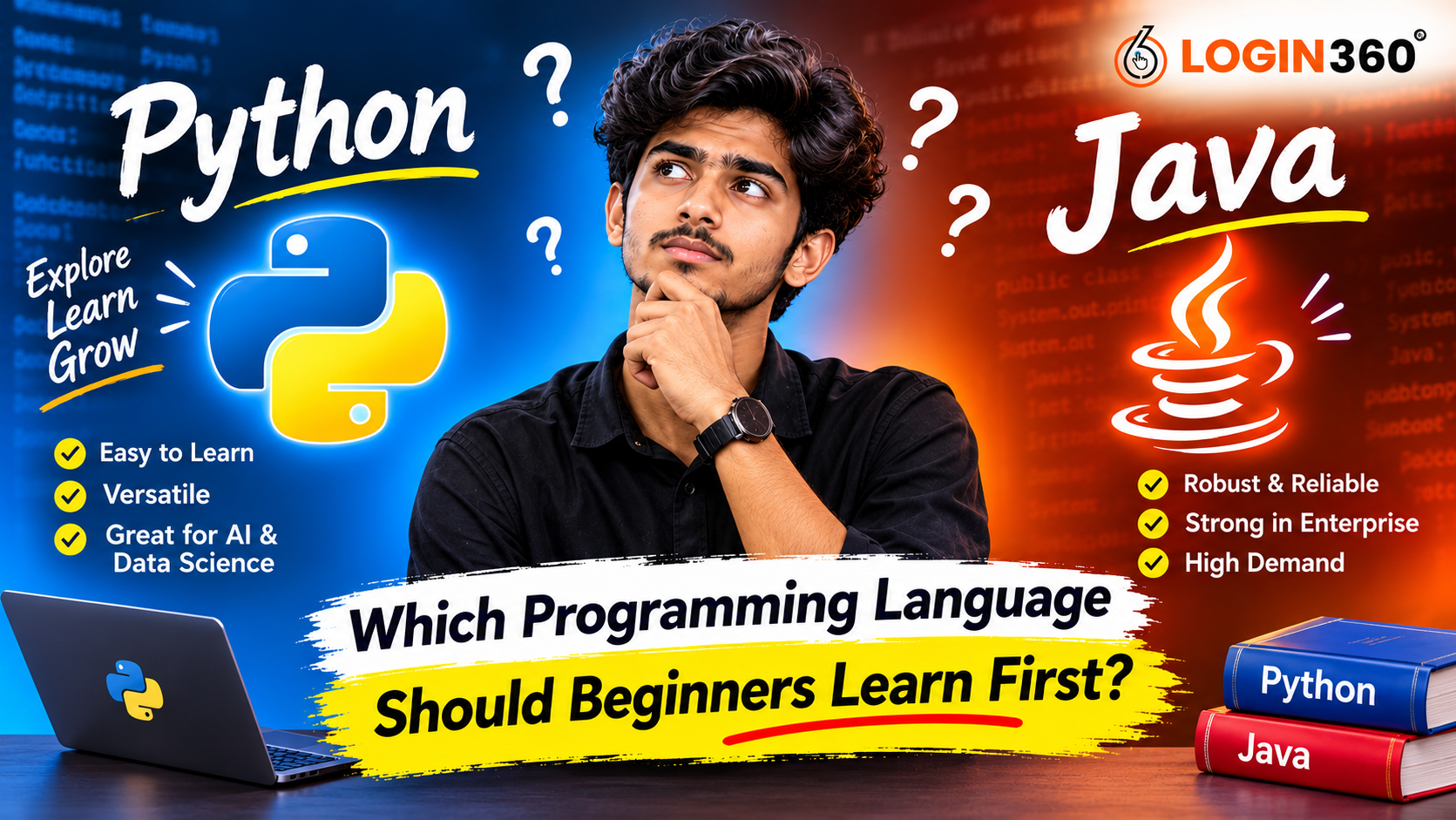
Selecting the right programming language is one of the most important decisions for anyone who wants to start a career as a software developer. Although numerous programming languages are available, Python and Java are two of the most popular choices among beginners because of their wide applications in the technology industry. If you are exploring Python vs Java for beginners, understanding the differences in syntax, applications, learning difficulty, and career opportunities can help you choose the right programming language. Both languages offer excellent learning opportunities, but their features and uses differ. Python is well known for its simplicity and readable code, whereas Java is popular for its structured programming approach, object-oriented concepts, and extensive use in enterprise applications. In the Python vs Java for beginners comparison, each programming language offers unique advantages depending on individual interests and career goals. In this guide, we will explore Python and Java, compare their features and differences, examine career opportunities, and understand which programming language is more suitable for beginners starting their software development journey.
What Is Python?
Python is a high-level, general-purpose programming language developed by Guido van Rossum and first released in 1991. When comparing Python vs Java for beginners, Python is often preferred because of its simple syntax, readability, and beginner-friendly structure. These features make it easier for new programmers to understand basic coding concepts and start their programming journey. Python is widely used in various fields, including web development, artificial intelligence, machine learning, data science, automation, and software testing. In the Python vs Java for beginners comparison, Python stands out as an accessible language for students who want to explore these technologies without dealing with complex code structures. For example, a simple Python program can display the output “Hello, World!” with just one line of code. This makes Python vs Java for beginners an interesting comparison, as beginners can understand and execute their first Python program without prior knowledge of complex programming concepts.
Advantages of Python
- Easy to Learn :Python employs user-friendly syntax that assists new programmers in understanding coding concepts like variables, loops, functions, and conditions.
- Versatile Applications :Python can be applied in areas like web development, data analysis, artificial intelligence, machine learning, and automation.This versatility enables Python to benefit people with an interest in various technological domains.
- Extensive Libraries :There are lots of different libraries and frameworks in Python that help in development. For instance, Django and Flask are utilized in web development Guide Pandas in data analysis, and TensorFlow in machine learning.
- Strong Community Support :It has got many programmers who program in it.The beginner can learn about Python through the tutorials, documentation, and other open source projects.
Disadvantages of Python
Although Python may be slower than Java for certain computational tasks, it remains an excellent choice for beginners because of its simple syntax and easy-to-understand structure. When exploring Python vs Java for beginners, Python offers a more accessible learning experience, especially for those who are new to programming. However, its dynamic typing can sometimes cause errors that appear only during program execution. Despite these limitations, Python is a beginner-friendly language that helps new developers build a strong programming foundation before exploring other languages like Java.
What Is Java?
Java is a high-level, class-based, object-oriented programming language designed by James Gosling and his associates at Sun Microsystems. The first release of Java occurred in 1995, and it is currently maintained by Oracle Corporation and the larger Java community. When comparing Python vs Java for beginners, Java is an excellent option for learning object-oriented programming and understanding structured coding concepts. Java is widely used to develop enterprise applications, backend systems, business applications, and several Android applications. In the Python vs Java for beginners comparison, Java stands out for its platform independence, strong security, and scalability. Platform independence is one of Java’s most notable characteristics. Java code is compiled into bytecode that can run on different operating systems through a compatible Java Virtual Machine (JVM). Java generates the same output as the Python program in this example. However, Java generally requires more lines of code because of its structured programming approach. Therefore, when exploring Python vs Java for beginners, understanding Java’s coding structure helps beginners decide which programming language best suits their learning goals.
Advantages of Java
- Platform Independence: One of the main features of the Java programming language is that it allows the use of the “Write Once, Run Anywhere” concept.
- Object-Oriented Programming :Java assists developers in working with classes and objects. Studying Java will help one understand the ideas of inheritance, encapsulation, abstraction, and polymorphism.
- Enterprise Development :Many enterprises make use of Java for developing enterprise-scale applications and back-end solutions which should sustain their performance with time.
- Extensive Frameworks :The technology has an advanced library ecosystem. The Spring and Spring Boot framework are popular in creating backend applications and enterprise-level services.
Disadvantages of Java
Java generally requires more lines of code than Python to complete the same task. However, when comparing Python vs Java for beginners, Java is a useful programming language for those who want to learn software development systematically. It helps beginners understand important programming concepts such as objects, classes, data types, and compilation. Although it may take some time for beginners to understand these concepts, learning Java provides a strong foundation for building software applications and developing problem-solving skills.
Python vs Java: Key Differences
- Difficulty of Learning:
Python: Generally easy for beginners to learn.
Java: May require more effort to learn initially. - Code Structure
Python: Uses simple, short, and readable code.
Java: Uses a more structured and often lengthy code format. - Type Checking
Python: Dynamically typed.
Java: Statically typed. - Execution
Python: Commonly runs through an interpreter.
Java: Compiles into bytecode and runs on the Java Virtual Machine (JVM). - Application Areas
Python: Used in machine learning, web development, and automation.
Java: Used in backend development, enterprise software, and Android development. - Libraries and Frameworks
Python: Popular frameworks include Django, Flask, and FastAPI.
Java: Popular frameworks include Spring and Spring Boot. - Speed and Performance
Python: Performance varies depending on the application and use case.
Java: Often performs well in long-running applications. - Ease of Getting Started for Beginners
Python: generally offers a simpler learning experience,
Java: Java provides a structured approach to programming.
Which Programming Language Is Easier for Beginners?
When exploring Python vs Java for beginners, Python is often a sensible choice for people learning programming for the first time because of its easy-to-read syntax and simple code structure. In the Python vs Java for beginners comparison, Python allows new learners to develop simple calculators, automate everyday tasks, analyze datasets, and build basic web applications with less code. However, choosing between Python vs Java for beginners depends on your learning goals, interests, and the types of applications you want to develop. If your goal is to build enterprise software, Android applications, or backend systems using Java, starting with Java could be the right approach. Ultimately, consistency and regular practice are essential when learning programming. It is better to master one programming language and understand its fundamentals than to learn several languages without grasping their basics.
Career Opportunities in Python
- Python Developer :Python programmers build apps, services, scripts, and software solutions with the use of Python.
- Data Analyst: Python programming language helps the data analysts clean the data, find patterns, do computations, and write reports. SQL, Statistics, and Visualization skills are also useful.
- Machine Learning Engineer :Machine learning practitioners construct and implement machine learning models. Machine learning is heavily reliant on mathematics, statistics, and programming, which is done mostly in Python.
- Automation Engineer: Automation professionals employ programming to minimize repetitive actions, conduct automated testing, and increase efficiency.
- Backend Developer: Python programmers can create applications and APIs for the servers using various frameworks like Django, Flask, and FastAPI.
Career Opportunities in Java
- Java Developer :A java developer develops, tests, and maintains applications in Java and associated technologies.
- Backend Developer: Java backend developers develop APIs, business logic, authentication solutions, and services running on servers. Spring Boot is a popular framework for that purpose.
- Enterprise Application Developer :Such developers develop enterprise applications related to databases, security, transactions, and software integration.
- Android Developer: Java is historically a significant language in Android development, although still needed in legacy projects. Kotlin is widely used in contemporary Android applications.
- Software Engineer :Java may help with a software engineering profession that involves application design, testing, debugging, and maintenance.
How to Choose Between Python and Java
- Artificial Intelligence and Machine Learning.
- Data Analysis and Data Science.
- Automation and Scripting.
- Programming for beginners.
- Web Development in Python Frameworks.
- Select Java if you are interested in:
- Application development in enterprises.
- Development of backends in Spring Boot.
- Big business software.
- Object-Oriented Programming.
- Development and support of Java systems.
Steps to Start Learning Python or Java
Step 1: Master the Basics : Begin from basics such as variables, data types, operators, conditionals, loops and functions. Write short codes instead of just viewing videos.
Step 2: Practice Solving Problems : Do coding exercises for beginners and gradually increase their complexity.
Step 3: Study Data Structures : Learn about arrays, lists, dictionaries or maps, sets, and other data structures. Study their applications in practical code.
Step 4: Make Projects :Work on projects that will show your programming skills. For example, a learner of Python can make calculators, file managers, or simple data processing tools . A learner of Java can make student management system or simple inventory tool.
Step 5: Study Supportive Technologies :Study Git, GitHub, debugging, software testing. If you are interested in working with the backend, study SQL and the basics of web APIs.
Step 6: Make a Portfolio: Put suitable projects into GitHub and describe them. Having a portfolio can be useful when applying for internships and junior developer positions.
Frequently Asked Questions
1. Is Python or Java better for beginners in 2026?
Python is generally easier for beginners because of its simple syntax, while Java is suitable for those who want to develop strong object-oriented programming skills.
2. Which one is better – Python or Java?
The two languages cannot be compared in terms of superiority. Python is used in the field of artificial intelligence, data science, and automation while Java in enterprises.
3. Can I find a job after learning Python?
Learning Python will enable you to apply for jobs such as Python Developer, Automation Engineer, and Data Analyst. However, other skills and technologies are also necessary.
4. Is Java easy to learn?
It could be perceived to be a bit complicated, . However, with consistent practice, beginners will learn it and create useful applications.
5. Can I learn Python and Java at once?
Yes, but as a beginner, it might be better to concentrate on one language at first. Knowledge of one programming language will make learning another much easier.
6. Which language is best for artificial intelligence?
Python has been widely used for artificial intelligence due to its vast libraries and development environment.
Conclusion
When deciding Python vs Java for beginners, the best programming language depends on your interests, career goals, and learning objectives. Python is an excellent starting point for students interested in automation, data science, artificial intelligence, and web development because of its simple syntax and beginner-friendly structure. On the other hand, Java is suitable for beginners interested in object-oriented programming, enterprise applications, and backend development.
In the Python vs Java for beginners comparison, both programming languages offer valuable career opportunities and practical learning experiences. The key to success lies in understanding programming concepts, practising regularly, and building real-world projects. Ultimately, choosing a programming language that aligns with your career goals and learning preferences is more important than selecting the most popular language.
Explore professional programming courses at Login360 and take your first step toward a successful tech career.