
Table of Contents
Introduction
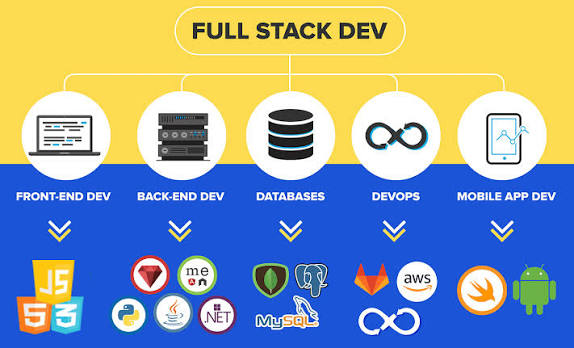
Technology moves fast, and how we build websites and applications has changed a lot over the past decade. Developers used to focus on either the visual side of a website or the behind-the-scenes logic that supports it. Now, the most in demand professionals are those who can handle both. This is where Full stack development comes in. If you’re thinking about whether to learn full stack development, you probably want to know what it actually means. In simple terms, a full stack developer works across the entire technology stack of an application. This includes the front end (what users see and interact with) and the back end (servers, databases, and application logic).
High Demand and Abundant Job Opportunities
- One of the best reasons to learn full stack development is the large number of job opportunities available. Companies from startups to global firms are creating digital products and need developers who can manage different layers of the technology stack without relying on a big team for every small task.
- Startups, in particular, prefer hiring full stack developers because it is more cost-effective to have one person handle both front-end and back end tasks than to hire separate specialists.
- Larger companies also appreciate full stack developers for their ability to jump in and assist wherever the team needs help, whether fixing a UI bug or optimizing a database query.
- This demand isn’t just limited to tech companies. E-commerce, healthcare, finance, education, and even government agencies now require professionals who understand the entire web development process.
- As digital transformation spreads across industries, the need for versatile developers is only expected to grow.
Attractive Salary Packages and Career Growth
- Full stack developers often earn higher salaries because they have a wider skill set. Employers are ready to pay more for professionals who can cut down on the need for cross-team coordination and provide complete solutions independently.
- Beyond starting salaries, full stack development also offers paths for long-term career growth. As you gain experience, you can move into roles like technical lead, solutions architect, product engineer, or even engineering manager.
- Many founders and CTOs of successful startups began their careers as full stack developers because this skill set gives a well rounded view of how software products are built. This career flexibility means you won’t be locked into a single path.
- You can choose to dive deeper into a specialty later, transition into a leadership role, or continue creating end-to-end products throughout your career.
Versatility: Master Both Front-End and Back-End Skills
- One of the key benefits of Full stack development is versatility. When you learn this skill, you will be able to work on every layer of a web application. On the front end, you’ll work with technologies like HTML, CSS, and JavaScript, along with frameworks such as React or Angular, to create visually appealing and user-friendly interfaces.
- On the back end, you will learn server-side languages and frameworks, database management systems, and how to design APIs that connect the front end to the back end smoothly.
- Knowing both sides means you can troubleshoot issues across the entire application without relying on someone else for explanations.
- You can fix problems, communicate better with different teams, and even complete projects on your own. This versatility also helps you adapt to different work settings.
- Small teams need generalists who can take on various roles, while larger teams benefit from developers who see the bigger picture, even if they specialize in one area.
Faster and More Efficient Project Development
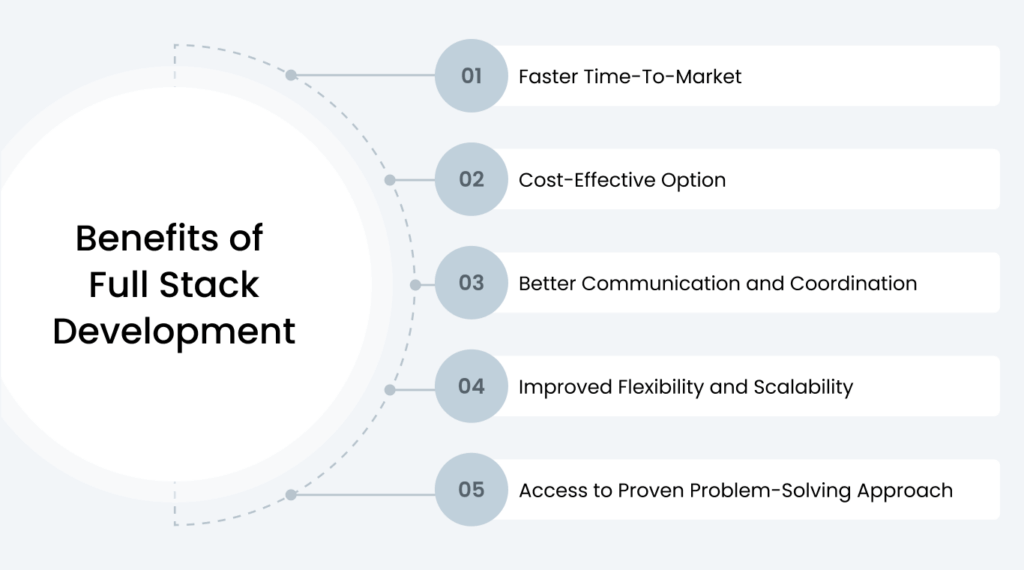
- When you know both front-end and back-end development, you become more efficient at building and delivering projects.
- There’s no waiting for another team member to finish their part before making progress. You can create a feature, test it, link it to the database, and refine the user interface, all within your workflow.
- This efficiency is extremely valuable, especially in fast-paced work environments where speed and adaptability are crucial. Full stack developers can quickly prototype ideas, which is especially helpful for startups and small businesses that need to test concepts and launch products rapidly.
- Furthermore, when you grasp the complete picture of how an application functions, you tend to write cleaner, more thoughtful code. This understanding leads to fewer bugs and makes projects easier to maintain over time.
Freedom to Freelance or Build Your Own Products
- Full stack development is one of the few tech skills that allows you to work entirely on your own. Because you know how to build an application from start to finish, you don’t need a huge team to bring your ideas to life. This makes it ideal for freelancers and entrepreneurs.
- If you’ve ever dreamed of creating your own app, launching a personal project, or freelancing for clients, full stack development provides you with the tools you need. You can design the interface, build the logic, manage the database, and deploy the application without needing to hire a separate team.
- Many successful independent developers and startup founders have used full stack skills to create minimum viable products (MVPs) that later grew into thriving businesses. Even if you don’t plan to start a company, the freelance market for full stack developers remains strong, offering flexible income opportunities and the chance to choose projects that excite you.
Better Problem-Solving and Technical Understanding
- Learning full stack development not only teaches you how to code but also improves your problem-solving skills. When you handle an entire application, you learn to think critically about how different parts work together, where slowdowns may occur, and how to design systems that grow effectively.
- This broader technical understanding is valuable, even beyond just writing code. You become more skilled at fixing issues because you can track a problem across the entire stack instead of assuming it is limited to one area. You also gain a deeper appreciation for software design, security practices, and performance improvements, since you encounter these aspects at every level of development.
- Employers value this type of analytical thinking because it leads to developers who make smarter choices, spot potential issues before they escalate, and engage meaningfully in technical discussions beyond their immediate tasks.
Staying Relevant with Evolving Technology Trends
- The tech industry changes constantly, and staying relevant requires updating your skills regularly. Full stack developers are often in a better position to adapt to these shifts because their broad background allows them to learn new tools, frameworks, and technologies more easily as they appear.
- For example, as artificial intelligence and machine learning become more embedded in everyday applications, Full stack developers can effectively integrate these technologies into their projects, since they already know how to connect different parts of a system. Similarly, as cloud computing and DevOps practices become standard, having a strong understanding of the entire application lifecycle makes adopting these practices simpler.
- This adaptability is not just about surviving in a competitive job market; it’s about staying curious and involved in your work. Full stack developers often find themselves at the intersection of several emerging technologies, making their work engaging and helping keep their skill set relevant for the future.
How to Get Started: Skills, Tools, and Learning Path
- If you believe that full stack development is worth pursuing, the next step is figuring out how to begin. The good news is that a formal computer science degree is not necessary to become a full stack developer, though having basic programming knowledge can be helpful.
- Start by building a solid foundation in HTML, CSS, and JavaScript, as these are the core components of the web. From there, pick a front-end framework like React, which is currently in high demand.
- For the back end, popular options include Node.js, Python with Django or Flask, or Java with Spring Boot. You will also need to understand how databases work, including relational databases like MySQL and non relational databases like MongoDB.
- In addition to programming languages and frameworks, get to know version control systems like Git, basic command line skills, and how to deploy applications using cloud platforms.
- Working on real projects, rather than just following tutorials, will help you apply these ideas in real life and build a portfolio that shows your skills to potential employers.
- Structured learning paths, whether through self-study, boot camps, or formal training programs, can help you stay organized and avoid feeling overwhelmed by the many technologies involved. The key is consistency; regularly dedicating time to practice and build projects will take you further than trying to learn everything at once.
Conclusion
Full stack development provides a rare mix of technical depth, career flexibility, and creative freedom. Whether your aim is to secure a high paying job, create your own product, freelance on your own terms, or simply understand technology better, this skill set offers a strong foundation for reaching those goals. The benefits extend beyond just job prospects. Learning Full stack development teaches you to think broadly, solve problems effectively, and adjust to an ever changing industry. It’s a challenging path, but one that rewards persistence with meaningful career stability and creative independence. If you’re ready to spend time learning something that opens doors across various industries and career paths, full stack development is definitely worth considering.