
Table of Contents
Introduction
The technology industry is constantly evolving, and businesses are looking for professionals who can develop complete digital products from beginning to end. From designing user-friendly interfaces to building powerful backend systems, modern software development requires a combination of technical knowledge, creativity, and problem-solving skills. This growing demand has increased interest in the role of a full stack product engineer.
A full stack product engineer is a professional who understands different stages of product development, including frontend development, backend programming, database management, testing, deployment, and maintenance. Unlike developers who focus on only one part of an application, these professionals work across the entire development process and contribute to building functional, scalable, and user-friendly products.
Understand the Role of a Full Stack Product Engineer
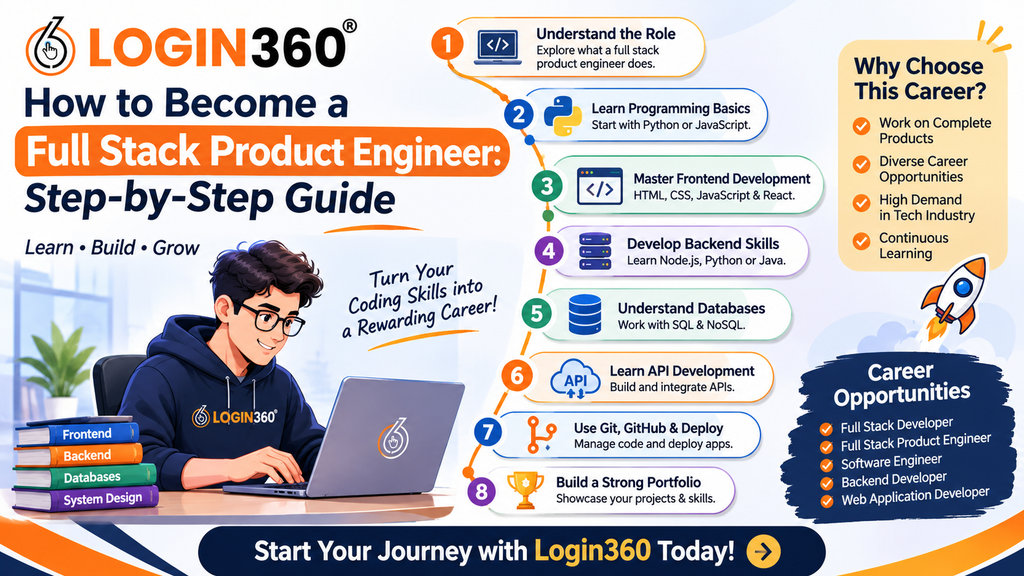
The first step is understanding what a full stack product engineer does. These professionals work on both the frontend and backend of applications while also considering the overall product experience.Their responsibilities may include designing application interfaces, developing server-side functionality, connecting databases, integrating APIs, identifying technical issues, and improving application performance.A full stack product engineer also understands how users interact with a product and how technical decisions affect business requirements. This makes the role broader than simply writing code.
Learn the Fundamentals of Programming
Programming is the foundation of full stack product engineering. Before working on complex applications, beginners should understand basic programming concepts.Start by learning:
- Variables and data types
- Conditional statements
- Loops and functions
- Object-oriented programming
- Data structures and algorithms
- Error handling and debugging
Beginners can choose programming languages such as Python or JavaScript. Python is popular for its simple syntax, while JavaScript is essential for modern web development.Developing strong programming fundamentals will make it easier to understand different frameworks and technologies used in product development.
Master Frontend Development
- Frontend development focuses on the visual and interactive parts of a website or application. It determines how users experience and interact with a digital product.A full stack product engineer should understand the following technologies:
- HTML: HTML provides the structure of web pages, including headings, paragraphs, images, forms, and other elements.
- CSS: CSS is used to style web pages by controlling colours, layouts, fonts, spacing, and responsiveness.
- JavaScript: JavaScript adds interactive functionality, allowing developers to create dynamic websites and improve user experiences.
- Frontend Frameworks: Learning React, Angular, or Vue.js can help developers build modern and interactive user interfaces efficiently.
Develop Backend Development Skills
Backend development handles the server-side operations of an application. It manages business logic, user authentication, data processing, and communication between the frontend and database.Important backend technologies include:
- Python: Used for backend development with frameworks such as Django and Flask.
- Java: Commonly used for enterprise applications with frameworks such as Spring Boot.
- Node.js: Allows developers to build server-side applications using JavaScript.
- PHP: Used for developing dynamic websites and web applications.
A full stack product engineer should understand how backend systems process requests, manage application data, and deliver responses to users.Learning backend development also helps developers build secure and reliable applications.
Understand Database Management
Databases are essential for storing, organizing, retrieving, and managing application information. Almost every digital product depends on databases to handle user accounts, transactions, customer information, and other important data.There are two major types of databases:
- Relational Databases: These databases store information in structured tables. Examples include MySQL and PostgreSQL.
- NoSQL Databases: These databases support flexible data storage structures. MongoDB is a popular example.
Developers should learn SQL queries, database relationships, CRUD operations, indexing, and basic database optimization.Strong database knowledge helps a full stack product engineer create applications that manage information efficiently.
Learn API Development and Integration
APIs (Application Programming Interfaces) allow different software applications to communicate with each other.For example, an e-commerce website may use APIs to connect its frontend with backend services, payment gateways, delivery systems, and third-party applications.Important concepts to understand include:
- REST API development
- HTTP methods such as GET, POST, PUT, and DELETE
- JSON data formats
- API authentication
- API testing and integration
Work on Real-Time Projects
Practical experience is one of the most important parts of becoming a skilled developer. Understanding programming concepts alone is not enough. You need to apply your knowledge by developing real-world applications.Start with simple projects and gradually move towards more complex applications.Some beginner-friendly project ideas include:
- Personal portfolio website
- Student management system
- Online shopping application
- Task management application
- Blog management platform
- Online appointment booking system
While developing these projects, try to implement frontend interfaces, backend functionality, database connections, and API integration.Building projects helps a full stack product engineer improve technical confidence, problem-solving abilities, and practical development experience.
Understand Git, GitHub, and Deployment
Software development involves managing code, tracking changes, and collaborating with other developers. Tools such as Git and GitHub make these activities easier.Learn essential Git commands, create repositories, manage branches, and understand how to collaborate on projects.You should also gain basic knowledge of deployment. Deployment involves making an application available to users through the internet.Popular platforms and technologies include:
- GitHub
- Vercel
- Netlify
- AWS
- Docker
Build a Strong Portfolio and Prepare for Interviews
A portfolio demonstrates your technical knowledge and practical development experience to potential employers.Include your best projects, GitHub repositories, technologies used, and a brief explanation of each project’s functionality.You should also prepare for technical interviews by practising:
- Programming fundamentals
- Data structures and algorithms
- Frontend and backend concepts
- Database queries
- API development
- Problem-solving questions
- Basic system design
Explore Career Opportunities
After developing the required skills and completing practical projects, you can start exploring opportunities in the software development industry.A full stack product engineer can work in different industries, including IT services, healthcare, finance, e-commerce, education, and technology startups.Some related career opportunities include:
- Full Stack Developer
- Full Stack Product Engineer
- Software Engineer
- Web Application Developer
- Backend Developer
- Product Development Engineer
Why Choose Full Stack Product Engineering as a Career?
- Full stack product engineering offers opportunities to work on different aspects of software development. Instead of concentrating on a single technology, professionals gain experience across the complete product development lifecycle.Some important advantages include:
- Versatile Technical Skills: You gain knowledge of frontend, backend, databases, APIs, and deployment.
- Multiple Career Opportunities: Your skills can be applied across different industries and software development roles.
- End-to-End Product Development: You can contribute to building complete applications rather than working on only one component.
- Continuous Learning: The technology industry constantly introduces new tools, frameworks, and development practices, creating opportunities to improve your skills.
Conclusion
Becoming a full stack product engineer requires consistent learning, practical experience, and a strong understanding of modern software development technologies. From programming fundamentals and frontend development to backend systems, databases, APIs, and deployment, every stage plays an important role in building complete digital products.
Students and fresh graduates can begin their journey by learning one technology at a time, practising regularly, and developing real-world projects. With the right technical foundation and hands-on experience, you can build a rewarding career in full stack product engineering.Start Your Full Stack Product Engineering Journey with Login360!
Visit Login360 today to learn more about the course, develop your technical skills, and prepare for exciting career opportunities in software development.
Frequently Asked Questions (FAQs)
1. What is a full stack product engineer?
A full stack product engineer is a software professional who works on both frontend and backend development while understanding the complete product development process, including databases, APIs, testing, and deployment.
2. How long does it take to become a full stack product engineer?
It may take around 6–12 months to develop a strong foundation in full stack development, depending on your learning speed, prior programming knowledge, and practical experience.
3. Which programming languages should I learn?
Beginners can start with JavaScript or Python. Learning HTML, CSS, JavaScript, and a backend programming language will help build a strong foundation.
4. Is full stack product engineering suitable for freshers?
Yes. Fresh graduates can pursue this career by learning programming fundamentals, developing practical projects, building a portfolio, and gaining hands-on experience.
5. Do I need to learn databases to become a full stack product engineer?
Yes. Database knowledge is essential because applications need to store, retrieve, update, and manage information efficiently.
6. What projects should beginners build?
Beginners can develop portfolio websites, task management applications, student management systems, e-commerce websites, and blog platforms to improve their practical skills.
7. What are the career opportunities after learning full stack product engineering?
You can explore roles such as Full Stack Developer, Full Stack Product Engineer, Software Engineer, Backend Developer, and Web Application Developer.