

Introduction
Django vs Flask: deciding upon which of the two frameworks to adopt is the first challenge that most Python developers face when delving into web development. They have a lot of similarities, however, they differ greatly in terms of their architecture and functionality. Python has turned out to be the ideal choice when it comes to web development because it is quite user-friendly and at the same time versatile enough to be used in creating enterprise solutions. However, it is not less important to choose the appropriate framework. Should you master Django or Flask? It all depends on a few things that will be discussed below. No matter whether you create a blog or a complicated e-commerce system, you will understand what to pay attention to while choosing one of them. In this article, you will find information about Django and Flask frameworks, as well as their main pros and cons.
Understanding Python Web Frameworks
Web frameworks are simply toolkits that help you develop websites and web applications. You can picture them as collections of pre-made tools that allow handling such tasks as routing, database management, and authentication. When we are talking about Python web frameworks, we need to distinguish between monolithic and microframeworks. Monolithic frameworks contain everything that you might need, while microframeworks offer you only basic components and allow customization. This difference forms the very essence of Django vs Flask and influences your choice of either one of them significantly. Your preferences regarding all-inclusive vs build-your-own solutions become one of the factors to consider when choosing between Django and Flask. This knowledge is helpful to understand why people have such different opinions about these frameworks. There is nothing better here, there are just different tools for different purposes.
Django: The Full-Featured Powerhouse
Django claims to be “the web framework for perfectionists with deadlines,” and rightly so. It provides numerous features, the implementation of which could take you hours in other web frameworks. Among its features, there are an admin panel, an authentication system, ORM (Object-Relational Mapping), and migration tools. In Django, you will get a fully-fledged toolset that will work efficiently even for the most complicated projects. A lot of features provided by Django result in a steeper learning curve compared to Flask; however, once again, it pays off. After grasping the principles of Django’s architecture, you will be able to create a full-fledged application in no time. Companies such as Instagram, Spotify, and Pinterest used Django in their systems. It doesn’t mean that Django is the only suitable solution here; instead, it means that Django performs extremely well in large-scale applications.
Flask: The Lightweight Alternative
Whereas Django does not shy away from complexity, Flask offers only the basics in terms of routing, handling requests, and sending responses. For developers who love being in control of all aspects of their projects, this is perfect. You decide which database to use, how to handle user authentication, and whether or not there will be any front-end framework. This minimalistic nature of Flask makes it very handy for creating certain things like REST API, microservices, and small web applications. If you know your stuff, it will take you five minutes to start an application built with Flask. However, you will have to do much more work yourself since no framework comes pre-assembled here; you use building blocks instead. Still, even though Flask is lightweight, it is extremely versatile. There are many successful applications created with Flask.
Learning Curve and Getting Started
For those without any prior experience in web development, using Django can be daunting at first glance. Django has strong opinions about its architecture, and you have to get acquainted with the concepts of models, views, and templates. The situation is entirely different with Flask. Your first Flask application will consist only of a few lines of code. Therefore, Flask is an extremely popular choice for tutorials, courses, and other educational materials. But the learning curve of Django is deceiving. The confusion you encounter initially will soon be replaced by comprehension when you start understanding the ideas behind Django. Choosing Django or Flask for learning purposes is a matter of personal preference. Are you a person who prefers guidance and structuring? Or, maybe, you enjoy freedom and want to discover for yourself how things work? If you are the former type of developer, then you will benefit from the initial difficulty of Django’s learning curve. In Django, you’ll learn good practices from the very beginning. If you belong to the latter category, then you should start your journey with Flask.
Performance and Scalability Comparison
In terms of sheer performance, Flask is a little bit faster than Django. Being a lightweight framework, Flask does not have to go through much processing for each request. But this advantage vanishes very soon as we talk about real-world performance of both frameworks. They work equally well if used correctly. The design of Django framework allows the developer to think about database optimization, cache, and security even at the early stage of development. You will have to take care of all these aspects manually in Flask. But it doesn’t mean that you cannot reach the same level of scalability, just do it manually. Django architecture works great for large applications. Instagram works with hundreds of millions of requests every day using the infrastructure of Django-based web-sites. For microservices and APIs where performance matters most, developers prefer the Flask framework.
Community Support and Documentation
Django’s Established Ecosystem
- Comprehensive Official Documentation – Django’s documentation is legendary in the Python community. Nearly every feature is documented with examples. The Django community has created extensive tutorials, books, and courses that make learning straightforward.
- Larger Developer Base – With more developers using Django, you’ll find answers to nearly any question on Stack Overflow. This means faster problem-solving when you get stuck. The larger community also means more third-party packages and extensions.
- Package Ecosystem – Django has thousands of pre-built packages that integrate seamlessly with the framework. Need user registration? Package exists. Want email functionality? Multiple packages available. This reduces development time significantly.
- Regular Updates and Maintenance – Django receives consistent updates that maintain backward compatibility while adding modern features. The core team is committed to the framework’s long-term viability. Security patches are released promptly.
- Corporate Backing – Several companies employ Django core developers and contribute resources. This ensures the framework remains actively maintained and evolves with modern web development practices.
Flask’s Growing Community
- Focused and Helpful Community – While smaller than Django’s, Flask’s community is incredibly welcoming and helpful. The philosophy of simplicity attracts developers who understand and appreciate Flask’s approach. This creates a tight-knit community that takes pride in helping newcomers.
- Quality Over Quantity – Flask extensions are carefully curated rather than overwhelming in number. This means higher quality packages but fewer options. You’ll find yourself writing more custom code, which actually deepens your understanding.
- Excellent Learning Resources – Flask’s simplicity makes it ideal for tutorials and educational content. Many developers find Flask easier to learn from because examples are clearer and more concise. Documentation is thorough despite the smaller community.
- Active Development – Flask continues to receive updates and improvements. The maintainers respond to issues and suggestions from the community. The framework remains modern and relevant despite its minimalist approach.
- Flexibility Appreciated – The Flask community values developers who want to learn how things work. Many Flask users become experts in their chosen libraries and tools through necessity. This creates a more technically diverse community.
Project Requirements and Use Cases
When Django Wins
- Content Management Systems – Django’s admin panel and built-in features make it ideal for CMS applications. Instagram’s early years relied heavily on Django’s admin for managing content. Complex content workflows are naturally handled by Django’s structure.
- Rapid Development – Startups with tight deadlines often choose Django because it shortens development time. You’re not making decisions about database layers or authentication systems; Django decides for you. This means more features built faster.
- Large Teams – When multiple developers work on the same project, Django’s conventions are invaluable. Everyone follows the same patterns, making code reviews and onboarding faster. The framework enforces consistency across a large codebase.
- Complex Applications – E-commerce platforms, social networks, and data-intensive applications benefit from Django’s batteries-included approach. Handling payments, user interactions, and complex relationships is simplified by Django’s design.
- Long-term Maintenance – Applications expected to run for years benefit from Django’s stability and conventions. Future developers can onboard quickly because Django projects follow predictable patterns. Technical debt is reduced by following framework conventions.
When Flask Excels
- APIs and Microservices – Flask’s lightweight nature makes it perfect for REST APIs. You only implement exactly what you need, nothing more. Companies building microservice architectures frequently choose Flask for individual services. The simplicity scales beautifully across multiple services.
- Specialized Applications – When you need unusual features or specific technology integrations, Flask’s flexibility shines. You’re not constrained by framework opinions; you can implement exactly what your application requires.
- Learning and Prototyping – Flask is perfect for learning how web frameworks actually work. You understand each component because you’re implementing them yourself. Prototyping new ideas is faster with Flask’s minimal setup.
- Real-time Applications – WebSocket implementations and real-time features are straightforward in Flask. The framework doesn’t force abstractions that would complicate real-time functionality.
- Personal Projects – If you’re building something for yourself or a small group, Flask’s simplicity is refreshing. You avoid Django’s overhead when you don’t need it. The result is lightweight, easy-to-understand code.
Real-World Applications and Examples
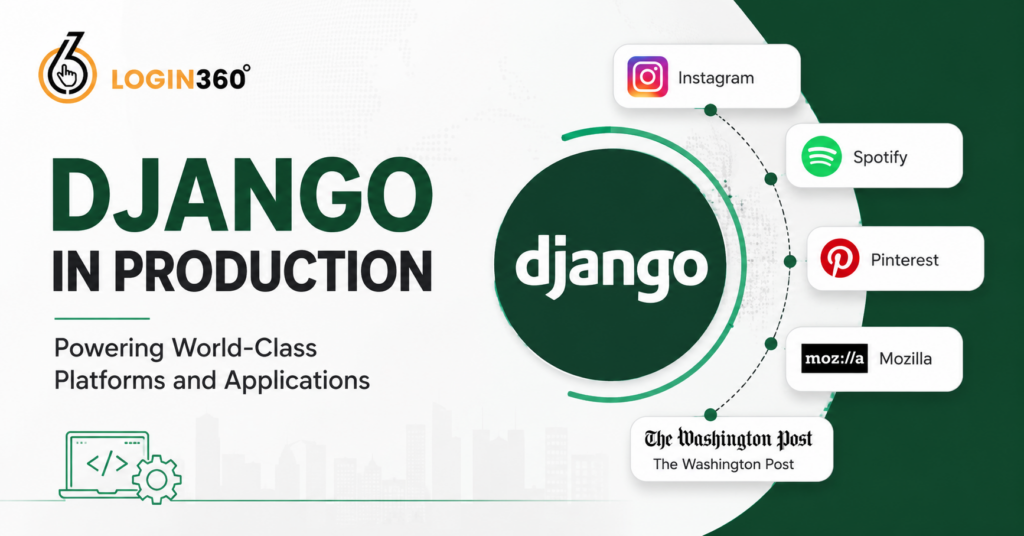
Django in Production
- Instagram – Started with Django and used it to scale to billions of users. The framework’s performance and scalability proved capable of handling massive growth. Even after expanding their infrastructure, Django remains part of their stack.
- Spotify – Uses Django for parts of their infrastructure. The framework handles their backend services and helps manage millions of simultaneous users. The reliability and robustness were crucial for their success.
- Pinterest – Built on Django and relies on it for their recommendation engine and user management. Managing hundreds of billions of pins required Django’s scalability and stability.
- Mozilla – Uses Django for various internal and public-facing applications. The Mozilla Foundation appreciates Django’s emphasis on security and open-source principles.
- The Washington Post – Their digital infrastructure uses Django for content management and publishing. Handling millions of daily readers and constantly updating content requires Django’s reliability.
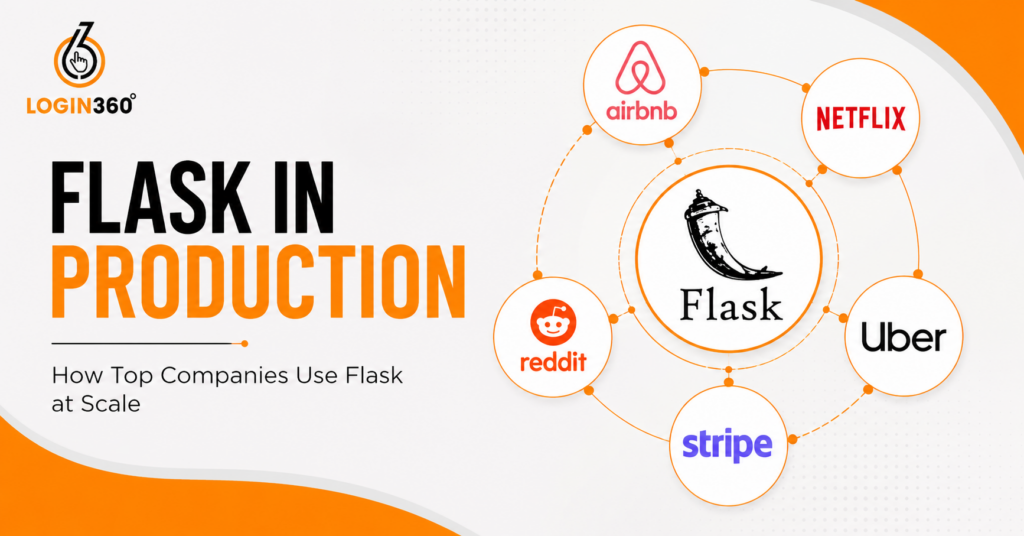
Flask in Production
- Airbnb – Uses Flask for their microservices architecture. Individual components run as Flask services, demonstrating Flask’s capability at scale when properly deployed.
- Netflix – Employs Flask in their service infrastructure. The lightweight framework allows them to build efficient microservices that handle millions of requests.
- Uber – Flask powers parts of Uber’s infrastructure, particularly in their API layer. The simplicity and performance are ideal for handling the rapid request volumes in ride-sharing.
- Stripe – Uses Flask as part of their payment processing infrastructure. The framework’s reliability and performance are crucial for handling sensitive financial transactions.
- Reddit – While not exclusively Flask-based, Reddit uses it as part of their technology stack. The community-driven platform benefits from Flask’s flexibility in custom implementations.
Security Considerations and Best Practices
- Django’s Built-in Security – Django includes protections against common vulnerabilities like CSRF, SQL injection, and XSS attacks out of the box. These protections are automatically enabled in new projects. The security team actively monitors threats and releases patches quickly.
- Flask’s Security Approach – Flask doesn’t force security features on you; you implement them as needed. This requires more knowledge but allows for customized security implementations. Popular Flask extensions like Flask-Security provide built-in protections similar to Django.
- HTTPS Enforcement – Both frameworks support HTTPS enforcement, but Django makes it easier with built-in settings. Flask requires manual configuration but is straightforward to implement. For production applications, HTTPS is non-negotiable regardless of framework choice.
- Password Hashing – Django provides built-in password hashing and validation tools. Flask doesn’t include this by default; you’ll typically use the bcrypt library or similar. Both approaches are secure when implemented properly.
- Database Security – Django’s ORM prevents SQL injection automatically through parameterized queries. Flask’s ORM options (like SQLAlchemy) provide similar protections. Using an ORM is essential with both frameworks for security and maintainability.
Deployment and Hosting Options
- Django Hosting – Virtually every Python hosting provider supports Django deployment. Heroku, AWS, DigitalOcean, and PythonAnywhere all have Django-specific documentation. Many hosting platforms include one-click deployment for Django applications. The mature ecosystem means deployment is well-documented and straightforward.
- Flask Hosting – Flask applications deploy just as easily to major hosting platforms. The lightweight nature sometimes allows Flask apps to run on platforms with stricter resource limits. Containerization with Docker is slightly simpler for Flask applications due to smaller dependencies.
- Scaling Considerations – Django applications scale well horizontally by adding more server instances. The database becomes the bottleneck before the application layer. Flask applications scale similarly; the lightweight nature doesn’t provide inherent advantages at scale.
- Development vs. Production – Django’s development server is more feature-complete, easing the transition to production. Flask’s development server is intentionally simple; you’ll use Gunicorn or similar in production. Both transition smoothly from development to production deployment.
- Containerization – Both frameworks work excellently with Docker. Django images are slightly larger due to more dependencies, while Flask images are minimal. This difference is negligible in practice when considering cloud deployment costs.
Django vs Flask: Making Your Final Decision
- Choose Django If – You’re building complex applications with multiple interconnected features. Your team values conventions and consistency. You want to move quickly without reinventing common wheels. You prefer having most tools pre-integrated and ready to use. You’re working on projects expected to grow and evolve over years.
- Choose Flask If – You’re building APIs or microservices with specific requirements. You want to understand how each component works. You prefer lightweight, minimal frameworks that don’t impose decisions. You’re prototyping new ideas and need maximum flexibility. You’re comfortable making more architectural decisions yourself.
- Learning Consideration – If you’re just starting, Flask’s simplicity might feel more welcoming initially. However, Django’s structure will accelerate your understanding of web application architecture. Many developers learn Flask first, then Django, then can use both effectively.
- Career Perspective – Django skills are highly marketable; many job postings specifically request Django experience. Flask is valuable for developers who understand architecture deeply. Companies building microservices specifically seek Flask expertise. Both skills enhance your employability significantly.
- Project Timeline – Django wins for deadline-driven projects where speed matters most. Flask wins for projects where you need maximum customization. For MVP development, Django’s rapid development often proves advantageous.
Conclusion
Choosing between Django vs Flask ultimately depends on your specific project needs, team size, and personal preferences. Django offers an all-in-one solution perfect for complex applications and rapid development. Flask provides the simplicity and flexibility for developers who want complete control over their application architecture. Both frameworks are production-ready, well-supported, and capable of powering everything from simple websites to massive applications handling millions of users daily.