

Table of Contents
Introduction
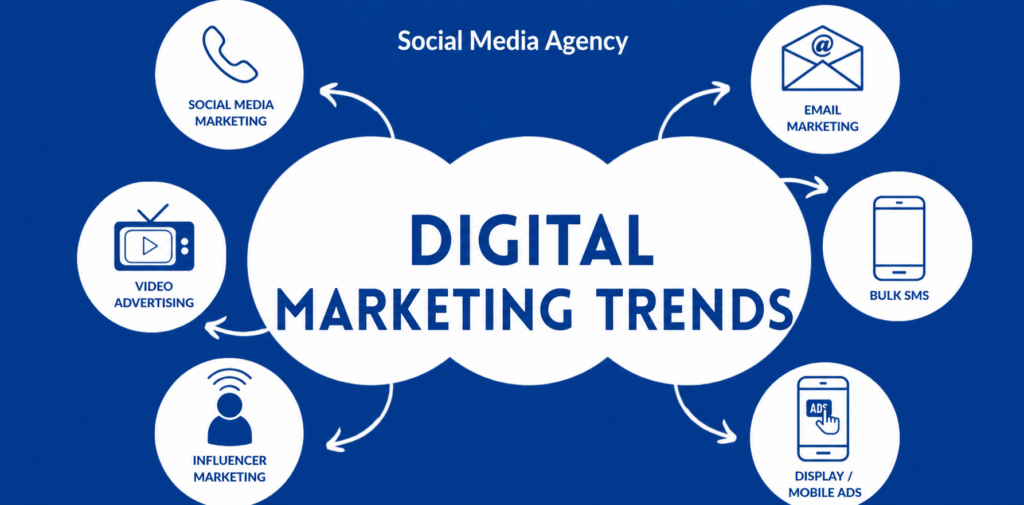
Digital marketing is always changing as technology advances and consumer habits shift. Businesses that want to stay competitive need to keep up with the latest Digital marketing trends and adjust their strategies. What worked a few years ago may not bring the same results today because search engines, social media platforms, and online users are evolving. Companies that understand these changes can build better relationships with customers, improve brand visibility, and attract higher quality leads. Today, digital marketing goes beyond just creating websites or posting on social media. It includes using artificial intelligence, personalized experiences, automation, data analytics, and various digital channels to reach the right audience at the right moment. As customers spend more time online, businesses invest heavily in new marketing strategies that show measurable results.
Why Keeping Up with Digital Marketing Trends Matters
The digital landscape changes quickly because technology, customer expectations, and online platforms evolve almost daily. Search engines frequently update their algorithms, social media platforms introduce new features, and consumers want faster, personalized experiences. Businesses that do not keep up often struggle to maintain visibility, while those that embrace change gain a significant edge. Following current digital marketing trends helps businesses enhance customer engagement and build stronger connections with their audience. Today’s consumers prefer brands that understand their needs and deliver relevant content rather than generic ads. By adopting new marketing strategies, businesses can boost website traffic, increase conversion rates, and maximize their return on investment. Staying informed also allows marketers to spot new opportunities before their competitors, helping businesses remain relevant in a crowded market.
Artificial Intelligence (AI) and Automation in Marketing
- Artificial intelligence has become a major force in transforming digital marketing. AI allows businesses to analyze large amounts of customer data, predict user behavior, personalize content, and automate repetitive marketing tasks.
- Instead of relying solely on manual processes, marketers can use AI-powered tools to work more efficiently while providing better customer experiences. AI is crucial in content creation by helping marketers brainstorm ideas, optimize headlines, suggest keywords, and enhance readability.
- While human creativity is still important, AI significantly reduces the time needed to research and produce marketing content. Many businesses use AI to create personalized email campaigns based on customer interests, purchase history, and browsing behavior.
- This level of personalization boosts customer engagement and improves conversion rates. Automation has also changed how businesses communicate with customers. Chatbots provide instant responses to inquiries, answer frequently asked questions, and guide visitors through the buying process any time of day.
- Marketing automation platforms help businesses schedule emails, manage social media posts, nurture leads, and analyze campaign performance without constant manual oversight.
The Rise of Video Marketing and Short-Form Content
Video content remains dominant on digital platforms because it captures attention quickly and delivers information engagingly. Consumers increasingly choose to watch short videos over reading long articles, making video marketing one of the fastest-growing trends. Platforms like Instagram Reels, YouTube Shorts, and TikTok have changed how businesses connect with audiences by promoting short, informative, and entertaining content. Short videos allow businesses to showcase products, explain services, share customer testimonials, and educate audiences in seconds. Because these videos are easy to consume and share, they often generate higher engagement than traditional text-based posts. Live streaming has gained popularity, allowing businesses to interact with customers directly through product demonstrations, Q&A sessions, webinars, and behind-the-scenes content. Video marketing also helps with SEO Trends by increasing user engagement and website retention. Visitors tend to stay longer on websites that include relevant videos, sending positive signals to search engines.
Voice Search and Conversational Marketing
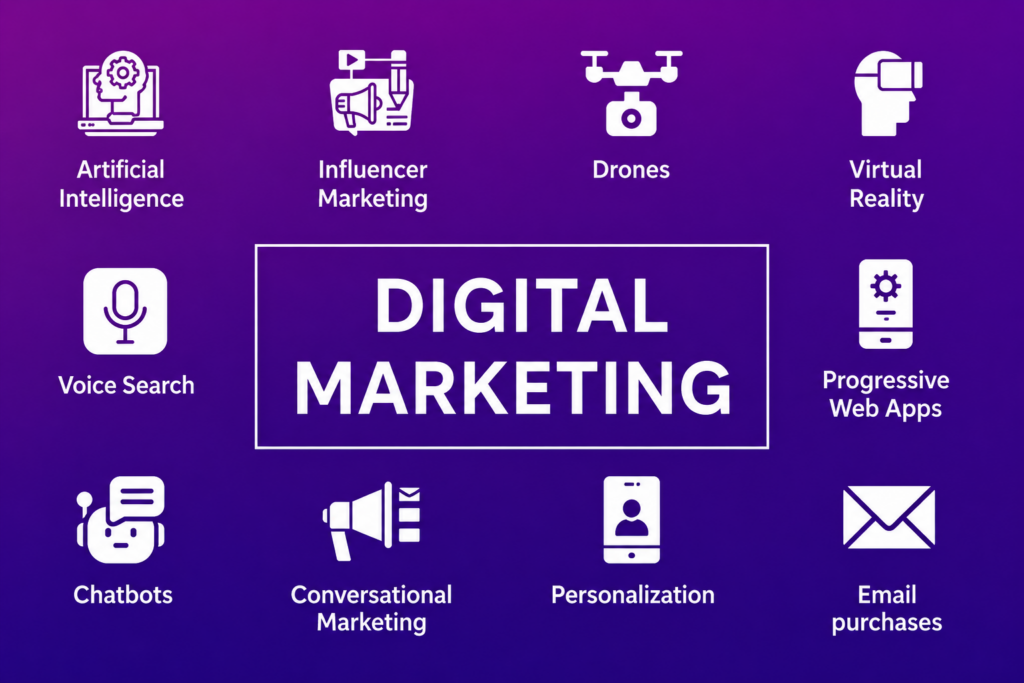
Voice search has become more common as more consumers use smart speakers and voice assistants on their smartphones. Instead of typing short keywords, users now ask complete questions in everyday language. This shift has prompted businesses to optimize their content for conversational search queries rather than just traditional keyword targeting. Voice search optimization means creating content that answers common customer questions clearly and naturally. Businesses benefit from using long-tail keywords, FAQ sections, and conversational language that reflects how people speak. Local businesses, in particular, gain from voice search since many users search for nearby products and services using voice commands while on the go. Conversational marketing goes beyond voice search by allowing businesses to chat with customers in real time using chatbots, messaging apps, and live chat systems.
Social Media Marketing Trends
Social media platforms have evolved far beyond basic networking sites. They are now powerful business tools that support brand awareness, customer engagement, online shopping, and direct communication. One of the biggest Digital marketing trends is the growth of social commerce, where users discover and purchase products directly through social media without leaving the app. Influencer marketing continues to expand as businesses team up with creators who have built trust with their audiences. Instead of just focusing on celebrities, many brands partner with micro-influencers whose smaller but highly engaged communities often create stronger customer connections and better conversion rates. Authenticity has become more important than follower count, making genuine recommendations more effective than traditional ads. Community building is another growing trend.
SEO and Content Marketing Trends
Search engine optimization remains one of the most effective long-term digital marketing strategies, but it is continually changing alongside search engine algorithms. Modern SEO emphasizes understanding user intent more than just repeating keywords. It focuses on creating helpful content and offering an excellent user experience. Search engines now favor websites that demonstrate expertise, authority, and trustworthiness while thoroughly answering users’ questions. Content marketing now prioritizes quality over quantity. Businesses achieve better results by publishing informative articles, detailed guides, case studies, videos, and interactive resources that genuinely address customer needs. Instead of churning out large amounts of content, marketers concentrate on creating valuable information that keeps visitors engaged and encourages return visits.AI-enhanced search experiences and zero-click search results have also impacted SEO strategies. Many users now receive answers right within search results without visiting a website.
Privacy, First Party Data, and Personalized Marketing
Privacy
Privacy is now a major concern for both consumers and businesses. Governments have put stricter data protection laws in place, while major tech companies are reducing support for third-party cookies. As a result, businesses must find new ways to understand customer behavior while respecting user privacy.
First Party data
First-party data has become increasingly valuable because it comes directly from customer interactions with websites, apps, email subscriptions, and purchase histories. Unlike third-party data, first-party information allows businesses to create personalized marketing experiences while maintaining greater transparency and customer trust. Companies encourage customers to share information willingly through loyalty programs, newsletters, surveys, and exclusive content. Despite increasing privacy expectations, personalization remains crucial.
Personalized Marketing
Consumers appreciate recommendations that align with their interests as long as businesses handle their information responsibly. Successful marketers find a balance between personalization and transparency by clearly explaining how customer data is collected and used. Building trust through ethical data practices strengthens customer relationships while ensuring compliance with evolving privacy laws.
How Businesses Can Prepare for Future Digital Marketing Trends
Preparing for future digital marketing trends requires businesses to commit to continuous learning and stay flexible. Instead of relying on outdated marketing methods, organizations should regularly assess new technologies, track customer behavior, and try out emerging platforms. Experimentation helps marketers find strategies that deliver measurable improvements before they become industry norms. Investing in employee training is also essential because digital marketing tools change quickly. Marketing teams should build expertise in AI, data analytics, SEO, content marketing, automation, and social media management to stay competitive. Businesses should also combine various marketing channels into a unified strategy that provides consistent messaging across websites, search engines, social media platforms, email campaigns, and paid ads.
Conclusion
Digital marketing keeps changing as technology advances and customer expectations shift. Trends like artificial intelligence, automation, video marketing, voice search, conversational experiences, social commerce, modern SEO, privacy focused marketing, and personalized customer engagement are reshaping how businesses communicate with their audiences. Companies that grasp these changes can create more meaningful customer experiences while improving marketing performance and achieving sustainable business growth. The future of Digital marketing will continue to focus on innovation, personalization, ethical data use, and customer-centered strategies. Businesses that stay open to learning, embrace emerging technologies, and consistently deliver valuable content will be better prepared for future changes. Instead of seeing digital marketing trends as temporary shifts, organizations should view them as opportunities to strengthen customer relationships, enhance brand visibility, and build long term success in a more competitive digital landscape.