
Introduction
While new innovations are continually being introduced, the technology industry continues to use software, artificial intelligence and cloud computing.As organisations continue to improve their operations through technology, the demand for individuals with SAP knowledge and specialised skills is also evolving.So, is SAP a good career choice in 2026? The answer depends on an individual’s interests, educational background and willingness to develop relevant skills.
Graduates, experienced professionals and career switchers can all explore different SAP career opportunities.For individuals interested in building practical knowledge, exploring an SAP Training Course in Chennai can be a starting point to understand SAP modules and enterprise business processes.This article explores SAP career options, popular modules, required skills, job roles and future career prospects, along with practical steps to start a career in SAP.
What Is SAP and Why Is It Important?
SAP is advanced enterprise technology that helps organisations manage and integrate different business activities.Unlike companies that use separate software for different departments, SAP connects business functions and supports the smooth flow of information between teams.
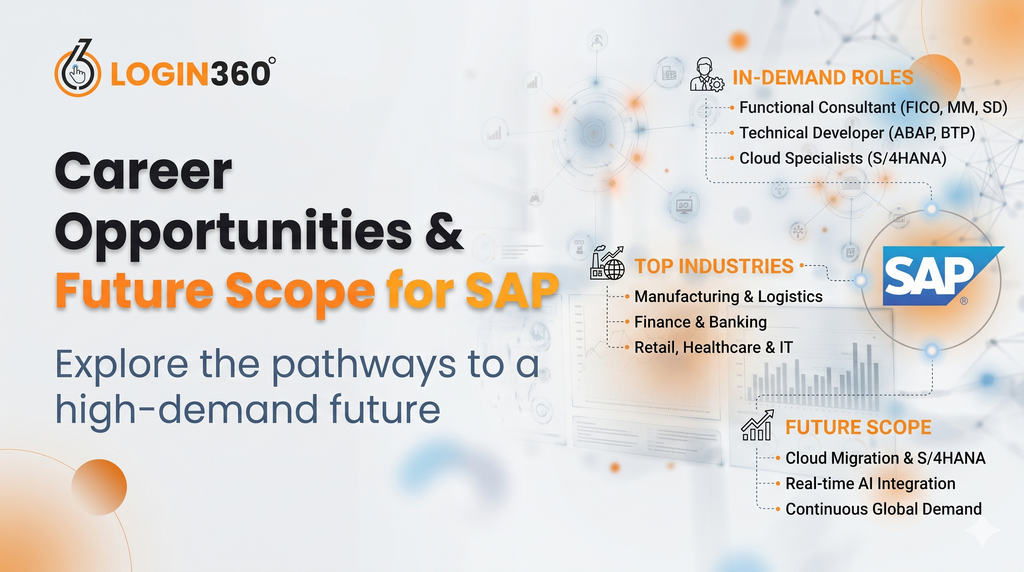
Industries That Use SAP
- Manufacturing and automotive
- Banking and finance
- Retail and e-commerce
- Healthcare
- Information technology
- Logistics and supply chain
- Energy and utilities
As businesses handle increasing amounts of operational data, SAP continues to play an important role in enterprise management.
Is SAP a Good Career Choice in 2026?
For individuals interested in enterprise technology, business management and software systems, SAP can offer valuable career opportunities in 2026.This means SAP professionals can benefit from developing knowledge beyond traditional ERP systems. Combining SAP expertise with modern technology skills and business awareness can support career development.However, learning SAP alone does not guarantee employment. Practical experience, problem-solving abilities, communication skills and an understanding of business processes are also important.
Why Is SAP Still Relevant in 2026?
1. SAP S/4HANA
SAP S/4HANA is an advanced ERP system that helps companies analyse data, integrate business functions and manage operations more effectively.As many organisations transition from older SAP ERP systems to SAP S/4HANA, opportunities are available for professionals with knowledge of implementation, configuration, data migration and system support.
2. Digital Transformation
Businesses are increasingly adopting digital technologies to automate activities and improve operational efficiency.SAP supports this transformation by connecting departments, managing business information and helping organisations streamline their processes.As digital transformation continues, ERP professionals can participate in technology initiatives across different industries.
3. Cloud ERP
Businesses are increasingly accessing enterprise applications through cloud-based platforms.SAP cloud solutions allow organisations to manage business operations without depending entirely on traditional on-premise infrastructure.Therefore, knowledge of cloud technology, system integration and enterprise applications can be valuable for individuals planning an SAP career in 2026.
4. Artificial Intelligence
Artificial intelligence is becoming increasingly important in enterprise technology.SAP is incorporating AI capabilities into its business solutions to support automation, data analysis and decision-making.Professionals who understand both SAP systems and AI-related technologies may be able to explore additional career opportunities as these technologies develop.
5. Changing Business Requirements
Companies require reliable systems to manage finance, procurement, sales, inventory and human resources.Although new technologies continue to emerge, businesses still need integrated platforms to manage their daily activities.As a result, SAP knowledge remains relevant across several business and technology functions.
Popular SAP Modules in 2026
SAP provides different modules and business applications based on organisational requirements. Individuals should understand the available modules before choosing their learning path.SAP FICO SAP FICO focuses on financial accounting and controlling. It helps organisations manage and report financial information, including accounts payable, accounts receivable and general ledger activities.Individuals with an interest in finance, accounting and business management may find this module suitable.
SAP MM
SAP Materials Management helps organisations manage procurement, purchasing, inventory and material planning.Candidates interested in supply chain operations, purchasing and stock management can explore this SAP module.
SAP SD
SAP Sales and Distribution focuses on sales order processing, delivery management, billing and customer-related business activities.Individuals interested in sales operations and business management may consider this module.
SAP ABAP
SAP ABAP is a programming language used to develop, customise and maintain SAP applications.People with programming knowledge or a background in software development may find this technical career path useful.
SAP SuccessFactors
SAP SuccessFactors is a cloud-based human resource management solution. It supports employee management, recruitment, performance management and training activities.Individuals interested in HR and digital human resource technology can explore this module.Professionals who want to improve their understanding of SAP technologies can also explore an SAP Course in Coimbatore to learn about functional and technical SAP modules.
Career Options After SAP Training
Completing SAP training can open up various career opportunities in different industries. Depending on their skills, interests, and chosen SAP module, candidates can explore functional, technical, and consulting roles. Some popular career options after SAP training include:
- SAP Functional Consultant: Helps businesses configure SAP modules according to their business requirements, such as finance, sales, and materials management.
- SAP Technical Consultant: Works on technical development, customisation, programming, and system integration using SAP technologies.
- SAP ABAP Developer: Develops and maintains custom applications, reports, and programs using SAP ABAP.
- SAP FICO Consultant: Handles financial accounting, cost management, and financial reporting processes using SAP.
- SAP MM Consultant: Manages procurement, inventory, and material management processes.
- SAP SD Consultant: Works with sales, order processing, billing, and distribution activities.
- SAP Basis Administrator: Manages SAP system installation, configuration, performance, and maintenance.
- SAP Support Consultant: Provides technical or functional support to resolve SAP system issues and maintain smooth business operations.
Skills Needed for SAP Careers
Apart from SAP module knowledge, developing additional professional skills can help individuals build a successful SAP career.
Business Awareness
SAP and business operations are closely connected. Understanding finance, sales, procurement and inventory processes can help professionals work more effectively with enterprise systems.
Technical Skills
Technical knowledge depends on the selected career path. For example, SAP ABAP developers require programming skills, while SAP Basis professionals need knowledge of system administration and databases.
Analytical Skills
SAP professionals frequently analyse business processes and system-related issues. Strong analytical and problem-solving skills help them identify problems and suggest suitable solutions.
Communication Skills
SAP consultants interact with clients, managers, software developers and business teams. Good communication skills help professionals explain technical information clearly.
Flexibility and a Desire to Learn
SAP technology continues to evolve. Professionals should stay updated with SAP S/4HANA, cloud solutions, system integration and other emerging technologies.
How to Start a Career in SAP in 2026
Although many job vacancies request relevant experience, beginners can follow a structured learning approach to develop the knowledge required for SAP careers.
1. Understand ERP Fundamentals
Start by learning what ERP means and how organisations use ERP systems. Understand how integrated software helps businesses manage different departments and improve operational efficiency.
2. Choose the Right SAP Module
Select a module based on your educational background and interests. For example, commerce graduates may consider SAP FICO, while individuals with programming knowledge can explore SAP ABAP.
3. Learn SAP Fundamentals
Understand the features, navigation, business processes and terminology associated with your selected SAP module.
4. Develop Practical Skills
Practical knowledge is valuable when preparing for SAP jobs. Work through sample business scenarios, exercises and guided activities to understand how SAP is used in real business environments.
5. Explore SAP Learning Resources
SAP provides official learning resources and training programmes. Beginners can use these resources to improve their understanding of different SAP solutions and explore available certification options.
6. Apply for Suitable Jobs
Prepare a professional resume that highlights your educational qualifications, SAP knowledge, technical abilities and practical learning experience.Apply for suitable entry-level opportunities such as SAP trainee, junior consultant and application support positions.
Can Non-IT and Non-Technical Graduates Work in SAP?
Yes. SAP is not limited to computer science and engineering graduates. Individuals from commerce, management, finance and other educational backgrounds can also explore SAP career opportunities.The suitable module generally depends on an individual’s education and career interests.Some common options include:
- B.Com and M.Com: SAP FICO
- BBA and MBA: SAP SD and other business-related modules
- Engineering: SAP PP, MM and technical modules
- Computer Science: SAP ABAP, Basis and integration modules
- HR Graduates: SAP SuccessFactors
Non-IT graduates should focus on improving their business knowledge and understanding relevant SAP modules. Additional programming or technical skills may be required for certain specialised roles.
Benefits and Challenges of SAP Careers
| Benefits | Challenges |
| Relevant across multiple industries | Specialised knowledge is required |
| Functional and technical career options | Getting initial practical experience can be challenging |
| Exposure to enterprise business systems | Some modules have a steep learning curve |
| Opportunities to specialise | Continuous learning is necessary |
| Experience with business technology | Entry-level competition can be challenging |
What Is the Future Scope of SAP Beyond 2026?
The future of SAP is closely connected to developments in cloud computing, enterprise automation, artificial intelligence and data analytics.As organisations modernise their ERP environments, professionals with knowledge of SAP S/4HANA, cloud integration and business process management may find opportunities to participate in technology projects.
Tips to Build a Successful SAP Career
Building a successful SAP career requires technical knowledge, business understanding and continuous professional development.Here are some useful suggestions:
- Choose one SAP module based on your educational background and interests.
- Understand the business processes related to your selected module.
- Practise using available SAP learning environments and exercises.
- Develop knowledge of SAP S/4HANA and cloud-based solutions.
- Improve communication and analytical skills.
- Build practical experience through relevant exercises and projects.
- Stay updated with industry developments and emerging technologies.
- Apply for suitable entry-level positions to gain professional exposure.
A focused learning approach can help beginners develop confidence and prepare for opportunities in the SAP ecosystem.
Conclusion
SAP a good career continues,to be an important technology in the enterprise software industry in 2026. With organisations investing in S/4HANA, cloud ERP, system integration and intelligent business applications, SAP knowledge can provide a foundation for different career opportunities.Practical exposure, business process knowledge, problem-solving abilities and continuous learning are equally important.Students and professionals in Cochin who are interested in exploring SAP training opportunities can contact Login360 to learn more about available courses, career guidance, and training options.
FAQs
1. Is SAP a good career choice in 2026?
Yes. SAP can be a good career choice because organisations continue to use ERP systems to manage business operations. Opportunities are available in functional consulting, technical development, implementation and application support.
2. Can freshers get SAP jobs?
Yes. Freshers can apply for trainee, junior consultant, associate and application support positions. Practical knowledge and an understanding of the selected SAP module can improve their job prospects.
3. Which SAP module is best for beginners?
There is no single best SAP module for everyone. SAP FICO is worth exploring for finance graduates, SAP MM and SD for business-oriented candidates, and SAP ABAP for individuals interested in programming.
4. Is coding required to learn SAP?
No. Coding is not required for every SAP career. Functional consultants generally focus on business processes and configuration, whereas technical roles such as ABAP development require programming knowledge.
5. How long does it take to learn SAP?
The learning duration depends on the selected module, previous knowledge and practice time. Understanding the fundamentals may take a few weeks, while developing practical skills and preparing for employment can require several months.