
Table of Contents
introduction:
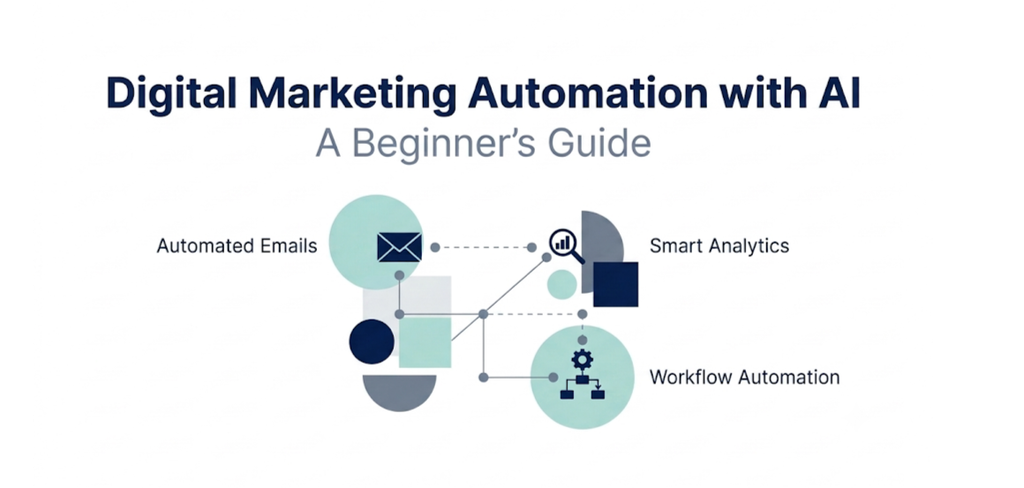
Automate repetitive tasks within Digital Marketing. So, if you are a Digital Marketing course in Chennai, then as soon as a potential student signs up to your newsletter, you can automatically send them a welcome email.Or, if a customer leaves items in their shopping basket, a reminder email can be automatically sent.Using AI in your marketing automation can allow increased flexibility. AI can be used to summarise information about customers, suggest customer segments, and identify patterns in campaign data. Using AI and automation together can allow businesses to interact with their customers effectively, quickly, and across multiple platforms (email, web pages, social media, adverts).As a beginner, it’s best to pick one useful process to implement first.
Common Uses:
- Many processes in customer journeys can be automated. Examples include:
- Saying welcome to new customers with an email.
- Providing relevant information to potential customers based upon completing a form/enquiry.
- Providing useful information about a product to customers after a purchase.
- Reminding customers of a booked appointment, and how to change this.
- Reminding customers of items they added to a basket.
- Providing a summary of campaign performance, highlighting any changes that might need investigating.
- Using AI to assist with creating content, and reviewing it before publishing.
- These processes should be triggered by a specific action from the customer. If messages are being sent regularly with no specific reason, it may cause frustration with customers.
Digital marketing automation Starts as a Beginner:
As a beginner, it is likely best to begin with tools that are already in place in your business, for example, your email, CRM, or advert account.Some AI digital marketing writing tools can help with developing your campaign. These can include suggestions for email/social media content, creating briefs from notes, or summarising feedback from customers. OpenAI has a guide available on using AI for marketing tasks, including campaign planning, writing, researching and analysing performance. In order to get good results from marketing automation, you should give the AI the target customer, goal, tone to match your brand, and accurate product information. The resulting content should therefore be reviewed.Some marketing tools have AI built in.
Decide on a Regular Process:
Start with an easy automation. This will give you confidence. Try sending a welcome email to new sign-ups, or confirm recent orders or remind people of an upcoming appointment. Doing this helps you get familiar with automations and pick up any potential problems early on.Before setting the automation up in your system, make sure you understand how the process works manually. What steps are taken in order, by whom and what information/resources is given to customers? Knowing this means that you can easily identify inefficiencies in the process, cut out any redundant steps and ensure that the content within your automation is useful and correct.
Decide on Success:
Consider what makes the process a success. If it is a welcome email, perhaps we want customers to understand more about the business, or be directed to useful information. If it is a follow-up for a lead, perhaps we want them to find information, or book a consultation.Consider how to measure success. If it is a welcome email, maybe you would want to measure clicks in the email. If it is a follow-up for leads, you may want to measure bookings, qualified enquires, purchases, or unsubscribes. It is not useful to just know how many messages were sent.
Understand the Customer Journey:
- Software confirms valid email address, and that the user has given permission to send them messages.
- If the customer clicked on a resource in the email, they may be sent a related follow-up email in a few days.
- If the customer did not click on a resource, the software may not send any further emails.
- Results of the automation should be reviewed, and content updated if needed.
- Understanding the process may help to identify any redundant steps, repeated messages, or points where human review is required.
Prepare Content and Customer Information:
Ensure that product information is accurate, and content is clear and helpful. While AI may be able to provide suggested content or subject lines, the content should be double-checked to ensure it is correct for the audience. Ensure that the correct fields are used (for example, customer name, appointment date), and decide what should happen if information is missing.Only include the necessary customer information. If integrating with a CRM, or adding data to AI tools, check that data is handled appropriately in that system. Ensure that data handling is in line with the privacy procedures in place in your business.
Decide on Triggers and Rules:
You will begin by putting in place triggers. For example, if your customer has inquired about the Digital marketing course in Coimbatore, you may wish to automate a process. Other triggers might be customers signing up, purchasing or making an appointment. Then decide what action to take. In this case, only send the selected follow up email/leaflet to those people who have inquired about this course. Only implement complex conditions if they improve the customer experience or help meet business objectives. Too many conditions can become complex to manage.
Test the Automation:
Send test messages to yourself and colleagues. Check that text, links, images, personalisation, and formatting on mobile devices are correct. Try different scenarios for customers, including missing information, or customers who have previously received similar messages.If your automation will make changes to budgets, customer data, or content, consider adding a review step to allow staff to approve changes before they occur.
Evaluate Results and Improve:
Review the results according to what you decided to measure. If the welcome email is receiving clicks, but not many people are progressing to the next step in the journey, it may be necessary to make changes to the link or page. If a high number of people are unsubscribing from the email, it may be that the email is too frequent or not relevant.While AI may be able to summarise results, or suggest what to investigate, double check the data. OpenAI recommend providing context to the AI (what decision needs to be made, time period, and definition of data), and double check key figures. Find the guide here.Benefits:
- Carefully implemented AI marketing automation can provide many benefits:
- Time saving. Repetitive messaging and reporting can be done automatically.
- Consistency. Customers can be sent messages at the right time, even if staff are very busy.
- Personalisation. If customer information is available, messages can be tailored to what interests them, or what they have done.
- Learning. AI can be used to summarise feedback and campaign data, allowing marketers to know what questions to investigate further.
- More capability for small teams. Small businesses may be able to manage basic follow-up messages and content creation without starting from scratch.
- However, careful consideration must be given to how AI is implemented. If messages sent through automation are incorrect, or not suitable for customers, it can create more work for staff, and reduce trust with customers.
Things to Consider:
- Human oversight: If there are automated campaigns or follow-up sequences in place for your Digital marketing course in Kochi, it is important to have human oversight on key parts of the campaign.
- Respect customer privacy. Only collect and use necessary information for the task.
- Avoid over-messaging. Limit how frequently messages are sent. Give customers an easy option to adjust their preferences, or unsubscribe.
- Check AI generated information. Inaccurate or unsuitable content could be created. Google suggests manually verifying the accuracy of AI generated content on websites. The focus should be on accuracy, quality and relevance. More information can be found here.
- Provide value. Ensure that automated messages answer a question, or provide helpful information to customers. Don’t just send more messages.
- Regularly review. As products, prices, links and business policies may change, it may be necessary to update automated messages.
Conclusion:
AI marketing automation can allow businesses to complete regular tasks, create content, react to actions from customers, and learn information from campaigns. Ai driven digital marketing, simple automations such as welcome emails, or reminders for appointments can be implemented, and extended as understood.To get the most out of marketing automation, clearly define goals, understand the customer journey, be sure to use accurate data, test, and review. While AI can be used to help create content/analyse data, important decisions, and communications should be handled by humans. If implemented carefully, marketing can be consistent, efficient, and provide valuable, personable interactions with customers.