
Introduction:
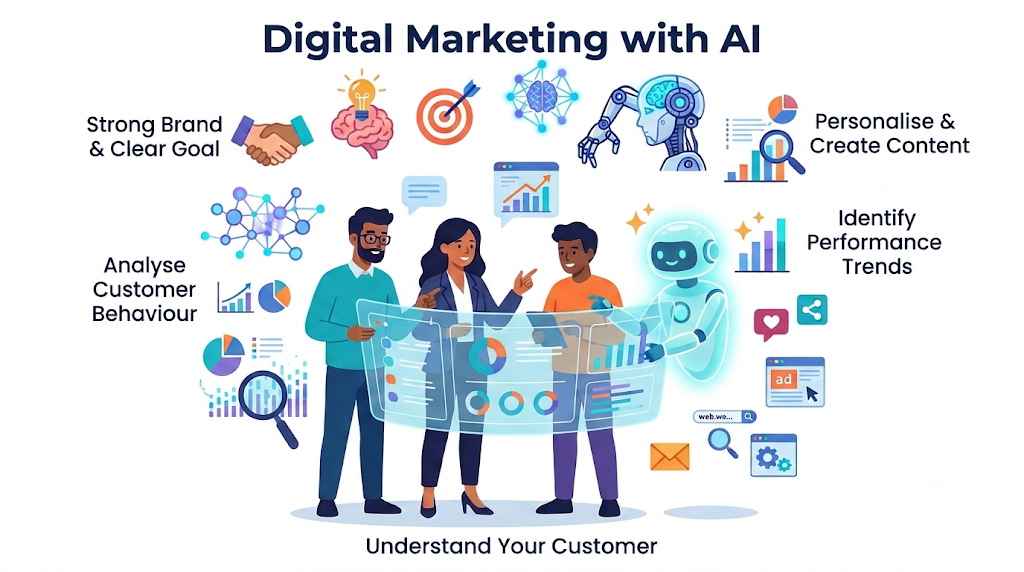
Digital marketing with ai allows businesses to interact with people via search engines, websites, emails, social media and online advertising. Using AI means that marketers can plan and implement their digital marketing efforts using tools that can help analyse customer behaviour, create content, personalise and identify trends in performance data. digital marketing course in chennai Overall, using AI correctly can give marketing teams more time to make decisions and improve their campaigns.Whilst using AI will not replace the need to understand your customer and have a strong brand, having a clear goal, accurate information and thoughtful consideration is key. If you’re using AI to simply create more content and advertisements you’ll likely end up creating generic content. However if you’re using AI to help you understand your data, try new things and improve your useful content, it can give you a more focused marketing strategy.This article will give an overview of the most common tools used in the benefits of using them and how they can be used effectively.
What is Digital Marketing with ai?
AI in marketing strategy that can help with tasks such as identifying patterns, creating text/images, predicting likely outcomes and completing repetitive tasks. Some tools use generative AI to create an initial draft for your email/social media content. Other tools give recommendations on your campaign performance, suggested audiences or help decide what advert to display.Using AI can help with many parts of your marketing campaigns. It can help with initial research and idea generation, during the campaign it can help with adjusting creative assets and completing repetitive tasks with your adverts. Finally, it can help with organising your results and identifying questions to ask your team.It is important to remember that AI will provide recommendations and predictions based on the information provided. It won’t automatically know if something is true, if something aligns with your brand or if it is the right campaign for your customer. This means human consideration is still needed.
Content & Research Assistants:
Tools like ChatGPT can help with idea generation, outlining articles, writing emails, rewriting content for different audiences and summarising research.Digital marketing course in coimbatore OpenAI have a guide on how they can be used for writing, research, idea generation and analysing campaign data.For example, if you’re a small business you can input your product description, target audience and brand guidelines and ask for multiple subject line options for your email.seo digital marketing ,You can pick the most relevant ideas and edit them. You can also ensure any product details are correct. This will save time in the initial draft stage.
AI Assisted Advertising:
Advertising tools are becoming more AI enabled. Google Ads have a tool called Performance Max that can create text & image assets for your campaigns across the Google advertising network. Marketers will review the assets before they’re used. Google also have new AI Max features for Search campaigns, helping you to have more control over your messaging and matching. These can help your team create and test more variations, however you’ll need to set your campaign goals, budget and brand requirements. See Google’s guide on how to use assets in Performance Max and an overview of AI Max.Meta also have AI enabled tools for advertising. As how the AI is used in your advertising can be important to your audience, Meta explain how they label some ads that are created or heavily edited using their Generative AI tools. See Meta’s AI transparency update.
Customer Relationship & Marketing Automation:
CRM platforms allow you to store information on your customers, leads and sales. Using the AI features can help organise your customer data, create marketing content, summarise activity and provide recommendations for your campaign.HubSpot have tools called Breeze Assistant & Marketing Studio. These can help with planning your campaigns, creating assets and using your brand, audience & performance information. These can be useful if you want to create a joined up approach to your campaigns and customer journeys. See HubSpot’s overview on Marketing Studio.
Analytics Tools:
Analytics tools will help you understand what happens once someone clicks on your adverts, opens your emails or visits your website. Using AI to help with your reporting can help summarise trends, identify changes and provide recommendations.Google have introduced some conversational AI tools to help you understand your performance. These include Ads Advisor & Analytics Advisor. See Google’s overview of AI Advisors.Whilst an AI summary can be helpful, you should always check the data underneath. For example if there has been a change in conversions it may be due to seasonal factors, tracking issues or a change in your campaign.
Personalisation & Customer Support:
AI can help personalise recommendations on your website, email content and customer support. For example, a retail business may recommend products based on what the customer has viewed. Service businesses may use chatbots to answer common questions and refer more complicated queries to a person.Ensure that your personalisation is relevant and respectful. Where appropriate explain how you’re using the data, don’t collect unnecessary information and ensure it’s easy for customers to speak to a person.
Increased Efficiency:
AI can help reduce the time spent on repetitive tasks such as creating draft variations, summarising reports, sorting customer feedback and editing copy for different channels. This can allow smaller teams to test more ideas.
Better Informed Decisions:
Marketers often deal with data from various channels. Using AI can help summarise this information and identify trends. For example, you may identify that a particular audience segment is engaging more with a certain type of content. You can then test this.
More Relevant to Customers:
AI can help you personalise your messaging to suit your customers needs and where they are in their buying journey. For example, a new visitor may need an introduction to your product whereas an existing customer may need tips on how to use the product. Personalisation based on the right data and providing a benefit to your customer can make your communications more useful.
Faster Testing:
AI can help create multiple variations of your adverts, headlines and landing page messaging. Marketers can test these variations and learn what works. This isn’t about creating lots of variations, it’s about testing and learning.
Improved Accessibility for Small Business:
Using AI writing and design tools can help small teams create some basic marketing content without specialist resources. For example, the business owner may use an assistant to create a content plan or initial draft for their product announcement. They can then review the content.
Set a clear business goal:
Before choosing a tool think about what you want to improve within your business. Are you looking to increase quality leads, improve engagement in your emails, reduce the time spent creating reports or help customers find relevant information? This will help you choose the right tool and see if it’s helping.
Useful Information from Customers:
The usefulness of the AI will depend on the information and context provided. Use customer feedback, FAQs, sales insights and campaign data to understand what people need. Ensure the information is accurate, relevant and appropriate. Don’t input sensitive customer information unless you’ve confirmed the tool and settings are appropriate.
Provide Useful Guidance:
Provide the tool with some useful guidance on your audience, brand tone, what claims you can make and what language to avoid. If you simply ask it to write an email there’s a lot of scope for generic content. Instead provide it with a brief explaining who your audience is, why you’re writing the email, what tone you’d like, key facts and a call to action. Also state how long you’d like the email to be.
Have Someone Review the Content:
Ensure someone reviews the AI generated content before it goes out to your customers. They should check the facts, tone, accessibility, brand and any legal/policy considerations. This is particularly important if there are any financial, health, safety or product claims. AI generated content can sound very confident but may be incorrect.
Create Useful Original Content:
AI can help with research and structuring however your content should provide a benefit to your target audience. This can be original insight, practical experience, clear explanations or useful evidence. Google have guidance on using generative AI to help with your content.seo and digital marketing However if you’re using it to create lots of pages with no added value this can breach their scaled content abuse policy. Google have guidance on using AI generated content on your website, ensuring it’s accurate, high quality, relevant and fact checked by a human.
Test Before Scaling:
Before spending a large amount of money or automating a big customer journey run a small test. Compare your AI assisted creative to your existing content, review the results over an appropriate timeframe and ensure it aligns with your original business goal. Ensure you’re looking at meaningful metrics such as quality leads, sales, retention or customer satisfaction.
Be Careful with Customer Data:
Be careful with customer data and only give it to those who need it. Digital marketing course in kochi Ensure you understand how the tool is storing/using the information before linking it to your business systems. Where appropriate be transparent with your automation. This is particularly important if customers are interacting with a chatbot.
Conclusion:
AI is becoming a practical tool within digital marketing. It can help with creating content, organising customer data, supporting advertising campaigns and analysing analytics. It can help your team save time, try new ideas and get the most from your campaign data. The best results will come from using AI to support a clear strategy and keeping the decision making in the hands of the marketers.To start with ensure you have a clear goal, choose tools that fit your processes and test the results. Ensure the AI generated content is accurate, be careful with customer data and focus on creating useful content. Whilst AI can help speed up and make your marketing more flexible it’s important to understand your customers, communicate in a trustworthy way and have a unique brand voice.