

Let’s start with a situation you may know well. You launch an ad campaign, the clicks roll in, and your dashboard looks great. Then your sales team says the leads are “not serious,” and the phone stays quiet.
It’s frustrating, and it’s more common than most businesses admit. The problem usually isn’t the ad. It’s everything that happens after the click.
In this guide, we’ll walk through how lead generation campaigns really work, why clicks and customers are different things, and how to build a system that brings in people who actually want to buy. At Login 360 Kochi, we see this gap often with local businesses, and the good news is that it can be fixed.

What Are Lead Generation Campaigns, Really?
A lead generation campaign is a planned effort to find people who might need what you sell and collect their contact details so you can talk to them. It sounds simple, but there are four moving parts: an audience, an offer, a place to capture details, and a follow-up plan.
Think of it like running a shop. The ad is your signboard. The landing page is your front door. The form is the person at the counter asking how they can help. The follow-up is what you do after they walk out without buying. If any of these is weak, customers slip away.
Many businesses spend all their energy on the signboard and forget the rest of the shop.
Why Clicks Don’t Always Turn Into Customers
A click means someone was curious for a moment. That’s all. It doesn’t tell you if they have the budget, if they’re the decision-maker, or if they need your service this month or next year.
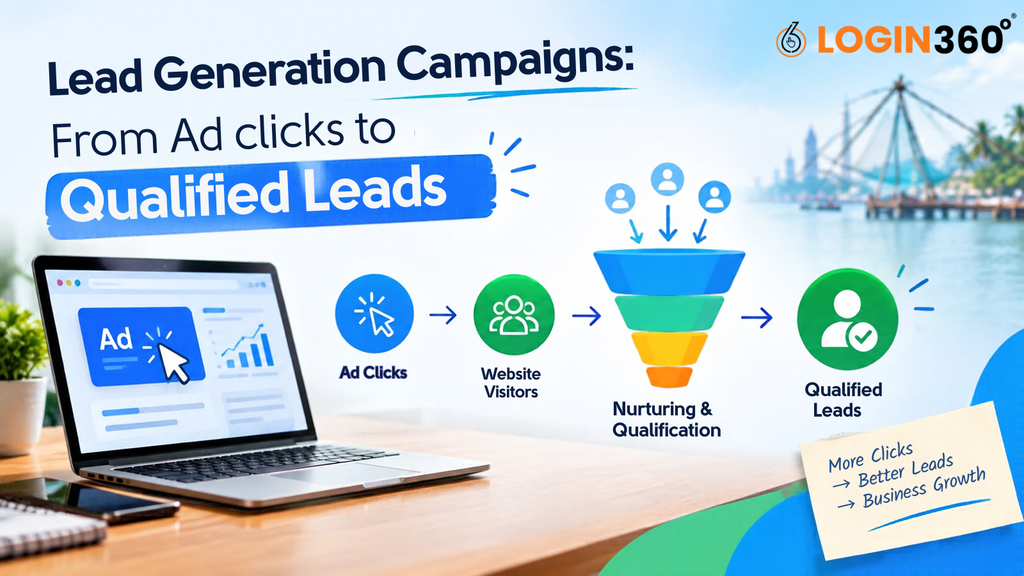
This is why the words we use matter. A click is someone tapping your ad. A lead is someone who gave you their details. A qualified lead is someone who fits your business and shows real interest in buying. Each step narrows the crowd, and that’s a good thing. A smaller group of the right people beats a huge group of the wrong ones.
Where Most Campaigns Quietly Lose Leads
When we audit campaigns, the same few problems keep showing up. The targeting is too broad, so the ad reaches people who will never buy. The ad promises one thing and the landing page says another. The page loads slowly on a phone. The form asks for too much, or too little. And the follow-up call comes three days late.Each of these is small on its own. Together, they can waste most of your ad budget.
A Simple Framework for Better Lead Generation Campaigns
Here is the process we recommend, step by step. You don’t need to do everything at once. Even fixing two or three of these will make a visible difference.
Step 1: Know Exactly Who You Want
Before you spend a rupee on ads, write down who your ideal customer is. What do they do? What problem keeps them up at night? What are they willing to pay? Look at your best existing customers and find what they have in common.
This one exercise shapes everything else, from your ad wording to the questions on your form. If you try to speak to everyone, you end up speaking to no one.
Step 2: Pick Channels That Match Buying Intent
Different platforms catch people at different moments. Search ads, like Google, reach people who are already looking for a solution, so the intent is high. Social ads on Facebook, Instagram, or LinkedIn are great for reaching specific groups and creating interest before people start searching. Retargeting gently reminds visitors who left without taking action.
For most businesses in Kochi and across Kerala, a good start is one search channel and one social channel. Learn what works, then grow from there. Spreading a small budget across five platforms rarely ends well.
Step 3: Write Ads That Filter, Not Just Attract
Here’s something many marketers get wrong. They write ads to get as many clicks as possible. But more clicks isn’t the goal. The right clicks are.
Be clear about who your offer is for. Mention the location, the price range, or the type of customer. Yes, this may reduce your clicks a little. But it also reduces the number of people who click out of curiosity and never buy. Your cost per click might go up slightly, while your cost per real customer goes down.
Step 4: Build a Landing Page That Does One Job
Your landing page should feel like a natural next step after the ad. If the ad says “Free website audit for your business,” the page should say exactly that, in the first line, not something vague about “digital solutions.”
Keep the page simple. Use a clear headline, a short explanation of the benefit, a few testimonials or numbers that build trust, and one button. Remove extra menus and links that pull people away. And always check how it looks on a phone, because most of your visitors are probably holding one.
Step 5: Make Your Form Work Harder
A form is a trade-off. Short forms get more submissions. Longer forms get better-quality leads. The sweet spot for most businesses is name, phone or email, and one or two simple questions, such as what service they need or when they plan to start.
If you’re offering something high-value, like a consultation or a custom quote, don’t be afraid of a slightly longer form. People who take the time to fill it in are usually more serious.
Step 6: Score Your Leads So Sales Knows Where to Focus
Lead scoring sounds technical, but the idea is simple. Give points for things that show a good fit, like the right job role or business size, and for things that show interest, like visiting your pricing page or asking for a demo.
When a lead crosses a certain score, it goes to your sales team. Everyone else stays in a nurture list. This saves your team from chasing people who aren’t ready, and it makes sure hot leads get a quick call.
The most important part is to sit down with your sales team once a month and ask: “Were these leads any good?” Their answer will tell you more than any dashboard.
Step 7: Follow Up Fast, Then Keep Nurturing
Speed matters. A lead who filled in your form ten minutes ago is thinking about you right now. By tomorrow, they may have moved on or spoken to a competitor. Even a quick automated message saying “Thanks, we’ll call you shortly” helps.
For leads who aren’t ready to buy, don’t give up. Send helpful emails, share a useful case study, or invite them to a short call. Think of it as staying friendly until the timing is right. Many of your best customers will come from people who said “not yet” the first time.
See the Whole Journey at a Glance
Sometimes a picture explains it better than paragraphs. The infographic below shows how a stranger becomes a qualified lead, step by step.
Suggested infographic content for your designer:
- Ad Impression: the right audience sees your offer
- Ad Click: they show interest
- Landing Page: one clear message and one action
- Form Submit: a visitor becomes a lead
- Lead Scoring: fit and interest are checked
- Nurture: emails and reminders build trust
- Qualified Lead: ready for a real sales conversation
Show the numbers getting smaller at each step while the quality gets higher.
The Numbers That Actually Matter
It’s easy to get lost in reports, so here is what we suggest watching closely.
Start with your click-through rate, which tells you if your ad message is working. Then look at your landing page conversion rate, meaning how many visitors fill in the form. Next is cost per lead, which is your ad spend divided by the number of leads. But don’t stop there.
The number we care about most is cost per qualified lead. A campaign that brings you leads at ₹300 each but none of them buy is worse than one that brings leads at ₹800 each and half of them become customers. Always follow the lead all the way to revenue.
Mistakes We See Again and Again
Chasing volume is the biggest one. A long list of leads feels good, but it means nothing if no one answers the phone.
The second is keeping marketing and sales in separate worlds. When they don’t talk, nobody knows what a “good lead” looks like. The third is sending all ad traffic to the homepage. A homepage tries to do everything, so it rarely converts well. A dedicated landing page almost always wins.
Other common mistakes include never testing different headlines or offers, setting up tracking incorrectly so you can’t tell which ad brought which customer, and following up too slowly. None of these is hard to fix once you spot them.
How Login 360 Kochi Can Help
Running lead generation campaigns well takes more than launching ads. It takes planning, testing, tracking, and patience. That’s where an experienced team makes a real difference.
Login 360 Kochi works with businesses to build campaigns that focus on quality, not just numbers. From understanding your audience and setting up your ads to designing landing pages and tracking results, the goal is simple: bring you leads your team is happy to call.
If your current campaigns are producing clicks but not customers, a fresh pair of eyes can often spot the problem quickly. Sometimes it’s a small fix that changes everything.
Frequently Asked Questions
How long do lead generation campaigns take to show results?
Paid ads can bring in leads within days. But getting the campaign properly tuned usually takes four to eight weeks, because you need enough data to see what’s working. Content and SEO take longer, but the results tend to last.
What is a good landing page conversion rate?
It depends on your industry and offer, so be careful with universal benchmarks. A better goal is to beat your own numbers month after month through small, steady tests.
How can I get better leads without losing too many?
Make your ads more specific, add one or two qualifying questions to your form, and use simple lead scoring. You may see a small dip in volume at first, but your close rate should improve.
Do small local businesses need lead generation campaigns?
Yes, and often they benefit the most. With local targeting, even a modest budget can reach the right people in Kochi and nearby areas.
Final Thoughts: Aim for the Right People, Not Just More People
Clicks are only the start of the story. The real work is guiding the right person from curiosity to conversation, and from conversation to customer.
When you know who you’re speaking to, write honest ads, build simple pages, ask smart questions, and follow up quickly, your campaigns begin to feel very different. Fewer wasted clicks, better conversations, and a sales team that’s happy to pick up the phone.
Start small. Pick one campaign this week, find the stage where people drop off, and fix that first. If you’d like help, Login 360 Kochi is ready to look at your campaigns with you.
[ Book a free consultation with Login 360 Kochi → /contact]