
Table of Contents
Introduction
Can non-technical students build a Career in Full Stack Development? This is one of the most common questions asked by students interested in entering the IT industry after studying arts, commerce, management, or humanities. With the increasing demand for web applications and digital services, full stack development has become a promising career option for students from different educational backgrounds. Although having a technical education can be helpful, it is not compulsory to start learning web development. With proper training, practical experience, and consistent learning, anyone can develop the skills required to enter this field. A Career in Full Stack Development involves learning both frontend and backend technologies to build complete web applications. Even if programming initially seems difficult, beginners can gradually understand coding concepts through structured learning and regular practice.
Understanding Full Stack Development
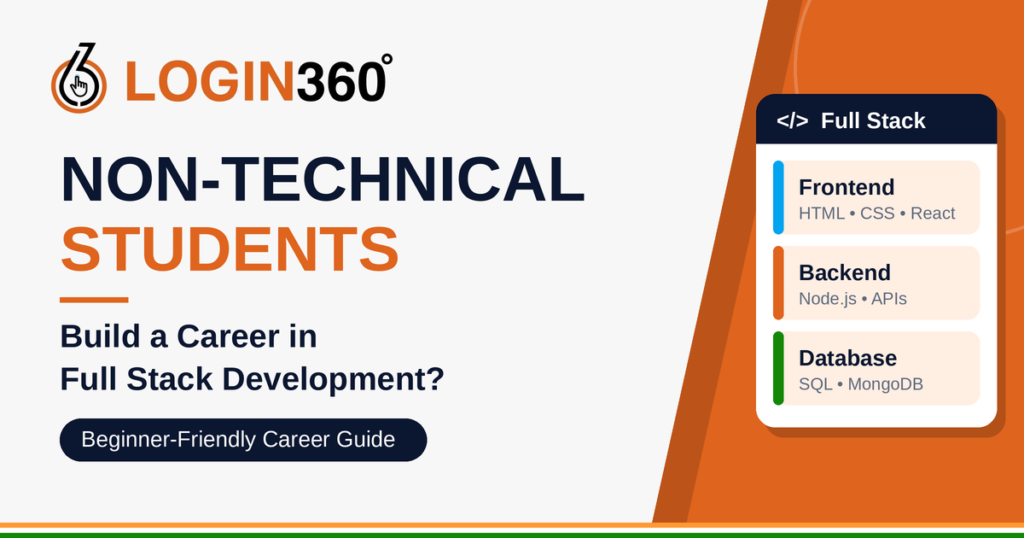
Before exploring a Career in Full Stack Development, it is important to understand what full stack development means. Full stack development involves working with both the frontend and backend of a web application. The frontend includes the elements that users see and interact with, such as web pages, buttons, forms, menus, and images. HTML, CSS, JavaScript, and React are commonly used to develop interactive user interfaces. The backend handles the operations that happen behind the scenes, including application logic, database management, authentication, and server-side processing. Technologies such as Python, Java, Node.js, and PHP are commonly used for backend development. A full stack developer understands how these technologies work together to create functional web applications.
Can Non-Technical Students Learn Full Stack Development?
Yes, non-technical students can learn full stack development if they are willing to invest time and effort in understanding programming concepts. A computer science degree can provide a strong foundation, but it is not the only way to enter the IT industry. Students from commerce, arts, management, and humanities backgrounds can also develop programming skills through proper guidance and practical training. The most important factor is having an interest in technology and maintaining a consistent learning routine. Beginners should start with basic programming concepts such as variables, conditions, loops, functions, and data types before moving on to advanced frameworks. With patience and regular practice, students can gradually build the knowledge needed for a Career in Full Stack Development.
Begin with the Fundamentals
Learning the fundamentals is the first step towards becoming a full stack developer. Beginners should understand how websites are structured, styled, and made interactive before moving on to advanced technologies. HTML helps create the structure of web pages, while CSS is used to improve their appearance and layout. JavaScript adds interactive features to websites. After understanding these basics, learners can explore frontend frameworks such as React and backend technologies such as Node.js. They should also learn database management using MySQL or MongoDB, understand APIs and server communication, and become familiar with version control tools such as Git and GitHub. Building a strong foundation makes it easier to understand advanced development concepts.
Learning Programming Through Practical Learning
For students without a technical background, programming may seem challenging at the beginning because it involves logical thinking and problem-solving. However, practical learning makes the process easier. Instead of concentrating only on theoretical concepts, beginners should practise coding by creating small applications. For example, they can develop a calculator using JavaScript or create a personal portfolio website using HTML and CSS. As their knowledge improves, they can build more advanced applications using frontend and backend technologies. Regular coding practice also helps learners identify errors, understand debugging, and improve their problem-solving abilities. These practical experiences are important for building a successful Career in Full Stack Development.
Know How Frontend and Backend Interact
Understanding how frontend and backend technologies communicate is another important part of full stack development. A full stack developer should know how information moves between the user interface, server, and database. For example, consider an online registration form where a user enters personal details. The frontend collects the information and sends it to the backend through an API. The backend processes the request and stores the information in a database. When the user logs in again, the backend verifies the details and sends the required response to the frontend. Understanding this process helps beginners learn how different technologies work together to create complete web applications.
Create Projects for Your Portfolio
Building real-world projects is one of the best ways to demonstrate development skills. Beginners can start with simple applications and gradually move towards more advanced projects. Some useful project ideas include personal portfolio websites, to-do list applications, blog websites, e-commerce platforms, student management systems, expense tracking applications, appointment scheduling systems, and basic authentication systems. These projects help learners understand frontend design, backend functionality, database management, and API integration. A strong project portfolio can also help candidates demonstrate their practical abilities during job interviews. Working on real-world projects provides valuable experience and supports long-term growth in a Career in Full Stack Development.
Does It Matter to Have a Degree in Computer Science for Non-Technical Students?
A computer science degree can help students understand important subjects such as algorithms, data structures, operating systems, computer networks, and software engineering. However, having a technical degree is not the only way to acquire these skills. Students from non-technical backgrounds can learn programming through professional training programmes, online courses, self-learning, and practical projects. Employers often consider technical knowledge, problem-solving abilities, practical experience, and project work when evaluating candidates. Therefore, students should focus on developing the skills required for the job rather than worrying only about their educational background.
Structure Your Learning Process
Having a structured learning plan helps beginners understand what to study and when to move to the next topic. Students should begin with HTML, CSS, and JavaScript before exploring frontend frameworks, backend programming, databases, APIs, and version control. After understanding the fundamentals, they should practise building projects and learn how to deploy applications. Joining a professional training programme can provide guidance, practical assignments, and support from experienced mentors. Regular practice and continuous improvement are essential for developing confidence and preparing for professional opportunities.
Enhance Your Communication and Collaboration Skills
Technical knowledge is important, but communication and teamwork also play a significant role in software development. Full stack developers regularly work with designers, project managers, clients, and other developers. Students from non-technical backgrounds may already have transferable skills such as communication, presentation, teamwork, time management, and critical thinking. These abilities can help them collaborate effectively in professional environments. Learning how to explain technical concepts clearly also improves communication with team members and clients.
Challenges Faced by Non-Technical Students
Students moving into full stack development may face several challenges during the learning process. Understanding programming terminology, writing logical code, debugging errors, and working with multiple technologies can be difficult initially. Some beginners may also feel discouraged when comparing their progress with experienced developers. However, these challenges can be managed through consistent practice and proper guidance. Instead of trying to learn everything at once, students should focus on understanding one concept at a time. Making mistakes and correcting them is a normal part of programming. With patience and dedication, beginners can gradually improve their technical abilities.
Career Opportunities in Full Stack Development
Learning full stack development opens the door to several career opportunities in the IT industry. Depending on their technical knowledge, practical experience, and interests, candidates can explore different job roles. Some popular career options include Junior Full Stack Developer, Frontend Developer, Backend Developer, Web Developer, Software Developer, and Application Developer. Apart from full-time employment, learners can also explore freelance projects, website development services, personal application development, and entrepreneurship. Developing practical skills and maintaining a strong portfolio can help candidates prepare for different opportunities in the technology industry.
Conclusion
So, can non-technical students build a Career in Full Stack Development? Yes, they can. Having a non-technical educational background may require additional time to understand programming concepts, but it does not prevent anyone from entering the IT industry. By learning coding fundamentals, practising regularly, understanding frontend and backend technologies, and creating real-world projects, students can develop the technical knowledge required to become full stack developers. The most important thing is to start learning with confidence, follow a structured approach, and remain consistent throughout the journey. With dedication and the right training, a Career in Full Stack Development can become an achievable goal for students from different educational backgrounds. Visit Login360 today and take the first step towards your full stack development career!