

Table of Contents
Introduction
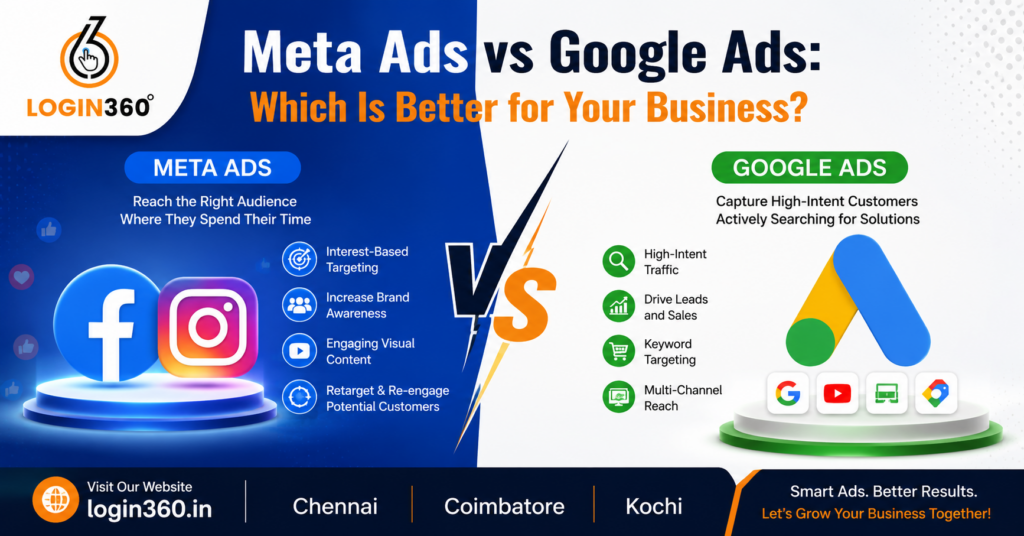
Digital marketing has emerged as one of the best methods through which firms can get in touch with their customers and create leads and sales. There are several digital marketing platforms available currently. Two of the leading examples in this regard include Meta Ads and Google Ads, which are commonly used by firms of various sizes to market their products and services to potential customers. One must keep in mind the difference between Meta Ads vs Google Ads before making any comparison between the two. Meta Ads mainly focus on the advertisement of products through social media sites like Facebook and Instagram, while Google Ads mainly focus on people who search for something online.
Understanding Meta Ads and Google Ads
Among the most widely used advertising platforms in digital marketing are Meta Ads and Google Ads, both of which help companies find prospective customers online. Meta Ads promote businesses on Facebook, Instagram, Messenger, and the Meta Audience Network by targeting users based on their interests, demographics, and online behaviour and introducing them to the offered products and services. At the same time, Google Ads is seen on Google Search, YouTube, the Google Display Network, and partner sites, targeting users looking for a specific product or service. The key distinction between the two lies in the user intent: Meta Ads stimulate demand through interest-based targeting, and Google Ads target users with the intent to buy a particular product.
How Meta Ads Work for Business Marketing
With Meta Ads, businesses can expand and achieve their marketing goals due to the ability of advertisers to apply advanced audience targeting and captivating visual formats. It is possible to target particular users depending on a variety of criteria such as age, geographic location, interests, behavioral, and purchase data. This way, advertisements are seen only by those individuals who can be interested in the product or service offered. Appealing formats that include pictures, videos, carousels, reels, and stories raise the visibility of brands even without active user search. Machine learning makes it possible for Meta Ads to become more efficient and deliver ads to the users who will likely engage with them. Features such as lookalike audiences and retargeting contribute greatly to connecting with new potential customers.
How Google Ads Drive Targeted Traffic
Google Ads enables businesses to drive targeted traffic through advertisements that are shown to individuals who are specifically searching for the required product, service, or information. This is because Google Ads does not target individuals based on their interests; rather, it uses their intent to deliver them the right advertisement. Through bidding, advertisers can use keywords, and Google evaluates how suitable an ad is in terms of quality, relevance, and bids. Google Ads is known for producing high-quality leads since the user is already interested in finding the solution. In addition to Search Ads, there are other advertising options offered by Google, including YouTube, Google Display Network, Google Shopping, and app promotion campaigns.
Audience Targeting Capabilities: Meta Ads vs Google Ads
Audience targeting is one of the most important differences between Meta Ads and Google Ads because both companies use a different approach to attracting potential customers. The Meta Ads platform is very good at audience targeting on the basis of demographics, interests, hobbies, life events, web behavior, purchasing behavior, and social interactions; hence, it is excellent for generating demand and bringing new products to the attention of people who have not yet made the effort to find them. Google Ads, on the other hand, target an audience based on the keywords that users search for, and such behavior often shows more purchase intent than the other approaches do.
Cost Comparison and Budget Considerations
- Meta Ads Often Have Lower Initial Costs
Many businesses find Meta Ads more affordable when starting digital advertising campaigns. Cost-per-click and cost-per-thousand impressions are often lower compared to highly competitive Google search campaigns. This makes Meta Ads attractive for small businesses with limited budgets. - Google Ads Can Be More Expensive in Competitive Industries
Industries such as legal services, insurance, healthcare, and finance often experience high keyword competition. Advertisers may need to spend significantly more to secure top positions in Google Search results. - Campaign Objectives Affect Overall Costs
Costs vary depending on campaign goals. Brand awareness campaigns generally cost less than lead generation or conversion-focused campaigns. Understanding objectives helps businesses allocate budgets effectively. - Optimization Impacts Advertising Expenses
Well-optimized campaigns typically achieve better results with lower costs. Regular testing, audience refinement, and creative improvements can significantly reduce wasted ad spend on both platforms. - Budget Flexibility Is Available on Both Platforms
Meta Ads and Google Ads allow businesses to set daily or lifetime budgets. This flexibility enables advertisers to control spending while scaling campaigns based on performance and business needs.
Ad Formats and Creative Opportunities
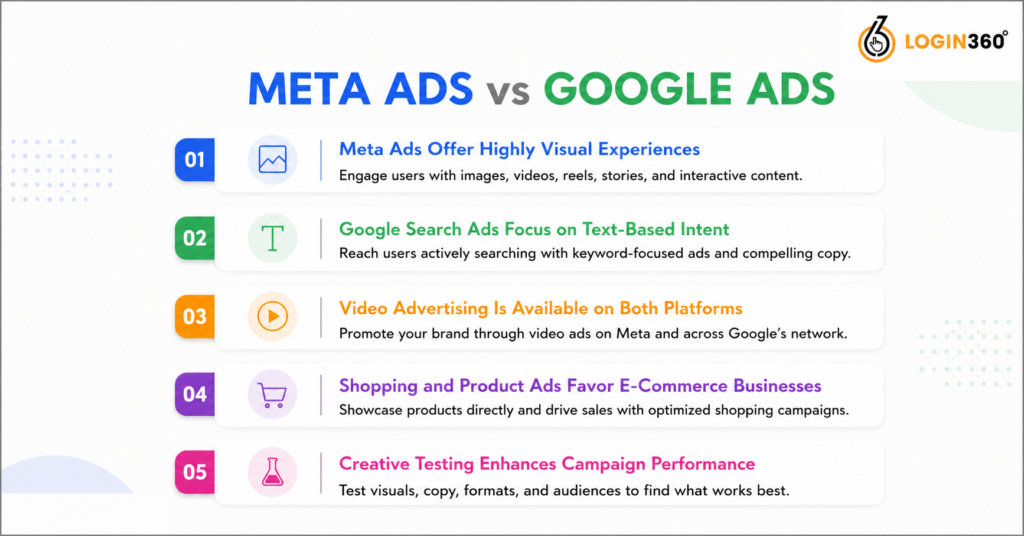
- Meta Ads Offer Highly Visual Experiences
Businesses can create image ads, video ads, reels, stories, carousel ads, and interactive content. These formats encourage engagement and help brands tell compelling stories through visual content. - Google Search Ads Focus on Text-Based Intent
Search ads rely primarily on compelling headlines and descriptions. Success depends on delivering relevant messaging that matches user search intent and encourages clicks. - Video Advertising Is Available on Both Platforms
Meta supports video placements across Facebook and Instagram, while Google offers extensive video advertising through YouTube. Both platforms provide opportunities to engage audiences through dynamic content. - Shopping and Product Ads Favor E-Commerce Businesses
Google Shopping Ads allow businesses to display products directly in search results. This feature can significantly improve visibility and drive purchase-ready traffic. - Creative Testing Enhances Campaign Performance
Advertisers can experiment with different visuals, headlines, calls to action, and formats. Continuous testing helps identify the most effective creative assets for target audiences.
Conversion Rates and Return on Investment (ROI)
- Google Ads Often Deliver Higher Purchase Intent
Users who search for specific products or services are usually closer to making a purchasing decision. This can lead to higher conversion rates for businesses targeting bottom-funnel customers. - Meta Ads Excel at Nurturing Customer Relationships
Social media advertising helps businesses engage users over time. Through repeated exposure and retargeting, brands can guide prospects through the buying journey. - Retargeting Improves Conversion Opportunities
Both platforms offer retargeting capabilities that allow businesses to reconnect with users who have visited websites, viewed products, or interacted with previous advertisements. - ROI Depends on Industry and Campaign Strategy
There is no universal winner when comparing Meta Ads vs Google Ads. Results vary based on audience behavior, competition, product type, and campaign execution. - Performance Tracking Supports Better Decisions
Detailed analytics help advertisers measure clicks, conversions, revenue, and customer acquisition costs. These insights enable continuous optimization and improved returns over time.
Choosing the Right Platform for Your Business Goals
- Choose Meta Ads for Brand Awareness
Businesses seeking to introduce new products, build recognition, and engage audiences visually often benefit from Meta’s extensive social media reach. - Choose Google Ads for Immediate Demand Capture
Companies targeting customers actively searching for solutions can generate qualified leads and sales through Google’s search network. - Use Meta Ads for Audience Discovery
Meta’s advanced targeting helps businesses identify and connect with potential customers who match specific demographic and behavioral profiles. - Use Google Ads for High-Intent Traffic
Search-based advertising is particularly effective when businesses need prospects who are ready to take action and make purchasing decisions. - Combine Both Platforms for Maximum Results
Many successful businesses use Meta Ads and Google Ads together. Meta builds awareness and interest, while Google captures demand and drives conversions, creating a comprehensive marketing strategy.
Conclusion
There will be no simple solution in the discussion on Meta Ads vs Google Ads as the two have distinct roles to play in the world of digital marketing. Meta Ads do a fantastic job at identifying audiences, building brand awareness, visual communication, and engaging customers. On the other hand, Google Ads stand out when it comes to capturing the attention of high-intent users looking for certain goods or services. For brands that place importance on developing their presence in the market and establishing brand awareness, Meta Ads are better; however, businesses that want to generate instant leads will benefit from using Google Ads. In many cases, the winning strategy will be neither of the options but the combination of the two.