
Table of Contents
Introduction
How AI is Transforming Full Stack Development
AI-Powered Developer Tools and Automation
The Rise of Intelligent Code Generation
Backend Development Evolution in the AI Era
Frontend Development: A New Frontier
Essential Skills for Future Full Stack Developers
Challenges and Considerations
Emerging Opportunities in Full Stack Development
Future Predictions and Trends
Conclusion
FAQ
Introduction
The technology ecosystem is going through a revolutionary transformation period, which is completely altering the future of full stack development by virtue of artificial intelligence technology. With the rapid progress of AI technology and its increasing capabilities, many challenges and opportunities have come up before developers to adapt themselves to this revolutionary era. As far as full stack developers are concerned, who are the people working in front end and back end development together, this is the time when these professionals would not only work on developing applications but would manage and orchestrate systems with the use of AI technology and workflow. In this guide, you will learn everything about the future of full stack development, how AI is transforming the development process of developers, and what skills one should possess in order to become successful in the coming years.
How AI is Transforming Full Stack Development
It should be noted that artificial intelligence is not merely a tool used by a software engineer in his/her work but rather a technology that completely changes the principles of solving problems in full stack development. The involvement of AI into the software development process gave rise to what some specialists term as “AI-assisted development” when the role of a full stack developer is complemented by that of a smart system capable of predicting code patterns, detecting errors and optimizing performance. This is why such big companies as GitHub, Google and Amazon are spending billions of dollars on AI-powered development tools, as they understand that artificial intelligence is going to play a crucial role in full stack development.
AI-Powered Developer Tools and Automation
The developer kit is changing at a fast pace, with many manual tasks being overtaken by AI-driven solutions. GitHub Copilot has proved that code completion can be done automatically through machine learning algorithms using billions of lines of open-source code for contextual relevance. AI is not limited to code completion but is also playing a significant role in testing and debugging. AI-based automated testing systems can develop tests, find edge cases, and predict failure points. All of this saves developers lots of time and helps in minimizing the bug escape rate. There have also been changes in the way DevOps automation works due to AI. Intelligent systems can now predict infrastructure failures, allocate resources dynamically, and offer performance insights. This is important because nowadays full-stack developers must know some DevOps concepts.
The Rise of Intelligent Code Generation
The development of intelligent code generation is one of the most important things for the future of full stack development. With the help of modern AI, it is possible to make the description of the required functionality in a natural language and get the working code in various programming languages and frameworks. It doesn’t mean that the developers’ work will become unnecessary. In fact, developers have to evolve into programmers that think about architecture and make decisions rather than write the boilerplate code. The technology used in the code generation consists of large language models that have been trained on the huge amount of code.
Backend Development Evolution in the AI Era
There is a paradigm shift occurring within backend development because of AI as it allows for novel architectural designs and optimization. There has been an increase in serverless computing in recent times but it is becoming smarter as AI helps in optimizing resources and reducing costs. Database optimization has always been very difficult in the past due to the complexity of the process but now there are AI solutions that help analyze the query patterns and make suggestions for database optimization. AI machine learning algorithms are also able to predict the data access patterns and optimize the data structures accordingly. Even API design and management are not spared as AI can detect API usage patterns, deprecated endpoints, and even suggest versioning strategies.
Frontend Development: A New Frontier
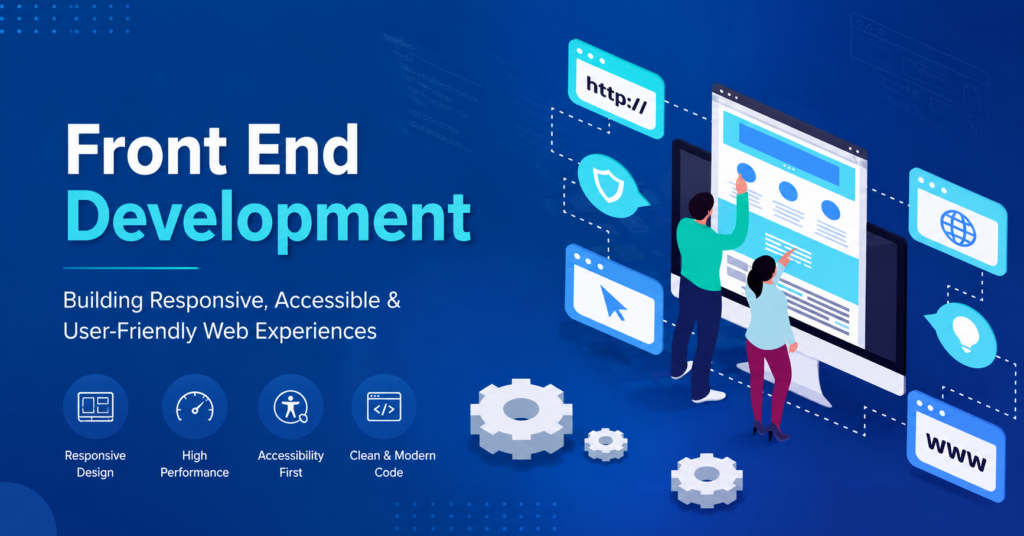
AI is causing radical shifts in the frontend space. Generation of components from design mock-ups, making them accessible, and improving their performance is being done by intelligent systems. Designers and developers can concentrate on user experience and leave all other aspects to intelligent systems. Personalization of frontend apps is becoming a reality due to machine learning algorithms which are being trained on data about users’ behavior. Each frontend application will be able to adjust its behavior according to users’ needs, their time needed for loading, and interaction patterns in real time. Responsive design, which was difficult to implement manually, is being automated by AI systems understanding principles of usability and generating layouts appropriate for any screen size or device.
Essential Skills for Future Full Stack Developers
Understanding AI and Machine Learning Fundamentals
Future full stack developers don’t need to become machine learning engineers, but understanding AI fundamentals is increasingly important. Knowledge of how machine learning models work, their limitations, and potential biases will help developers make informed architectural decisions and implement AI features effectively.
Data Literacy and Analytics
As data becomes more central to modern applications, full stack developers must understand data flow, analytics, and how to design systems that collect and process data responsibly and efficiently. This skill bridges the gap between business requirements and technical implementation.
Prompt Engineering and AI Interaction
As AI tools become more prevalent, knowing how to effectively communicate with AI systems through “prompt engineering” is becoming essential. This involves crafting clear, specific instructions to get better results from AI-powered tools.
Security and Ethical Considerations
With AI integration comes new security challenges and ethical responsibilities. Understanding how to protect AI systems from adversarial attacks, ensure model transparency, and implement responsible AI practices is critical for the future of full stack development.
Continuous Learning and Adaptation
Perhaps the most crucial skill is the ability to learn continuously. The technology landscape changes rapidly, and successful developers will be those who embrace lifelong learning and stay updated with emerging trends in AI and software development.
System Design and Architecture
As AI handles more implementation details, system design and architectural decision-making become more valuable. Understanding how to design scalable, maintainable systems that leverage AI effectively is essential for senior full stack developers.
Challenges and Considerations
Code Quality and Technical Debt
While AI can generate code quickly, developers must ensure the generated code meets quality standards and doesn’t introduce technical debt. Understanding the code produced by AI systems and refining it appropriately is a key responsibility.
Security Vulnerabilities in AI-Generated Code
AI models are trained on diverse code sources, including potentially vulnerable code. Developers must carefully review AI-generated code for security issues before deploying it to production environments.
Model Bias and Fairness Issues
Machine learning models can perpetuate biases present in their training data. Full stack developers must be aware of these issues and implement safeguards to ensure applications built with AI are fair and unbiased.
Dependency on Third-Party AI Services
Many AI-powered development tools rely on cloud-based services. This introduces dependencies on external providers and raises concerns about data privacy, service reliability, and vendor lock-in.
Skill Obsolescence Concerns
While AI creates new opportunities, developers may worry about certain skills becoming obsolete. However, history shows that technology shifts create new roles even as others diminish, and adaptability is more valuable than specialization in specific obsolete techniques.
Emerging Opportunities in Full Stack Development
AI-Driven Product Innovation
Full stack developers can now build intelligent applications that were previously impossible. Creating features like real-time personalization, intelligent chatbots, and predictive systems opens entirely new product opportunities.
Efficiency and Productivity Gains
AI-assisted development means developers can accomplish more in less time. This allows companies to accelerate product development cycles and bring innovations to market faster, creating competitive advantages.
Career Advancement and Specialization
As routine coding tasks are automated, developers can advance into more strategic roles such as solution architect, technical lead, or AI product specialist. These roles typically command higher salaries and greater impact on business outcomes.
Global Accessibility of Development
AI-powered tools are democratizing software development, making it more accessible to people without traditional computer science backgrounds. This creates new opportunities for diverse talent to enter the field and contribute innovation.
New Frameworks and Paradigms
The integration of AI is spawning new development frameworks, programming paradigms, and architectural patterns. Early adopters and innovators who master these new approaches will be in high demand.
Future Predictions and Trends
AI as Standard Practice
By 2025-2026, AI-assisted development will be the standard, not the exception. Organizations not leveraging AI development tools will find themselves at a significant productivity disadvantage, making adoption inevitable.
Shift Toward Higher-Level Abstractions
We’ll see a continued movement toward higher-level programming abstractions and frameworks that abstract away low-level details, allowing developers to focus on business logic and user experience rather than infrastructure.
Integration of AI and Low-Code/No-Code Platforms
The convergence of AI and low-code/no-code platforms will create new opportunities for rapid application development. Full stack developers will need to understand both these platforms and traditional coding approaches.
Regulatory and Compliance Focus
As AI becomes more prevalent, regulatory requirements around AI transparency, bias mitigation, and data privacy will intensify. Developers who understand compliance requirements will be highly valued.
Emergence of New Specializations
New specializations like “AI-integrated full stack developer,” “prompt engineer,” and “AI ethics specialist” will become formal roles with specific career paths and skill requirements.
Conclusion
The future of full stack development is being crafted right now, and the involvement of AI in the process will be critical for its development and future functioning. Instead of replacing developers with machines, AI helps people get rid of boring and monotonous tasks that take their time and prevents them from working on the things people are supposed to be good at such as problem solving and strategic decision-making. As for full stack developers, there is only one piece of advice – use the power of AI as your ally, not foe. You should learn how to work productively with AI, master the basics of machine learning, and develop those soft skills that will become more and more important with the development of technology. Those developers who will survive in the world where everything can be done by machines will be the developers who are curious enough to study and adjust to the constantly changing environment.