

Introduction
The demand for full-stack developers has grown quickly as businesses look for professionals who can build complete web applications from beginning to end. Creating an engaging user interface, managing databases, and developing strong server-side logic are all essential parts of a modern website or application. However, many beginners entering the software development field are often confused by terms like “frontend,” “backend,” and “full stack development. Understanding the differences between these roles is important for choosing the right career path and developing the skills that employers want. Frontend developers focus on what users see and interact with, while backend developers manage the systems and databases that support those experiences.
What Is Full Stack Development?
Full-stack development involves building both the frontend and backend parts of a web application. A full stack developer has the knowledge and skills needed to create complete software solutions, from designing responsive user interfaces to managing servers, databases, APIs, and application logic. Instead of focusing on just one area of development, full stack developers understand how all the layers of a web application come together.
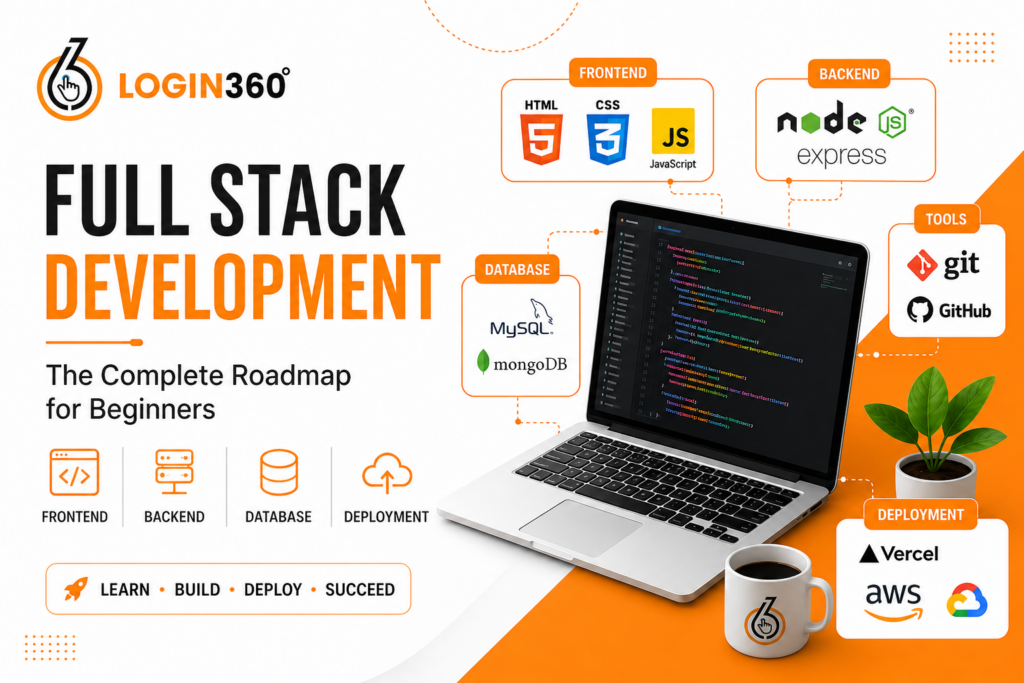
On the frontend, a full-stack developer usually works with technologies such as HTML, CSS, JavaScript, React, Angular, or Vue.js to create attractive and user-friendly interfaces. On the backend, they use programming languages like Python, Java, PHP, Node.js, or C#, along with frameworks such as Django, Express.js, Spring Boot, or Laravel. They also manage databases like MySQL, PostgreSQL, or MongoDB and integrate third-party services through APIs.
full-stack full-stack full-stack One of the biggest benefits of full-stack development is flexibility. Companies, especially startups and small businesses, often prefer hiring full-stack developers because they can contribute to various aspects of a project without needing separate frontend and backend teams. This boosts collaboration, reduces development time, and makes it easier to identify and fix problems across the entire application.
Modern full-stack developers also use cloud platforms, version control systems like Git, containerization technologies such as Docker, and DevOps tools that help automate deployment processes. Their broad understanding of software architecture allows them to participate in planning, development, testing, deployment, and maintenance. As businesses increasingly adopt digital transformation strategies, full stack development has become one of the most valuable and rewarding career paths in the tech industry.
What Is Frontend Development?
Frontend development focuses on creating the visual and interactive parts of a website or web application that users see and use. Every button, navigation menu, image, animation, form, and layout is designed and developed by frontend developers to provide an engaging and smooth user experience. Their primary goal is to ensure that websites are responsive, visually appealing, accessible, and easy to navigate on desktops, tablets, and mobile devices.
The core technologies used in frontend development include HTML for structuring content, CSS for styling web pages, and JavaScript for adding interactivity. Modern frontend developers also use powerful frameworks and libraries such as React, Angular, Vue.js, Next.js, and Tailwind CSS to efficiently build scalable and high-performance applications.
Frontend developers collaborate closely with UI/UX designers to transform design mockups into fully operational websites while maintaining consistency in colors, typography, spacing, and branding. They optimize website performance by reducing loading times, improving responsiveness, and implementing accessibility standards so that people with disabilities can comfortably use websites.
In today’s competitive digital landscape, frontend development extends beyond just looks. Developers need to understand browser compatibility, responsive design principles, SEO-friendly coding practices, and user behavior. Since users form their first impression within seconds of visiting a website, the quality of frontend development directly impacts customer satisfaction, engagement, and conversion rates. Businesses therefore invest significantly in frontend development to create memorable digital experiences that encourage visitors to stay longer and interact with their products or services.
What Is Backend Development?
Backend development powers the functionality behind every website and application. Unlike frontend development, which focuses on the user interface, backend development manages everything that happens behind the scenes. It handles server-side programming, business logic, databases, authentication, security, data processing, and communication between different systems. Without backend development, websites would display only static content and wouldn’t perform meaningful actions.
Backend developers use programming languages like Python, Java, PHP, Ruby, C#, and JavaScript with Node.js to build secure and scalable applications. They also work with frameworks like Django, Spring Boot, Express.js, ASP.NET, and Laravel to simplify development while maintaining high performance. Databases like MySQL, PostgreSQL, MongoDB, and Oracle are used to store, retrieve, and manage application data effectively.
A key responsibility of backend developers is creating APIs (Application Programming Interfaces), which allow frontend applications to communicate with servers and external services. For instance, when a customer logs into an online shopping site, places an order, or processes a payment, the backend validates user credentials, processes transactions, updates inventory, and securely stores order details.
Security is another crucial aspect of backend development. Developers implement authentication, authorization, encryption, and data validation to protect sensitive information from cyber threats. They also optimize server performance, monitor application health, and ensure that websites remain stable even when handling thousands or millions of users simultaneously. As cloud computing and AI applications continue to expand, backend developers play an increasingly important role in building reliable, secure, and scalable digital solutions.
Key Differences Between Frontend, Backend, and Full Stack
Full stack development all help build modern web applications; each role has unique responsibilities, technologies, and skill requirements. Frontend developers mainly focus on creating the user interface and enhancing user experience. They ensure that websites look good and function smoothly across various devices and browsers. Their work emphasizes design implementation, responsiveness, accessibility, and client-side performance.
Backend developers, however, focus on the server-side operations that users do not see. They create application logic, manage databases, develop APIs, implement security measures, and ensure reliable communication between the frontend and backend. Their work ensures that applications process requests efficiently, store data securely, and deliver accurate information to users.
Full stack developers combine the skills of both frontend and backend development. They understand how each layer interacts and can build complete applications from concept to deployment independently. This versatility allows them to fix issues throughout the entire technology stack, work well with various teams, and contribute during the software development lifecycle.
full-stack Choosing between these career paths relies on personal interests and career goals. Individuals who enjoy design, animations, and user interaction often prefer frontend development. Those drawn to databases, programming logic, and system architecture may find backend development more appealing. Professionals who like mastering multiple technologies and solving end-to-end development challenges typically choose full-stack development because it offers broader career opportunities and greater flexibility. As organizations increasingly seek developers who can handle a range of technical responsibilities, full stack development remains one of the most sought-after skills in the global tech job market.
Skills Required to Become a Full Stack Developer
Frontend Skills
HTML5, CSS3, and JavaScript
These technologies are essential for building modern websites. HTML structures the content, CSS styles the pages, and JavaScript adds interactivity and dynamic features.
React, Angular, or Vue.js
These popular frameworks and libraries help developers create fast, responsive, and scalable web applications. They make UI development easier and increase code reusability.
Responsive Web Design
Responsive design makes sure websites adjust smoothly to desktops, tablets, and smartphones. It improves the user experience across different screen sizes and devices.
UI/UX Fundamentals
Knowing UI/UX principles allows developers to create visually appealing and user-friendly interfaces. Good design enhances usability, accessibility, and customer satisfaction.
Bootstrap or Tailwind CSS
Bootstrap and Tailwind CSS are well-known CSS frameworks that speed up front-end development. They offer pre-built components and utility classes for creating responsive layouts efficiently.
Backend Skills
Node.js, Python, Java, PHP, or C#
These programming languages are commonly used for server-side development. They help developers build secure, scalable, and high-performance web applications.
Express.js, Django, Spring Boot, or Laravel
Backend frameworks make application development easier by providing built-in features and organized architecture. They boost productivity, security, and maintainability.
RESTful API Development
REST APIs enable effective communication between front-end and back-end systems. They allow applications to exchange data securely between servers and clients.
Authentication and Authorization
These security methods verify user identities and manage access to resources. They protect sensitive data and ensure only authorized users can perform specific actions.
Server-Side Programming
Server-side programming deals with business logic, processes user requests, and interacts with databases. It drives the functionality behind every web application.
Database Skills
MySQL
MySQL is a popular relational database for storing and managing structured data. It provides reliability, performance, and strong community support.
PostgreSQL
PostgreSQL is an open-source relational database known for its scalability and robust features. It is commonly used in enterprise-level applications.
MongoDB
MongoDB is a NoSQL database that stores data in flexible document formats. It is ideal for managing large amounts of unstructured and semi-structured data.
Database Design and Optimization
Good database design enhances data organization and application performance. Optimization techniques help ensure faster queries and effective resource use.
Development Tools
Git and GitHub
Git is a version control system that tracks code changes, while GitHub enables collaboration and code sharing. Together, they support efficient software development workflows.
Docker
Docker packages applications and their dependencies into lightweight containers. This ensures consistent performance across development, testing, and production environments.
CI/CD Pipelines
Continuous Integration and Continuous Deployment automate code testing and application deployment. They minimize manual effort and promote faster software releases.
Cloud Platforms (AWS, Azure, or Google Cloud)
Cloud platforms offer scalable infrastructure for hosting applications and managing services. They assist businesses in deploying reliable and cost-effective solutions.
Visual Studio Code and Debugging Tools
Visual Studio Code is a widely used code editor with powerful extensions and debugging features. It boosts developer productivity and simplifies troubleshooting.
Soft Skills
Problem-Solving
Strong problem-solving skills help developers identify issues and implement effective solutions. They are crucial for building reliable software.
Communication
Clear communication allows developers to work well with team members, clients, and stakeholders. It reduces misunderstandings and leads to better project outcomes.
Team Collaboration
Software development is a team effort involving multiple groups. Working well with others ensures projects progress smoothly and efficiently.
Time Management
Effective time management helps developers meet deadlines while keeping code quality high. It boosts productivity and improves project planning.
Continuous Learning Mindset
Technology changes quickly, making ongoing learning essential for developers. Staying updated with new tools and trends supports long-term career growth.
Advantages and Challenges of Full Stack Development
Full-stack development has many advantages, making it one of the most popular career paths in the software industry. A full-stack developer can create complete web applications by working on both frontend and backend development. This reduces the need for multiple specialists and boosts project efficiency. Their ability to work with different technologies helps them understand the entire software development cycle. This understanding makes it easier to collaborate with designers, developers, and DevOps teams. Their versatility also opens up great career opportunities, competitive salaries, and the chance to work in startups, large companies, or even as freelancers. Because they have end-to-end technical knowledge, full-stack developers can quickly spot and fix issues, leading to faster development and maintenance.
However, full-stack development also presents several challenges. Developers need to learn and stay current with various programming languages, frameworks, databases, cloud platforms, and development tools. This requires ongoing learning and commitment. Balancing frontend and backend tasks can increase workload, especially in large projects with tight deadlines. Furthermore, since full-stack developers work across many technologies, they might not reach the same level of expertise as developers who focus solely on frontend or backend work. Still, with regular practice, strong problem-solving skills, and a dedication to learning, they can overcome these challenges. This makes full stack development a rewarding and future-proof career choice.
The Future of Full Stack Development in the AI Era
Artificial intelligence is revolutionizing software development, but it is not taking away full stack developers. AI tools have been designed in such a way that they help developers automate some tasks like writing boilerplate code, testing, debugging, and documentation. Developers are therefore able to spend more time solving business problems, creating architectures that scale, and designing innovative apps. With cloud computing, automation, cybersecurity, and machine learning continuing to develop, the job of a full-stack developer continues to become more important. Modern developers need to know AI tools for software development, cloud computing, DevOps tools, and application programming interfaces together with their programming knowledge. Companies are looking for people who can adopt technologies quickly to provide solutions efficiently. Artificial intelligence is not making life difficult for developers but rather creating many opportunities for them to use technology to solve complex business problems creatively.
Conclusion
full-stack Each of the three mentioned types of development holds great importance when it comes to building web applications, and it becomes very necessary to understand them for those who wish to pursue a career in the field of software development. While front-end developers design engaging user experiences and back-end developers create the infrastructure of the applications, full-stack developers develop end-to-end applications, combining the skills of both. As a result of rapid digitization and AI implementation by companies, the number of opportunities for full-stack developers keeps growing. Through mastering the correct set of technologies, consistent practice, and gaining knowledge about the latest trends, it becomes possible to have a bright career in the field.