

Introduction
In today’s competitive digital landscape, understanding what is SEO is essential for anyone looking to grow their online presence. Search Engine Optimization (SEO) is the process of improving a website’s visibility in search engine results, helping businesses attract more organic traffic. As millions of users rely on Google and other search engines to find information, products, and services, ranking higher can significantly impact business growth. SEO not only increases website traffic but also improves credibility, user experience, and brand awareness. Whether you own a small business, run an eCommerce store, or manage a blog, SEO plays a crucial role in reaching your target audience. By implementing effective SEO strategies, you can connect with potential customers at the exact moment they are searching for solutions
What Is SEO?
SEO stands for Search Engine Optimization. It is a collection of methods and techniques that help make your website more visible when people search for things online. If someone is looking for words related to your business, SEO helps your website show up higher in the search results. Imagine this: search engines like Google are always looking through the web, collecting information from millions of pages, and figuring out which ones are most useful for users. SEO is about making sure your website gets noticed and ranked well by these search engines. Unlike paid ads, where you pay for each click, SEO is about getting visitors naturally through search results. This is also known as “organic search” or “natural search.” Here’s the key point: SEO is all about matching up. Your content should match what people are searching for, search engines should understand what your content is about, and your website should offer a good experience for visitors. When all three parts work together, that’s when SEO really works.
How Search Engines Work
Crawling: Search engine bots (called crawlers or spiders) browse the internet, following links from page to page. They read the content, structure, and code of each page they visit.
Indexing: As these bots crawl your site, they collect information and add it to Google’s massive index essentially a giant catalog of all the web pages they’ve discovered. Your website won’t show up in search results if it’s not indexed.
Ranking: When someone performs a search, the search engine uses complex algorithms to determine which indexed pages are most relevant and authoritative. It then displays them in order of relevance on the search results page.
This is where SEO becomes crucial. By optimizing your website, you’re essentially helping search engines understand your content better and signaling that your site is worthy of a higher ranking.
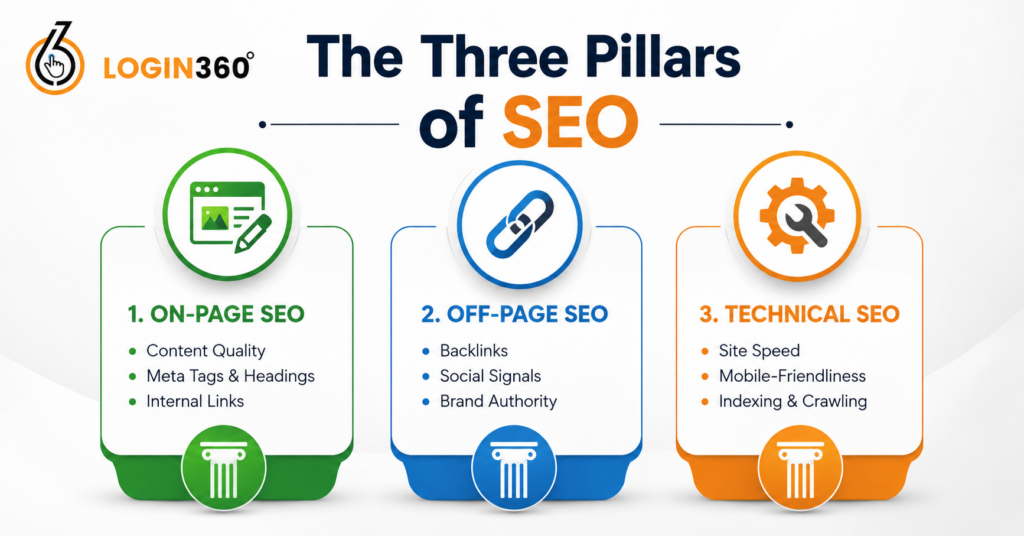
The Three Pillars of SEO
1. On-Page SEO focuses on the elements you control directly on your website—your content, meta tags, headings, and internal links.
2. Off-Page SEO involves factors outside your website, primarily building authority through backlinks and social signals.
3. Technical SEO ensures your website’s infrastructure is optimized for search engines—site speed, mobile-friendliness, indexing, and more.
These three pillars work together. A strong on-page strategy without technical optimization won’t yield results. Off-page SEO without quality content won’t help. Understanding how these elements interact is crucial to answering the question: “Why is SEO important?”
On-Page SEO Explained
Content Quality: Your content needs to be original, valuable, and directly answer the questions your audience is asking. Search engines increasingly favor content that demonstrates expertise, experience, and trustworthiness.
Keyword Optimization: This involves naturally incorporating relevant keywords—like “what is SEO”—throughout your content. However, keyword stuffing (overloading your page with keywords) will hurt your rankings. The goal is to use keywords naturally while maintaining readability.
Meta Tags and Descriptions: Your page title and meta description are your first impression in search results. They should be compelling and include relevant keywords to attract clicks.
Headings and Structure: Proper use of H1, H2, and H3 headings helps search engines understand your content structure and improves readability for visitors.
Internal Linking: Linking to other relevant pages on your website helps distribute page authority and guides both search engines and users through your content.
User Experience (UX): Pages should load quickly, be easy to navigate, and display properly on mobile devices. Google’s Core Web Vitals—measuring page speed, interactivity, and visual stability—are now ranking factors.
Off-Page SEO and Link Building
Backlinks (links from other websites to yours) act as “votes of confidence.” When reputable websites link to your content, search engines see this as a signal that your site is trustworthy and authoritative. However, not all links are equal—links from high-authority, relevant websites carry more weight than random links.
Building Quality Backlinks:
- Create content so valuable that others naturally want to link to it
- Guest post on industry-relevant blogs
- Reach out to industry influencers and journalists
- Get listed in reputable directories
- Participate in industry forums and communities (with relevant, helpful contributions)
Brand Signals: Social media mentions, reviews, and overall brand authority also contribute to off-page SEO, though indirectly. When your brand is frequently mentioned and discussed online, it signals relevance to search engines.
Technical SEO Fundamentals
Site Speed: A slow website frustrates users and search engines. Google uses page speed as a ranking factor. Optimize images, minimize code, and use a Content Delivery Network (CDN) to improve load times.
Mobile Responsiveness: With most searches happening on mobile devices, having a mobile-friendly website isn’t optional—it’s essential. Google even prioritizes the mobile version of your site when ranking.
XML Sitemaps: This file helps search engines discover and crawl all your pages, especially important for larger sites.
Robots.txt: This file tells search engine bots which pages to crawl and which to skip.
Structured Data Markup: Using schema markup helps search engines understand your content better, often resulting in rich snippets in search results (like star ratings or pricing information).
SSL Certificate (HTTPS): Secure websites signal trustworthiness to both search engines and users. Google uses HTTPS as a ranking signal.
Fixing Crawl Errors: Broken links and missing pages prevent search engines from properly indexing your site. Regular audits help identify and fix these issues.
Why Is SEO Important for Your Business?
Organic Traffic is Sustainable: Unlike paid advertising, once your content ranks well, you continue receiving visitors without paying for each click. This creates long-term, sustainable growth.
Cost-Effectiveness: SEO requires time and expertise investment, but the cost-per-click is ultimately lower than paid advertising. You’re not paying Google for every visitor.
Trust and Credibility: People trust organic search results more than ads. When your site appears at the top of search results, users perceive your business as more credible and authoritative.
Higher Conversion Rates: Users who find you through organic search are often more qualified because they’re actively searching for solutions you provide. This typically results in higher conversion rates.
Local Business Visibility: For businesses serving specific geographic areas, local SEO helps customers find you when they search for nearby services.
Competitive Advantage: If your competitors are investing in SEO and you’re not, they’re capturing the traffic you could be getting. Conversely, ranking above them gives you a significant advantage.
Understanding User Intent: SEO forces you to understand what your customers actually want, leading to better content and products.
Long-Term Investment: While results take time, SEO compounds over months and years, providing increasing benefits.
Common SEO Mistakes to Avoid
Ignoring Mobile Users: If your site isn’t mobile-optimized, you’re losing most of your potential traffic. Mobile-first indexing means this is non-negotiable.
Keyword Stuffing: Overusing keywords makes your content unreadable and can result in penalties. Write naturally for humans first.
Buying Backlinks: Purchasing links from link farms or low-quality sites violates Google’s guidelines and can tank your rankings.
Duplicating Content: Using the same content across multiple pages or copying content from other sites will hurt your rankings. Each page needs unique, valuable content.
Neglecting Technical Issues: Ignoring site speed, broken links, or crawl errors prevents search engines from properly indexing your site.
Not Using Analytics: If you’re not tracking what’s working and what isn’t, you’re flying blind. Use Google Analytics and Google Search Console to monitor your performance.
Expecting Overnight Results: SEO is a long-term strategy. It typically takes 3-6 months to see significant results. Quick-fix promises are red flags.
Creating for Search Engines, Not Users: If your content doesn’t actually help your audience, search engines and users will eventually penalize it.
Conclusion
SEO is the process of optimizing your website to improve search engine rankings and attract organic traffic. It helps businesses increase visibility, build credibility, and reach potential customers cost-effectively. Successful SEO combines on-page optimization, off-page authority building, and strong technical performance. By creating valuable content and providing a great user experience, businesses can achieve sustainable growth in search results. Consistent SEO efforts today can lead to greater online visibility, traffic, and long-term business success.