

Table of Contents
Introduction
Nowadays, Full Stack Development is one of the most in-demand skills in the sphere of technology. Due to the need for programmers who will be able to deal with the front and back sides of an application, full stack developers are required by many startups, IT companies, and product companies. But although this field seems to be very promising for beginners, at the beginning of the career path, some newcomers may face difficulties because of the lack of experience and knowledge about what to do, how to learn correctly, and what pitfalls to avoid. As a newcomer, there is no doubt that you are faced with the necessity to learn many different programming languages and frameworks. Below in this blog post, I will discuss the mistakes that are typical for full stack developers at the beginner level and give you some advice on how to overcome them.
What is full stack development?
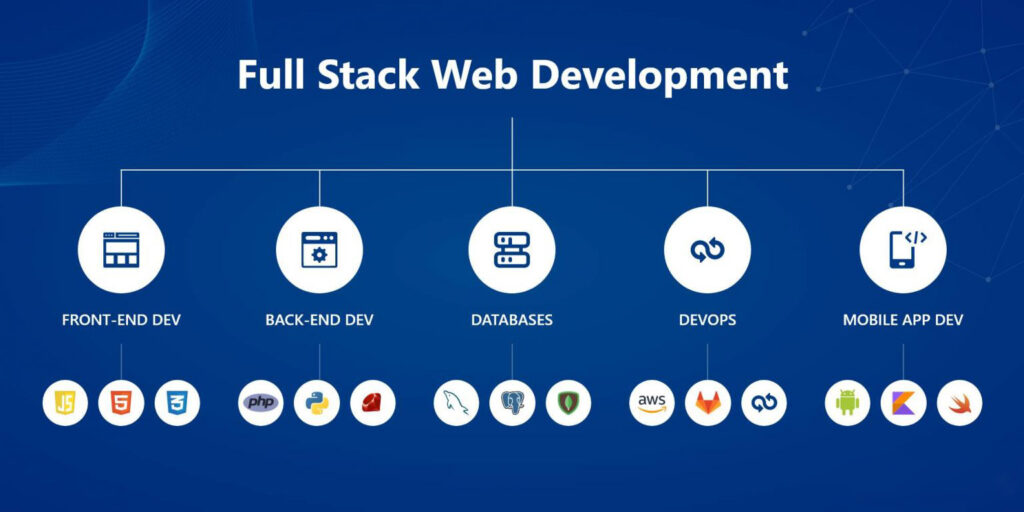
- Full stack development is the name used to refer to developers that can develop the front-end and back-end aspects of a web application. It entails developing the user interface and implementing the logic for powering the interface as well as working on databases and other aspects.
- The front-end development process uses technologies such as HTML, CSS, and JavaScript and framework such as React or Angular. Back-end technologies include Node.js, Python, Java or frameworks such as MongoDB or MySQL.
- In other words, a full stack developer has knowledge of the whole process of web development starting from how a website should be designed to how the application works internally. This is precisely why full stack developers are essential in companies.
Why Beginners Make Mistakes While Learning Full Stack Development
- Full stack development means dealing with a bunch of different things at once. That is why it may be quite confusing when you start learning.
- Many people start learning all those things simultaneously, ignoring the logic behind it.
- Moreover, some developers rush to the frameworks without knowing the basics. Such gaps in knowledge become obvious when they appear in interviews or actual projects.
- When you take into account tutorials that promise “Full Stack Development in 30 days” along with this information, it becomes evident why beginners make mistakes. Without proper guidance, even enthusiastic learners will spend months trying to understand the basics.
Mistakes Novices Make During Full Stack Development
1. Wanting to Know All at Once
The most frequent thing that novices do is that they try to study several tools for front-end and back-end development at once. It might seem very productive to handle React, Node.js, MongoDB, and so on, all at once, but it rarely leads to any deep understanding of at least one tool and to the understanding of many tools partially. As a result, you will be aware of syntax but not of how it works and why.
2. Not Learning Basics
Newcomers tend to get excited about diving straight into learning frameworks such as React or Express without prior knowledge of the basics of JavaScript, HTML, and CSS. There is always the temptation to dive into something interesting, but it is not the way to build a solid foundation for the future. The absence of one makes it hard to debug issues, understand how frameworks work in depth, or adjust in case things don’t go according to plan.
3. Not Learning About Version Control
.Git and GitHub are almost always overlooked by beginners since these tools are considered to be nice-to-have extras rather than must haves. In practice, however, version control is employed in almost any development setting from the smallest start ups to big IT enterprises. Without version control, a developer would not be able to follow up on any changes to the codebase, cooperate with team members, or undo mistakes made in his code.
4. Lack of Knowledge of How Client and Server Communicate
While many beginners can comfortably deal with HTML/CSS at one end and databases at another end, most of them do not have any idea about the mechanism of transfer of information between the two via the use of APIs. And this ignorance turns into a big issue as soon as the project requires dynamic information in place of static pages.
5. Copy-Pasting Code Without Comprehending the Principle of Its Work
Learning through tutorials is absolutely fine, but there comes the point when you start to use pieces of someone else’s code without any understanding of how it works and what purpose each line serves. Great thing, until something goes wrong or you need to explain your thought processes in an interview. When you don’t understand things well enough, it becomes really hard to add anything new to the code written by following the tutorial.
6. Ignoring the Process of Database Building
Many novice programmers tend to regard database design as an afterthought where they just dump the data into the table because it works without really taking time to consider the structure and relations that are needed. The result here is that they get messy code and performance issues that become evident with increased usage of the application. While poor database design won’t hurt your application when it’s still at tutorial level, its performance will become a problem once real users and data start using it.
7. Failing to Test and Debug Code
Novice developers usually ignore the fact that one should test his or her software or debug the code at all; they tend to do everything by trial and error hoping that something will work. In such cases, people waste too much time looking for solutions which could have been found much earlier through systematic work. Ignoring testing can appear to be time saving at first sight; however, it may cost significantly more time later if problems start occurring somewhere.
8. Creating Projects That Lack Real-Life Applications
Many beginners tend to create generic to-do lists, calculators, and weather apps, just because they follow a tutorial blindly, without including any unique functionality of their own. As a result, their portfolios will be similar to those created by other people. The recruiters have seen the same tutorials so many times that they hardly remember what they saw.
9. Lack of Practice in Deployment
Too many beginners build projects locally and stop right there, never practicing the process of deployment. In doing so, they miss out on understanding hosting platforms, environment variables, and other production level concepts that most companies expect their developers to already be familiar with. A project that only runs on your own laptop doesn’t demonstrate the same level of skill as one that’s live and accessible to others.
10. Lack of Request for Feedback
The benefits of isolation in learning do not apply to finding flaws in coding practices. Being new to the field means that you may take quite a while to come to terms with the fact that your functional piece of code is actually bad because of inefficiency, lack of readability, or improper structure. The feedback from others will serve as a mirror, showing the weaknesses that you cannot detect yourself.
How to Construct a Robust Learning Roadmap
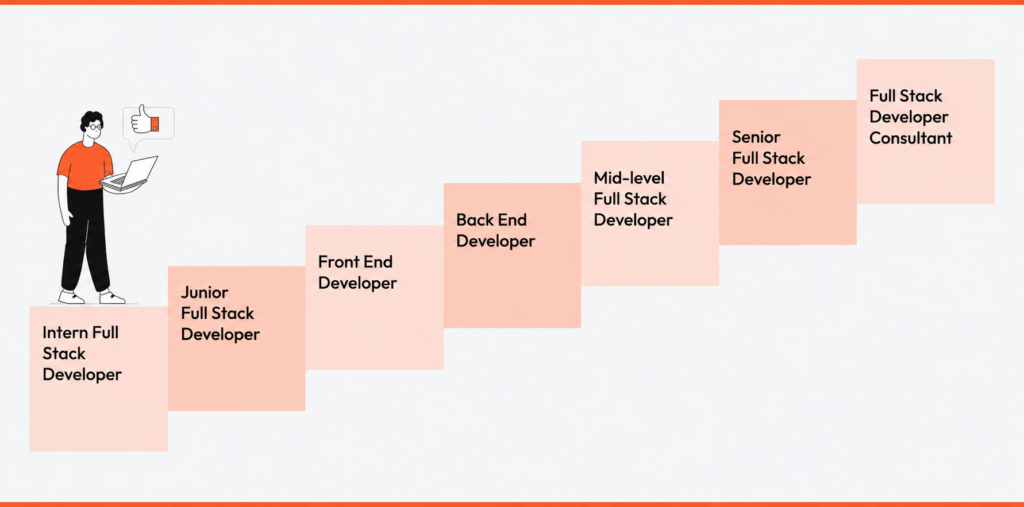
- It is more efficient to have a structured journey than switching among all possible tutorials. First of all, make sure that you have understood the basics: HTML, CSS, and JavaScript.
- Having gained sufficient skills, move to the front-end framework such as React and then to the back-end frameworks such as Node.js and Express.
- Then, learn the basics of working with databases (both relational such as MySQL and non-relational such as MongoDB) and how to link them to the back-end.
- At the same time, do not forget about the importance of mastering Git and GitHub for versioning, which will be needed throughout your career.
- Having acquired all necessary knowledge, start working on your projects including front-end and back-end components and gradually add elements of authentication, API usage, deployment, etc. Following the right sequence of steps described above will probably be more effective than consuming all possible resources available online simultaneously.
Best Practices to Avoid Common Development Mistakes
To avoid the common development mistakes noted earlier, a few good practices will help you out here.
- Firstly, go deep rather than wide because it is far better to know one stack deeply than to know five stacks shallowly.
- Secondly, always strive to learn why something is written in the way you do.
- Version controlling should become a routine for you right from the beginning even if it involves working on personal projects only.
- Learn how to write small APIs and hook them up with the front end. Try getting your code reviewed by other programmers as much as possible because their feedback will expose the weaknesses that you might be unable to identify yourself.
- Last but not least, never skip deployment. Moving your code from your local computer to the server will teach you a lot of things which are simply impossible to learn from any tutorial.
Tools and Resources for Beginner Full Stack Developers
- Tools for learning do not come up short in any way. Some of the popular choices for code editors include the versatile Visual Studio Code. GitHub is the most common choice for version control.
- For practice in front-end development, sites like CodeSandbox and StackBlitz can be used where one does not need any complex setup in their local environment. Tools like Postman become very helpful when it comes to testing the back-end and APIs.
- For learning resources, a combination of online documentations (MDN Web Docs) and YouTube videos, along with courses work best. If you are someone who would like to follow an interactive learning process, and learn by getting involved in projects and receiving mentoring from mentors.
Advice for Becoming a Good Full Stack Developer
- It’s not enough to have knowledge of several technologies when becoming a good full stack developer.
- One should pay attention to practical experience rather than repeating the same tutorial tasks over and over again.
- Whenever possible, one should try to participate in some open source projects as it gives more experience of working with real code bases and collaboration.
- Be aware of industry trends and technologies, but avoid switching between the newest frameworks every time.
- First, one needs to create a good solid base in order to master all these technologies easily in the future. It’s also important to know other people working in this sphere.
- For this purpose, one can use different communities, forums, and meetups.
- The most important thing is to be patient. Full stack development is a very wide area and requires much practice and experience to become a professional in this sphere.
Conclusion
Being a Full Stack Development is an extremely interesting field to work in, but there are many mistakes which will hinder one’s progress and prevent success in the future. Learning too much information at once, avoiding learning the basics, and not deploying what you have learned are just some examples of mistakes which will slow down your progress. However, using the right strategy to develop a full stack will help you overcome all of these challenges. Whether you are going to teach yourself how to become a full stack developer or are planning to enroll in any courses to guide you on this path, being consistent and making projects will help you achieve your goal successfully