
Table of Contents
Introduction
Data science career path is one of the fastest growing fields. It combines technology, math, and business knowledge to solve real world problems. Organizations depend on data scientists to analyze large datasets and offer useful insights for better decision making. Building the right skills is crucial for success in this competitive profession. This article outlines the key skills needed for a successful data science career path.
What is Data Science?
Data science involves collecting, analyzing, and interpreting data to uncover meaningful patterns and insights. It merges statistics, programming, machine learning, and industry knowledge to tackle complex issues. Businesses apply data science to enhance operations, predict trends, and make informed decisions. It is widely used in sectors like healthcare, finance, retail, and technology.
Why Skills Matter in a Data Science Career Path
Data science requires a mix of technical know how and soft skills to effectively address business challenges. Strong skills help professionals analyze data accurately, create predictive models, and communicate findings to stakeholders. As technology changes quickly, ongoing learning is vital for staying competitive. Developing these skills boosts career growth and job opportunities.
Technical Skills Required
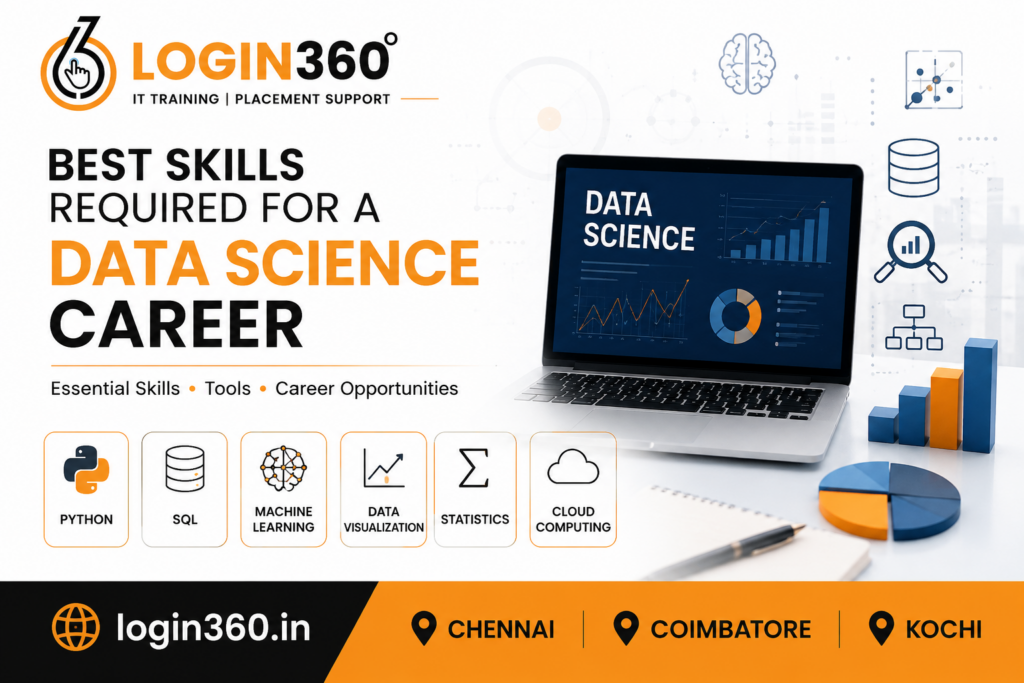
Technical skills lay the groundwork for a data science career path, allowing professionals to manage large datasets efficiently. These skills include programming, statistical analysis, machine learning, data visualization, cloud computing, and data management. Mastering these concepts enables data scientists to build reliable models and automate complex tasks. Regular practice is key to keeping these skills current.
1. Programming (Python, R, SQL)
Programming languages like Python, R, and SQL are essential for data analysis and model development. Python is popular for its powerful libraries such as Pandas, NumPy, and Scikit learn. R is favored for statistical computing and research, while SQL is used to fetch and manage data from databases. Learning these languages increases efficiency in data driven projects.
2. Statistics and Mathematics
Statistics and math provide the theoretical basis for data science. Concepts like probability, hypothesis testing, linear algebra, and calculus help in understanding data patterns and building predictive models. These skills allow data scientists to interpret results accurately and make decisions based on data. A solid math background enhances analytical thinking.
3. Machine Learning
Machine learning involves creating algorithms that enable computers to learn from data without explicit programming. It helps predict future outcomes, classify information, and find hidden patterns. Common techniques include regression, classification, clustering, and neural networks. Machine learning is often used in recommendation systems, fraud detection, and image recognition.
4. Data Visualization
Data visualization focuses on presenting data through charts, graphs, and dashboards to make information easy to understand. Tools like Tableau, Power BI, and Matplotlib help transform complex datasets into meaningful visual insights. Effective visualization supports better decision making and communication with stakeholders. It also aids in quickly identifying trends and patterns.
5. Big Data Technologies
Big data technologies are used to process and analyze large volumes of structured and unstructured data. Tools like Hadoop and Spark enable organizations to store and process extensive datasets efficiently. These technologies enhance performance and scalability for data heavy applications. Understanding big data is crucial for managing modern business data.
6. Cloud Computing
Cloud computing offers access to computing resources, storage, and data processing over the internet. Platforms like AWS, Microsoft Azure, and Google Cloud support scalable data science projects. Cloud services allow organizations to handle large datasets without investing in pricey hardware. Knowledge of cloud platforms boosts career opportunities in data science.
7. Data Wrangling and Preprocessing
Data wrangling involves cleaning, transforming, and organizing raw data before analysis. This includes managing missing values, removing duplicates, correcting errors, and formatting data consistently. Proper preprocessing enhances the accuracy and reliability of machine learning models. Since most real world data is unstructured, this skill is crucial for every data scientist.
Business and Domain Knowledge
Business and domain knowledge helps data scientists grasp industry specific issues and provide effective solutions. Understanding how businesses operate allows professionals to interpret data within the proper context. This skill enhances decision making and ensures that analytical results align with organizational goals. Domain expertise raises the value of data driven recommendations.
Soft Skills for Data Scientists
Soft skills complement technical know how by helping data scientists communicate, collaborate, and solve problems effectively. These skills improve teamwork, project management, and interactions with clients and stakeholders. Strong interpersonal abilities are vital for presenting complex findings in a clear and understandable way. Soft skills significantly contribute to long term career success.
1. Communication Skills
Communication skills allow data scientists to explain technical concepts and analytical results clearly to both technical and non technical audiences. Effective communication helps stakeholders understand insights and make informed choices. Good presentation and report writing skills are equally important. Clear communication enhances the impact of data driven recommendations.
2. Critical Thinking
Critical thinking involves analyzing situations objectively and assessing different solutions before making decisions. This skill assists data scientists in identifying patterns, questioning assumptions, and solving complex analytical problems. Strong critical thinking leads to better insights from data and improved business outcomes.
3. Problem Solving
Problem solving means identifying challenges, analyzing possible solutions, and implementing the most effective approach. Data scientists use analytical methods and machine learning techniques to tackle business and technical issues. This skill helps enhance operational efficiency and innovation. Effective problem solving is highly valued across industries.
4. Teamwork and Collaboration
Data science projects often necessitate collaboration with software developers, business analysts, and managers. Teamwork ensures smooth communication, knowledge sharing, and successful project completion. Working well with diverse teams enhances productivity and innovation. Collaboration helps deliver solutions that meet business needs.
5. Time Management
Time management allows data scientists to organize tasks, meet deadlines, and balance multiple projects efficiently. Prioritizing work and planning schedules increase productivity and reduce stress. Effective time management ensures timely delivery of data analysis and reports. It also supports continuous learning and professional growth.
Essential Tools and Technologies
Data scientists utilize various tools to collect, analyze, visualize, and manage data efficiently. Common tools include Jupyter Notebook, Git, Tableau, Power BI, TensorFlow, Apache Spark, and SQL databases. These technologies simplify complex workflows and improve collaboration among teams. Learning modern tools boosts productivity and employability.
Certifications and Continuous Learning
Certifications confirm a data scientist’s knowledge and showcase expertise to employers. Continuous learning is vital since data science technologies and methods evolve rapidly. Online courses, workshops, and professional certifications help professionals stay abreast of industry trends. Lifelong learning ensures long term career growth and competitiveness.
How to Develop These Skills
Developing data science career path skills requires consistent practice, hands-on projects, and ongoing learning. Beginners should start with programming, statistics, and machine learning before working on real world datasets. Participating in internships, hackathons, and online competitions strengthens practical knowledge. Building a portfolio of projects enhances job opportunities.
Career Opportunities in Data Science
Data science provides diverse career options across industries like healthcare, finance, retail, manufacturing, and information technology. Common job roles include Data Scientist, Data Analyst, Machine Learning Engineer, Business Intelligence Analyst, and AI Engineer. The demand for skilled professionals continues to rise globally. This field offers competitive salaries and excellent prospects for career advancement.
Conclusion
A successful data science career path requires a balanced mix of technical knowledge, business understanding, and soft skills. Mastering programming, statistics, machine learning, and communication enables professionals to tackle complex business problems effectively. Continuous learning and hands-on experience are essential for staying relevant in this evolving field. Developing these skills opens the door to rewarding career opportunities.