
In a world saturated with fleeting digital trends, one channel consistently delivers unparalleled direct access to your audience: email marketing. It’s not just about sending messages; it’s about building relationships, nurturing leads, and driving measurable growth directly to your inbox. For businesses, from burgeoning startups to established enterprises, understanding the email marketing basics isn’t merely advantageous—it’s foundational for sustainable success. This comprehensive guide will equip you with everything you need to know to get started, ensuring your efforts resonate and convert.
What is Email Marketing and Why is it Indispensable?
At its core, email marketing involves sending commercial messages to a group of people using email. This can include advertisements, requests for business, or sales or donation solicitations. More broadly, it encompasses any email sent to a current or potential customer. Its power lies in its directness: you’re speaking directly to individuals who have expressed interest in your brand, product, or service.
The indispensability of email marketing stems from several critical advantages:
- Exceptional Return on Investment (ROI): Studies consistently show email marketing delivers one of the highest ROIs of any marketing channel, often yielding $38 for every $1 spent. This efficiency makes it incredibly attractive, especially for businesses like Login 360 that prioritize affordability and accessibility in their offerings.
- Direct Communication Channel: Unlike social media where algorithms dictate reach, email provides a direct line to your audience’s inbox. You own this channel, giving you complete control over your message and delivery.
- Personalization and Segmentation: Modern email platforms allow for highly personalized messages based on user data, behavior, and preferences. This goes beyond just using a recipient’s name; it means sending relevant content to the right person at the right time, drastically increasing engagement.
- Lead Nurturing and Customer Retention: Email is a powerful tool for guiding prospects through the sales funnel and keeping existing customers engaged. From welcome series for new subscribers to re-engagement campaigns for inactive users, it fosters loyalty and repeat business.
- Measurable Results: Every aspect of an email campaign—open rates, click-through rates, conversions—can be tracked and analyzed, providing invaluable insights for continuous optimization.
The Core Components of a Successful Email Marketing Strategy
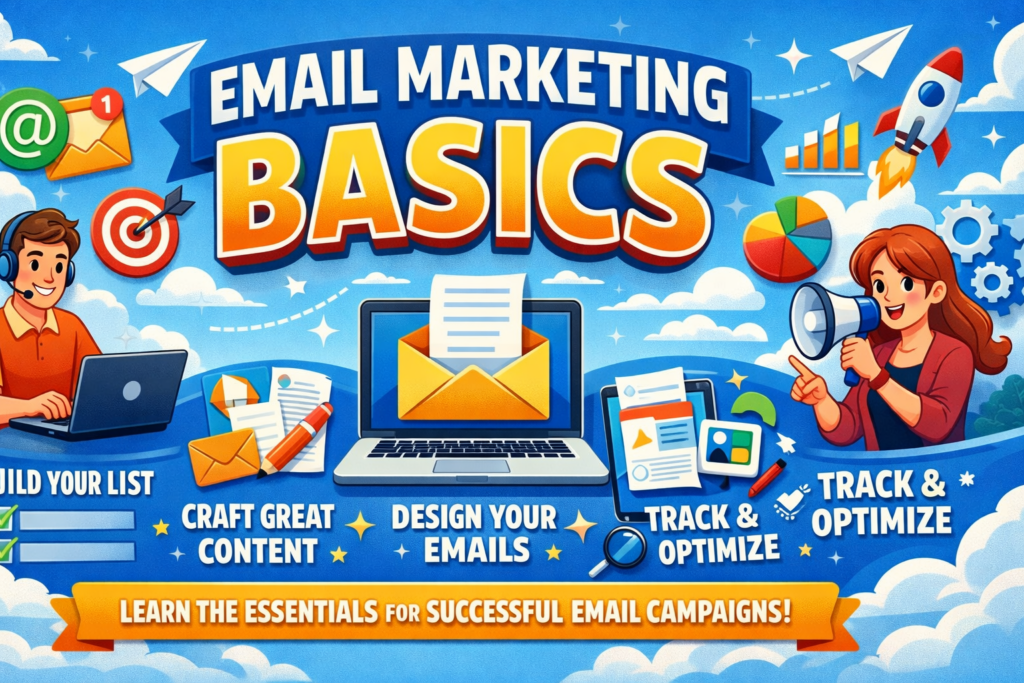
Building an effective email marketing strategy requires attention to several key areas. Mastering these email marketing basics will set you on a path to success.
1. Building Your Email List: The Foundation of Your Efforts
Your email list is your most valuable asset. Without it, you have no one to email. The golden rule here is permission-based marketing: always get explicit consent before adding someone to your list. Never buy email lists; they are ineffective, damage your sender reputation, and are often illegal.
Effective list-building tactics include:
- Opt-in Forms: Place clear, concise sign-up forms prominently on your website (homepage, blog posts, sidebar, pop-ups). Offer a compelling reason to subscribe.
- Lead Magnets: Offer something valuable in exchange for an email address. This could be an e-book, a webinar, a free course module, a checklist, a discount code, or exclusive content. For an IT training institute like Login 360, a free introductory lesson or a career guide could be highly effective.
- In-person Sign-ups: If you have physical interactions, offer a way for people to sign up (e.g., at events, workshops).
- Social Media: Promote your lead magnets and sign-up forms on your social media channels.
- Double Opt-in: Implement a double opt-in process where subscribers confirm their subscription via an email. This verifies email addresses, reduces spam complaints, and ensures a highly engaged list.
2. Choosing an Email Service Provider (ESP): Your Marketing Command Center
An ESP is a software platform that allows you to send, manage, and track your email campaigns. While you could technically send emails manually, an ESP is essential for scalability, automation, and analytics. When selecting an ESP, consider:
- Features: Look for robust features like drag-and-drop email builders, segmentation tools, automation workflows, A/B testing capabilities, and comprehensive analytics.
- Deliverability: A good ESP has strong relationships with internet service providers (ISPs) to ensure your emails reliably land in inboxes, not spam folders.
- Scalability: Choose an ESP that can grow with your list size and campaign complexity.
- Pricing: Most ESPs offer tiered pricing based on the number of subscribers or emails sent. Compare plans to find one that fits your budget and needs.
- Ease of Use: A user-friendly interface will save you time and frustration.
- Customer Support: Responsive and helpful customer support is crucial, especially when you’re just getting started.
Popular ESPs include Mailchimp, Constant Contact, ConvertKit, ActiveCampaign, and HubSpot. Each has its strengths, so research which one aligns best with your specific goals and budget.
3. Crafting Compelling Email Content: Engaging Your Audience
Even with a perfect list and a powerful ESP, your emails won’t succeed if your content doesn’t resonate. Every element of your email contributes to its effectiveness:
- Subject Lines: This is your email’s headline. It needs to be concise, intriguing, and clearly communicate value. Aim for 30-50 characters. Use emojis sparingly but effectively. Examples: “Unlock Your Career Potential: New IT Courses!” or “Don’t Miss Out: Early Bird Discount Ends Soon!”
- Preheader Text: This short snippet appears next to or below the subject line in the inbox. Use it to expand on the subject line and entice opens. Example: “Learn Python, Data Science, and more with expert instructors.”
- Body Copy: Keep it clear, concise, and value-driven. Focus on benefits, not just features. Use short paragraphs, bullet points, and subheadings to improve readability. Maintain a conversational tone. Tell a story if appropriate.
- Call-to-Action (CTA): This is the single most important element. What do you want your reader to do next? Make your CTA prominent, clear, and actionable. Use strong verbs. Examples: “Enroll Now,” “Download Your Free Guide,” “Learn More About Our Courses.”
- Personalization: Go beyond just using a first name. Segment your audience and tailor content to their specific interests, past behaviors, or stage in the customer journey. For Login 360, this could mean sending information about specific programming languages to students interested in development, or cybersecurity courses to those looking for networking careers.
4. Segmentation and Personalization: The Power of Relevance
Sending the same email to everyone on your list is a recipe for low engagement. Segmentation involves dividing your email list into smaller, more targeted groups based on shared characteristics. Personalization then involves tailoring your message to these segments. This significantly increases relevance and, consequently, open rates, click-through rates, and conversions.
Common segmentation criteria include:
- Demographics: Location (e.g., Coimbatore-based students for Login 360), age, gender, occupation.
- Behavioral Data: Past purchases, website visits, email engagement (opens, clicks), downloaded content, course interests.
- Purchase History: First-time buyers, repeat customers, high-value customers.
- Lead Source: How they subscribed (e.g., from a specific landing page for a Python course).
- Stage in Customer Journey: New subscriber, lead, active customer, inactive customer.
By segmenting, you can send highly specific campaigns, such as a special offer on advanced Java courses to students who have completed an introductory Java program.
5. Automation: Sending the Right Message at the Right Time
Email automation allows you to set up automated email sequences that are triggered by specific user actions or events. This saves time, ensures timely communication, and keeps your audience engaged around the clock.
Key automated workflows include:
- Welcome Series: A sequence of 2-5 emails sent to new subscribers, introducing your brand, sharing valuable content, and guiding them towards a first purchase or engagement.
- Nurture Sequences: Emails designed to educate leads about your offerings, address pain points, and move them closer to a conversion.
- Abandoned Cart Emails: Sent to customers who added items to their cart but didn’t complete the purchase, often including a gentle reminder or a small incentive.
- Re-engagement Campaigns: Sent to inactive subscribers to try and win them back before removing them from your list.
- Milestone Emails: Birthday wishes, anniversary emails, or messages celebrating a customer’s loyalty.
Diverse Types of Email Campaigns to Leverage
Email marketing isn’t a one-size-fits-all approach. Different goals require different types of campaigns:
- Welcome Emails: The first impression. Introduce your brand, set expectations, and provide value immediately.
- Promotional Emails: Announce new products, services, sales, or special offers. These are often conversion-focused.
- Newsletters: Regular emails providing valuable content, updates, industry news, and community highlights. They build relationships and establish authority.
- Transactional Emails: Triggered by a user’s action (e.g., order confirmation, password reset, shipping updates). These are expected and have high open rates, making them opportunities for subtle branding or cross-sells.
- Re-engagement Emails: Aimed at inactive subscribers to rekindle their interest and prevent them from churning.
Measuring and Optimizing Your Campaigns: Data-Driven Decisions
To continuously improve your email marketing efforts, you must track and analyze key metrics. This data provides insights into what’s working and what needs adjustment.
- Open Rate (OR): The percentage of recipients who opened your email. Influenced by subject line, preheader, and sender name.
- Click-Through Rate (CTR): The percentage of recipients who clicked on a link within your email. Reflects the effectiveness of your content and CTA.
- Conversion Rate: The percentage of recipients who completed a desired action (e.g., course enrollment, download) after clicking a link.
- Bounce Rate: The percentage of emails that couldn’t be delivered. High bounce rates can indicate a poor list or deliverability issues.
- Hard Bounces: Permanent delivery failures (e.g., invalid email address).
- Soft Bounces: Temporary delivery failures (e.g., full inbox).
- Unsubscribe Rate: The percentage of recipients who opted out of your list. A high rate suggests content irrelevance or frequency issues.
- List Growth Rate: How quickly your email list is expanding.
A/B Testing: Refine and Improve
A/B testing (or split testing) involves sending two different versions of an email to a small segment of your audience to see which performs better. You can test:
- Subject Lines: Different phrasing, emojis, length.
- CTAs: Wording, button color, placement.
- Email Content: Short vs. long, different images, personalization levels.
- Send Times: Different days of the week or times of day.
By systematically testing and implementing the winning variations, you can significantly improve your campaign performance over time.
Legal and Ethical Considerations: Building Trust and Compliance
Adhering to legal and ethical guidelines is paramount for maintaining a positive sender reputation and avoiding penalties. Key regulations include:
- CAN-SPAM Act (U.S.): Requires clear identification of sender, a physical address, and an easy unsubscribe mechanism.
- GDPR (General Data Protection Regulation – EU): Strict rules on obtaining explicit consent, data protection, and the right to be forgotten. Even if your business isn’t in the EU, if you interact with EU citizens, it applies.
- CCPA (California Consumer Privacy Act): Similar to GDPR, granting California consumers more control over their personal information.
Always prioritize permission-based marketing, provide a clear unsubscribe link in every email, and be transparent about how you use subscriber data. This builds trust, which is the cornerstone of any successful long-term relationship.
Advanced Tips for Aspiring Marketers and Login 360 Students
Once you’ve mastered the email marketing basics, consider these advanced strategies to elevate your campaigns:
- Integrate with Other Channels: Connect your email marketing with your CRM, social media, and website analytics. This creates a holistic view of your customer journey and enables more sophisticated segmentation and personalization.
- Leverage User-Generated Content (UGC): Encourage students to share their success stories or projects, then feature these in your emails. This builds social proof and authenticity, resonating deeply with potential students for Login 360.
- Focus on Mobile Responsiveness: The vast majority of emails are opened on mobile devices. Ensure your emails are designed to look great and function perfectly on smaller screens.
- Accessibility: Design emails with accessibility in mind (e.g., sufficient color contrast, descriptive alt text for images, clear hierarchy). This ensures your message reaches everyone.
- Incorporate AI and Machine Learning: Advanced ESPs are integrating AI for predictive analytics, optimal send times, and even dynamic content generation. Staying abreast of these technologies can give you a significant edge.
- Continuous Learning: The digital marketing landscape is constantly evolving. As an IT training institute in Coimbatore committed to affordability and accessible education, Login 360 understands the value of lifelong learning. Embrace ongoing education in email marketing trends, tools, and best practices. This commitment to knowledge will not only enhance your skills but also empower you to deliver exceptional value to your audience.
Conclusion: Your Journey into Effective Email Marketing Begins Now
Email marketing remains one of the most powerful, cost-effective, and direct ways to connect with your audience, nurture relationships, and drive business growth. By understanding and diligently applying these email marketing basics—from building a permission-based list and choosing the right ESP to crafting compelling content, segmenting your audience, and analyzing your performance—you can build a robust and highly profitable channel. For students and aspiring professionals, especially those at Login 360 in Coimbatore, mastering these skills is an investment in a future where you can directly influence outcomes and contribute significantly to any organization’s success. Start implementing these principles today, and unlock the immense potential of the inbox.