
Introduction
Entering the IT industry as a fresher can be challenging, especially when companies expect candidates to possess knowledge, practical experience, problem‑solving abilities and an understanding of real‑world software development. Although completing a degree or learning programming languages is important, it may not always be enough to secure a job. Freshers need to understand how software applications are developed, tested, deployed, maintained and improved. This is where Full Stack Product Engineering plays a role in building a strong foundation for a successful IT career.
Full Stack Product Engineering combines frontend development, backend development, databases, API integration, testing, deployment and other essential software development practices. Full Stack Product Engineering helps learners understand the lifecycle of a software product rather than focusing only on individual coding concepts. Full Stack Product Engineering, through learning and project‑based training, helps freshers develop the technical and professional skills required to enter the software industry confidently.
What Is Full Stack Product Engineering?
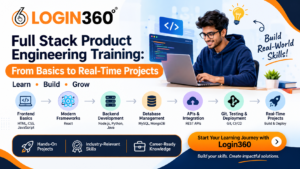
Full Stack Product Engineering is an approach to developing software products by working on different layers of an application. Full Stack Product Engineering involves designing user interfaces, developing server‑side functionality, managing databases, connecting components, testing applications and deploying them for users.
- Frontend Development: Creating user‑friendly interfaces using HTML, CSS, JavaScript and modern frameworks.
- Backend Development: Developing application logic, server‑side functionality, authentication and business operations.
- Database Management: Storing, retrieving organizing and managing application data.
- API Integration: Connecting applications with services and different software components.
- Debugging: Identifying errors, improving performance and ensuring application functionality.
- Deployment: Making applications to users through suitable hosting and cloud environments.
Develops Strong Technical Skills
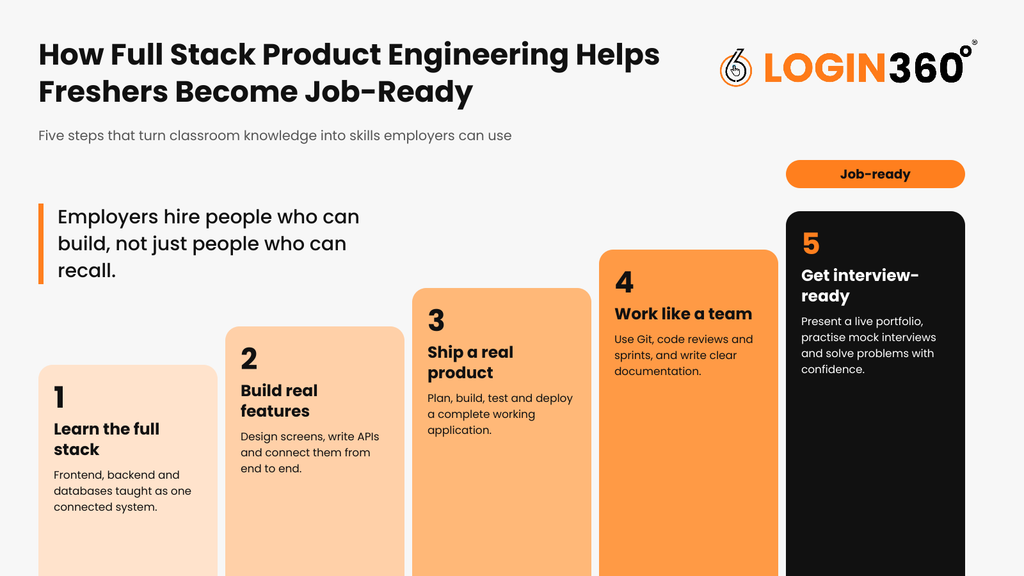
One of the advantages of Full Stack Product Engineering is that Full Stack Product Engineering helps freshers develop a broad range of technical skills. Companies look for candidates who can understand programming concepts and apply them to development tasks.Freshers learn frontend technologies to create web pages. Freshers learn backend technologies to handle application logic. Freshers learn database concepts to manage information. Freshers also become familiar with development tools, frameworks, version control and debugging techniques.
Learning technologies together gives freshers a better understanding of how different components of an application interact. These technical skills help freshers adapt to roles and technologies in the IT industry.
Provides Hands‑On Project Experience
experience is one of the most important factors in becoming job‑ready. Freshers may understand programming concepts theoretically. Struggle when they need to develop an application independently.Full Stack Product Engineering focuses on hands‑on learning through real‑time projects and practical assignments. Full Stack Product Engineering gives learners opportunities to build applications such as websites, dashboards, e‑commerce platforms, management systems and other software solutions.
By working on projects, freshers learn how to plan application features, write code, connect databases, solve errors and improve functionality. These experiences help freshers understand development challenges and prepare freshers to handle tasks in a professional working environment.
Improves Problem‑Solving and Debugging Abilities
Software development involves identifying problems, understanding their causes and finding solutions. Developers frequently encounter errors, unexpected results, performance issues and technical challenges while building applications.Full Stack Product Engineering encourages learners to solve problems through thinking, debugging, testing and continuous improvement. Full Stack Product Engineering encourages learners to analyze errors and understand why a particular approach works or fails.
These problem‑solving skills are valuable for freshers because employers expect developers to learn, troubleshoot and contribute to projects.
Helps Freshers Understand the Software Development Lifecycle
Understanding the software development lifecycle is essential for anyone entering a software development role. Building an application involves more than writing code. Building an application requires planning, designing, development, testing, deployment, maintenance and updates.Full Stack Product Engineering introduces freshers to the stages of building software. Full Stack Product Engineering explains how teams work together to deliver software products. Learners learn how to turn requirements into features, how developers work together, how to test applications and how to keep software running after it is launched.
Full Stack Product Engineering knowledge helps freshers get used to development workflows. Full Stack Product Engineering knowledge reduces the gap between what’s taught in school and what is expected at work.
Builds a Strong Portfolio for Job Applications
A portfolio is a way for freshers to show their technical skills to recruiters. Of only listing programming languages on a résumé, candidates can display the applications they have built and explain the technologies and features behind them.
Through Full Stack Product Engineering projects, learners can build a portfolio that includes applications, GitHub repositories, project descriptions, screenshots and links to deployed sites.
A strong portfolio shows that the candidate can use knowledge, understand project needs and finish development tasks. It also gives talking points for technical interviews and helps freshers stand out from other applicants.
Increases Career Opportunities
Full Stack Product Engineering lets freshers look at career options in software development. Because learners see both frontend and backend technologies, they can apply for entry‑level jobs in development teams.Some career opportunities include:
– Junior Full Stack Developer
– Frontend Developer
– Backend Developer
– Web Developer
– Software Developer
– Application Developer
– Associate Software Engineer
The demand for developers with technical knowledge makes full stack skills a valuable starting point for freshers. As they gain experience, they can specialize in areas such as cloud computing, product development, DevOps, software architecture or advanced web technologies.
Strengthens Communication and Teamwork Skills
Technical skills alone are not enough to succeed at work. Developers must communicate ideas, understand requirements, work with teammates, share updates and respond to feedback.Full Stack Product Engineering training can include group projects, presentations, code reviews, technical discussions and project demos. These activities help freshers improve communication, teamwork, time management and confidence.Learning to explain choices and work together prepares candidates for the expectations of real software development teams.
Prepares Freshers for Technical Interviews
Technical interviews often look at a candidates programming basics, practical knowledge, project experience, logical thinking and ability to explain solutions.Full Stack Product Engineering helps freshers get ready for interviews by showing them programming concepts, database queries, application design, project challenges and development workflows. When learners build projects on their own, they can confidently explain the technologies they used, the problems they faced and how they solved them.
This practical understanding makes interview preparation more effective. Helps candidates face technical interviews with greater confidence.
Conclusion
Being ready for a job needs more than books or knowledge of programming languages. Freshers need experience, technical understanding, problem‑solving skills, teamwork and confidence to do software development work.
Full Stack Product Engineering gives a learning path that helps freshers see the whole process of building software. From frontend and backend work, to databases, testing, deployment and project building, Full Stack Product Engineering prepares learners with skills that matter in the industry.
At Login360, learners can grow their knowledge, get hands‑on experience, work on projects and build the skills needed for software development jobs. Structured guidance helps freshers see concepts clearly, practice regularly and get ready for entry‑level jobs in the IT industry.By putting time into learning and building a strong portfolio, freshers can improve their job chances and get ready to enter the IT industry. Start building your skills today and take the step toward software development with Login360.
Frequently Asked Questions (FAQs)
1. Is Full Stack Product Engineering suitable for freshers?
Yes. Full Stack Product Engineering is suitable for freshers who want to start a career in software development. Full Stack Product Engineering helps beginners learn frontend, backend, database and application development concepts from the basics.
2. What skills can freshers learn through Full Stack Product Engineering?
Freshers can learn Full Stack Product Engineering skills such as HTML, CSS, JavaScript, core programming ideas, frontend frameworks, backend coding, database handling, API use, testing, debugging, Git and deployment. I have seen many beginners grow stronger in these areas during their training.
3. Does Full Stack Product Engineering help in getting a job?
Full Stack Product Engineering can boost job readiness by giving hands‑on skills, projects, problem‑solving power and a portfolio that recruiters love. Still, landing a job also depends on your skills, how you do in interviews, how steady you stay and what employers need.
4. Do freshers need coding experience to learn Full Stack Product Engineering?
No, freshers do not need prior coding experience to learn Full Stack Product Engineering. You can begin with programming ideas and slowly pick up frontend, backend and database tools as you train and practice.
5. What projects can freshers build during Full Stack Product Engineering training?
Freshers can create projects like e‑commerce sites, student management systems, task trackers, appointment booking tools, dashboards and personal portfolio websites while training in Full Stack Product Engineering.
6. What jobs can I apply for after Full Stack Product Engineering training?
After finishing Full Stack Product Engineering training, you can apply for jobs such as Junior Full Stack Developer, Web Developer, Frontend Developer, Backend Developer, Software Developer or Associate Software Engineer, depending on what you have learned and the projects you have done.
7. How can I become job‑ready after Full Stack Product Engineering training?
To be job‑ready after Full Stack Product Engineering training, practice coding every day, finish projects, keep a portfolio, learn Git and GitHub, brush up on core concepts, tackle problem‑solving drills and get ready for technical interviews and communication talks.