

Table of Contents
Introduction
In today’s competitive job market, developing industry-relevant technical skills is essential for building a successful career. Companies across different industries rely on advanced software solutions to manage their business operations, improve productivity, and make better decisions. One of the most widely used enterprise software solutions is SAP (Systems, Applications, and Products in Data Processing). It helps organizations manage important business functions such as finance, human resources, sales, purchasing, inventory, and supply chain management.
As businesses increasingly adopt digital technologies, the demand for professionals with SAP knowledge continues to grow. This makes SAP Training for Career Growth a valuable learning opportunity for students, fresh graduates, and working professionals who want to improve their career prospects. SAP training provides practical knowledge of enterprise resource planning (ERP) systems and helps learners understand how businesses operate using integrated software solutions.
Whether you are starting your professional journey or planning to upgrade your existing skills, learning SAP can open doors to various career opportunities. SAP Training for Career Growth helps learners understand how enterprise software supports modern business operations.In this blog, we will explore the importance of SAP training, its benefits, career opportunities, and why it can be a valuable investment in your professional future.
What Is SAP and Why Is It Important?
SAP stands for Systems, Applications, and Products in Data Processing. It is an enterprise software platform that helps organizations manage their daily business activities through an integrated system.
Instead of using separate software applications for different departments, businesses can use SAP to connect various operations within a single platform. This improves communication, reduces manual work, and provides accurate business information.Understanding SAP is an important first step towards making SAP Training for Career Growth a valuable learning experience. SAP is widely used in industries such as:
- Information Technology
- Banking and Financial Services
- Manufacturing
- Healthcare
- Retail and E-commerce
- Logistics and Supply Chain Management
- Telecommunications
Why Choose SAP Training for Career Growth?
Choosing the right professional course is important for achieving long-term career goals. SAP Training for Career Growth helps learners understand enterprise software and develop skills that are relevant to modern business environments.Here are some important reasons to consider SAP training.SAP Training for Career Growth provides learners with the knowledge required to understand different business processes. With proper guidance, SAP Training for Career Growth can help students develop confidence in using enterprise software.
- Industry-Relevant Technical Skills: SAP training provides knowledge of enterprise resource planning systems and business management processes. Learners understand how different departments work together and how technology supports business operations.These skills can help candidates become familiar with the software solutions used by many organizations.
- Better Career Opportunities: SAP knowledge can help candidates explore different job roles depending on their chosen module, educational background, and practical experience.
- Organizations often look for professionals who understand business processes and can work with enterprise software.
- Practical Learning Experience: Professional SAP training programs introduce learners to practical concepts and software functionalities. Hands-on exercises, real-time examples, and project-based learning help students understand how SAP is used in business environments.Practical knowledge can also improve confidence when attending interviews.
- Opportunities for Career Advancement: Working professionals who want to improve their technical knowledge can consider SAP training as part of their career development plan.Learning a specialized SAP module may help them move towards roles involving business operations, system support, consulting, or implementation.
Different SAP Modules You Can Learn
SAP offers several modules designed to manage different business functions. Selecting the right module depends on your educational qualifications, interests, and career objectives. Choosing the right module is an important part of SAP Training for Career Growth because each module focuses on different business functions.Some popular SAP modules include:
- SAP FICO (Financial Accounting and Controlling): SAP FICO focuses on financial management and accounting processes. It helps organizations manage financial transactions, reporting, budgeting, and cost management.It is suitable for candidates interested in accounting, finance, and financial management.
- SAP MM (Materials Management): SAP MM manages purchasing, procurement, inventory, and material-related activities. It helps businesses maintain proper stock levels and manage purchasing operations.This module is useful for individuals interested in procurement, inventory management, and supply chain operations.
- SAP SD (Sales and Distribution): SAP SD focuses on sales processes, order management, delivery, billing, and customer-related transactions.It is suitable for candidates interested in sales operations and business management.
- SAP HCM (Human Capital Management): SAP HCM helps organizations manage employee information, payroll, recruitment, attendance, and other HR activities.It is relevant for individuals interested in human resource management and HR technology.
- SAP ABAP (Advanced Business Application Programming): SAP ABAP is a programming language used for developing and customizing SAP applications. It is suitable for candidates with an interest in software development and programming.
- SAP S/4HANA: SAP S/4HANA is an advanced ERP platform designed to support integrated business processes and real-time data processing. Learning about this platform can help professionals understand modern enterprise technology.
Top Career Opportunities After SAP Training
One of the major advantages of learning SAP is the variety of career paths available across different industries. SAP Training for Career Growth introduces learners to various professional roles in the enterprise technology industry. Practical knowledge gained through SAP Training for Career Growth can help candidates prepare for different job responsibilities. Depending on your chosen module, technical knowledge, and experience, you can explore roles such as:
- SAP Consultant: Helps organizations understand business requirements and implement suitable SAP solutions.
- SAP Functional Consultant: Works with specific SAP modules such as FICO, MM, or SD to support business processes.
- SAP Technical Consultant: Handles technical development, customization, and system-related requirements.
- SAP ABAP Developer: Develops and customizes applications using the ABAP programming language.
- SAP Support Analyst: Helps users resolve software issues and maintain smooth system operations.
- SAP Project Associate: Supports SAP implementation projects, documentation, testing, and coordination.
Benefits of SAP Training for Freshers
Fresh graduates often face challenges when entering the job market because employers expect candidates to have both theoretical knowledge and practical skills.SAP training can help freshers develop a better understanding of enterprise software and business processes. For fresh graduates, SAP Training for Career Growth offers an opportunity to develop industry-relevant technical knowledge. Some important benefits include:
- Improved Technical Knowledge: Freshers gain an understanding of ERP systems and the role of technology in business operations.
- Better Interview Preparation: Learning SAP concepts and practicing real-time scenarios can help candidates answer technical and functional interview questions more confidently.
- Professional Skill Development: SAP training encourages analytical thinking, problem-solving, and an understanding of business workflows.
- Multiple Career Paths: Learners can explore opportunities in finance, supply chain, sales, HR, and technology-related fields.
How SAP Training Helps Working Professionals
SAP training is not limited to students and fresh graduates. Working professionals can also benefit from learning enterprise software.Employees working in accounting, finance, purchasing, inventory, HR, and IT can improve their existing knowledge by understanding how SAP supports their professional responsibilities.Working professionals can consider SAP Training for Career Growth to improve their existing skills and explore new responsibilities. For example, an accounting professional can learn SAP FICO to understand financial management processes, while an IT professional can explore SAP ABAP or SAP S/4HANA based on their technical interests.Learning SAP can help working professionals:
- Upgrade their existing technical knowledge.
- Understand integrated business operations.
- Explore specialized job roles.
- Improve their professional skill set.
- Prepare for new responsibilities and career transitions.
Skills Required to Build a Successful SAP Career
To build a successful career in SAP, learners should develop a combination of technical and professional skills. Developing analytical and problem-solving abilities makes SAP Training for Career Growth more effective.Some important skills include:
- Understanding of Business Processes: Knowledge of how finance, sales, purchasing, inventory, and HR departments operate is useful.
- Analytical Thinking: SAP professionals often work with business data and system-related problems. Analytical skills help them identify issues and understand requirements.
- Problem-Solving Skills: The ability to identify problems and find suitable solutions is important in SAP-related roles.
- Communication Skills: SAP consultants and support professionals regularly interact with clients, teams, and business users.
- Technical Knowledge: Understanding the selected SAP module and its functionalities is essential for performing job-related tasks.Developing these skills alongside SAP knowledge can help learners prepare for professional responsibilities.
How to Choose the Right SAP Training Institute
Selecting the right training institute is an important step in your learning journey. A good training program should focus on both theoretical concepts and practical understanding. Selecting a quality training institute is essential to getting the best learning experience from SAP Training for Career Growth.Before enrolling, consider the following factors:
- Experienced Trainers: Choose an institute with trainers who have relevant industry knowledge and practical experience.
- Practical Training: Check whether the course includes hands-on exercises and real-time examples.
- Updated Course Content: Ensure that the training covers relevant SAP modules and current software concepts.
- Learning Support: Look for institutes that provide doubt-clearing sessions, assignments, and learning materials.
- Career Guidance: Interview preparation, resume guidance, and placement assistance can be additional benefits.
Is SAP Training Worth It?
SAP training can be a valuable investment for individuals interested in enterprise technology and business management systems.As organizations continue to adopt digital solutions, understanding ERP platforms can provide useful professional knowledge. SAP training helps learners develop specialized skills, understand business workflows, and explore different career opportunities.
However, the value of the training depends on several factors, including the selected module, course quality, practical exposure, and individual effort.Candidates should focus on developing strong fundamentals and gaining hands-on experience rather than depending only on course completion certificates.Investing time in SAP Training for Career Growth can help learners build knowledge that supports their long-term professional goals.
Conclusion
Building a successful career requires continuous learning, practical knowledge, and the ability to adapt to changing industry requirements. SAP Training for Career Growth provides an opportunity to understand enterprise resource planning systems and develop skills relevant to modern business operations.
From SAP FICO and SAP MM to SAP SD, SAP ABAP, and SAP S/4HANA, learners can choose modules based on their interests and professional goals. Whether you are a fresher looking for career opportunities or a working professional planning to upgrade your skills, SAP training can help you move towards your career objectives.SAP Training for Career Growth can be a useful step towards developing a strong foundation in enterprise resource planning.
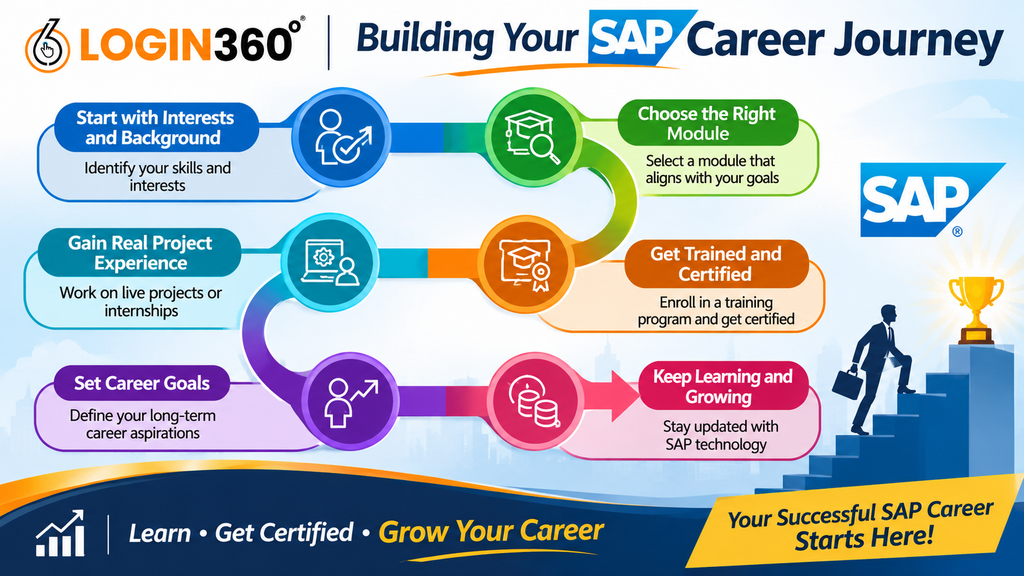
Choosing the right training institute, gaining practical experience, and continuously improving your technical knowledge are important steps towards building a rewarding SAP career.Start your learning journey with Login360 and explore professional SAP training opportunities. Visit Login360 today to take the next step towards your career growth!
Frequently Asked Questions (FAQs)
1. What is SAP training?
SAP training is a professional learning program that teaches individuals how to use SAP software and understand enterprise resource planning systems. It covers different modules related to finance, sales, purchasing, HR, and technology.
2. Is SAP training good for freshers?
Yes. SAP training can help freshers understand enterprise software, develop technical knowledge, and explore different career opportunities based on their educational background and selected module.
3. Which SAP module is best for beginners?
The best SAP module depends on your educational background and career interests. SAP FICO is relevant for finance graduates, SAP MM for procurement and inventory interests, SAP SD for sales operations, and SAP ABAP for candidates interested in programming.
4. Can non-IT students learn SAP?
Yes. Non-IT students can learn functional SAP modules such as FICO, MM, SD, and HCM. A technical background is generally more relevant for programming-focused modules such as SAP ABAP.
5. What are the job opportunities after SAP training?
Depending on their knowledge and experience, candidates can explore roles such as SAP Functional Consultant, SAP Technical Consultant, SAP ABAP Developer, SAP Support Analyst, and SAP Project Associate.
6. Is SAP training useful for working professionals?
Yes. Working professionals can use SAP training to upgrade their technical knowledge, understand business processes, and explore specialized career opportunities.
7. How do I choose the right SAP training institute?
Consider trainer experience, practical training facilities, updated course content, learning support, and career guidance before selecting an SAP training institute.