

Table of Contents
Introduction
In today’s technology-driven business world, organizations depend on advanced software solutions to manage their daily operations efficiently. From finance and accounting to human resources, sales, inventory, and supply chain management, businesses need reliable systems to handle different activities. One of the most widely used enterprise software solutions is SAP.
SAP Training for Beginners is becoming a popular learning option among students, fresh graduates, and working professionals who want to build a career in enterprise technology. SAP helps organizations integrate different business processes into a centralized system, making it easier to manage information, improve productivity, and support business decisions.SAP Training for Beginners provides a structured introduction to enterprise resource planning and helps learners understand how SAP supports different business operations.
Whether you are a commerce graduate, engineering student, IT professional, or someone looking to upgrade your technical skills, understanding SAP can open doors to several career opportunities. In this guide, we will explore what SAP is, how it works, its important modules, the benefits of learning SAP, and the career opportunities available in this field.
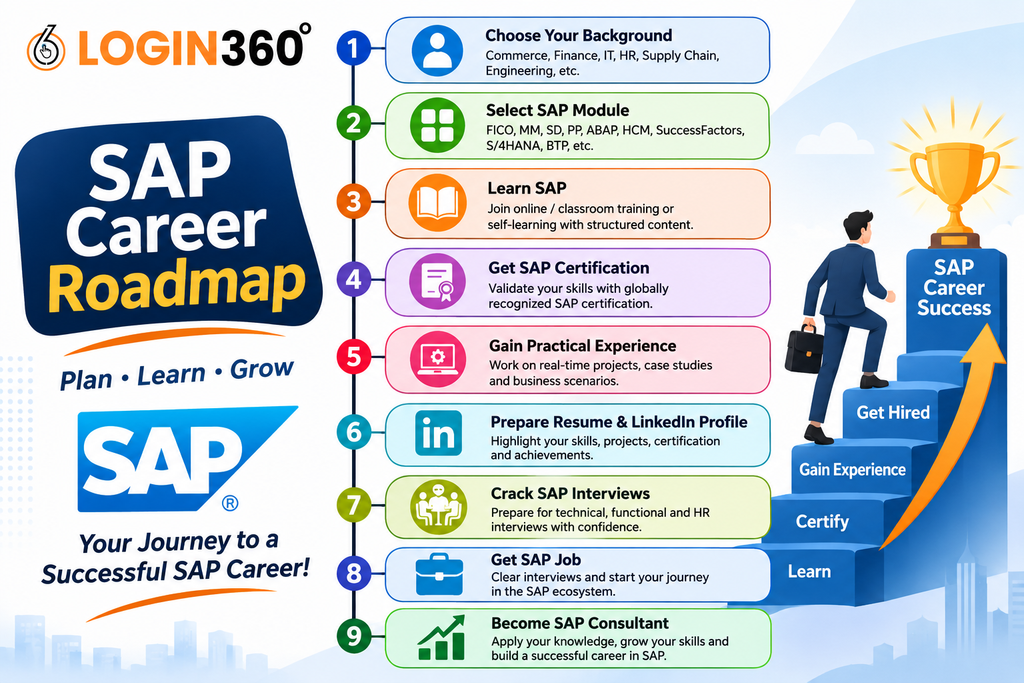
What Is SAP?
SAP stands for Systems, Applications, and Products in Data Processing. It is a leading enterprise software solution that helps businesses manage and integrate their important operations through a centralized platform.
SAP was founded in Germany in 1972. Over the years, it has developed into one of the major enterprise resource planning (ERP) software providers used by organizations across different industries.
SAP connects different departments within an organization, allowing them to share information and work together efficiently. For example, when a customer places an order, the sales department can access the order details, the inventory department can check product availability, and the finance department can manage the billing process.This integration reduces manual work, improves accuracy, and supports better business management.Through SAP Training for Beginners, learners can understand how these integrated systems work and how businesses use them in real-world environments.
What Is SAP Used For?
SAP is used by organizations to manage various business activities through a single integrated system. It helps businesses maintain accurate records, monitor operations, reduce manual work, and improve overall efficiency. As part of SAP Training for Beginners, learners understand how these business functions are connected and managed using SAP.
- Financial Management: SAP helps organizations manage accounting activities, financial transactions, budgeting, and financial reporting. It allows businesses to maintain accurate financial records, monitor expenses, track income, and prepare financial statements. This helps management make better financial decisions.
- Human Resource Management: SAP supports HR departments in managing employee information, payroll processing, recruitment, attendance, and workforce planning. It helps organizations maintain employee records, simplify HR operations, and manage different workforce-related activities efficiently.
- Inventory Management: SAP helps businesses monitor stock availability, manage warehouse operations, and track the movement of products. It allows organizations to maintain proper inventory records, avoid stock shortages, reduce excess inventory, and ensure that materials are available when needed.
- Sales and Distribution: SAP helps organizations manage customer orders, product pricing, billing, and delivery processes. It connects sales activities with inventory and finance departments, making it easier to process customer orders, track deliveries, and manage business transactions efficiently.
- Supply Chain Management: SAP supports purchasing, procurement, production planning, logistics, and material management. It helps organizations coordinate suppliers, monitor product movement, manage resources, and ensure the smooth flow of materials from suppliers to customers.
- Customer Relationship Management: SAP helps businesses manage customer information, track interactions, understand customer requirements, and improve customer service. It enables organizations to maintain better customer relationships and deliver more personalized experiences.
Important SAP Modules You Should Know
- SAP FICO: SAP FICO stands for Financial Accounting and Controlling. It is mainly used to manage financial transactions, accounting activities, cost management, and financial reporting. It is suitable for candidates interested in finance, accounting, and commerce.
- SAP MM: SAP MM stands for Materials Management. It focuses on purchasing, procurement, inventory management, and material planning. This module is useful for professionals interested in supply chain and inventory operations.
- SAP SD: SAP SD stands for Sales and Distribution. It manages sales orders, customer information, pricing, billing, and product delivery. It is suitable for individuals interested in sales and business operations.
- SAP HCM: SAP HCM stands for Human Capital Management. It supports human resource activities such as employee administration, payroll, recruitment, and workforce management.
- SAP ABAP: SAP ABAP is a programming language used for developing and customizing SAP applications. It is a suitable option for candidates with programming knowledge and an interest in software development.
- SAP S/4HANA: SAP S/4HANA is SAP’s modern ERP solution designed to help organizations manage business processes using an in-memory database. It provides real-time data processing, analytics, and improved business performance.
Why Should Beginners Learn SAP?
- Better Career Opportunities: Many organizations across different industries use SAP to manage their business operations. Learning SAP can help candidates explore job opportunities in finance, consulting, IT, supply chain management, and business operations. With proper SAP Training for Beginners, individuals can develop the foundational knowledge needed to understand SAP systems and prepare for relevant job roles.
- Industry-Relevant Skills: SAP knowledge helps individuals understand how businesses manage their internal processes using enterprise software. Learners gain an understanding of financial operations, inventory management, sales, purchasing, and human resource activities. SAP Training for Beginners introduces these important concepts and helps students understand how different departments work together within an organization.
- Opportunities Across Industries: SAP is widely used in industries such as manufacturing, healthcare, retail, banking, automotive, and information technology. Since different organizations depend on SAP for managing their operations, candidates with relevant SAP knowledge can explore opportunities across multiple business sectors. Learning SAP can help beginners understand the technology requirements of different industries.
- Professional Development: SAP knowledge improves an individual’s understanding of business processes, technical systems, enterprise applications, and data management. Through SAP Training for Beginners, learners can develop practical knowledge, improve problem-solving abilities, and understand how enterprise software supports everyday business activities. These skills can also strengthen their professional profiles.
- Career Growth: SAP professionals can develop their careers by gaining practical experience, learning advanced modules, and improving their technical or functional knowledge. Beginners who start with the fundamentals can gradually move towards specialized roles such as SAP Consultant, SAP Functional Analyst, or SAP Support Executive. Consistent learning and hands-on experience can help professionals progress towards advanced responsibilities.
Who Can Learn SAP?
- Fresh Graduates: Students who have completed degrees in commerce, business administration, engineering, or computer science can consider learning SAP to improve their professional skills. SAP Training for Beginners helps fresh graduates understand enterprise resource planning, business operations, and different SAP modules. By choosing a module based on their educational background and interests, they can build a strong foundation for starting their careers.
- Working Professionals: Employees who want to upgrade their existing skills or move into a different career field can explore SAP training. Learning SAP can help working professionals understand business processes, improve their technical knowledge, and develop expertise in specific modules. SAP Training for Beginners provides an opportunity to understand the fundamentals before moving towards advanced concepts and specialized roles.
- IT Professionals: Software developers, system administrators, and other technical professionals can explore SAP technical modules to expand their existing knowledge. Individuals with programming experience can consider SAP ABAP, which focuses on developing and customizing SAP applications. Learning SAP can help IT professionals explore opportunities in enterprise application development, technical consulting, and system support.
- Commerce Graduates: Candidates with educational backgrounds in accounting, finance, and commerce can consider SAP FICO. This module focuses on financial accounting, controlling, cost management, and financial reporting. Through SAP Training for Beginners, commerce graduates can understand how organizations use enterprise software to manage financial activities and maintain accurate business records.
- Management Students: Students pursuing business administration and management-related courses can learn SAP modules connected to business operations, procurement, sales, and supply chain management. Modules such as SAP MM and SAP SD can help them understand material management, purchasing, sales, and distribution processes. SAP Training for Beginners can provide management students with additional knowledge of how organizations use technology to manage their daily operations.
What Is Included in SAP Training for Beginners?
- Introduction to SAP and ERP concepts.
- Understanding different SAP modules.
- Navigation through the SAP environment.
- Learning important business processes.
- Practical exercises and real-world examples.
- Working with business scenarios.
- Understanding reporting and data management.
- Preparation for relevant SAP certification examinations.
Career Opportunities After Learning SAP
- SAP Consultant:Helps organizations implement, configure, and maintain SAP software according to their business requirements. They work with different departments to improve business processes and system performance.
- SAP FICO Consultant: Specializes in financial accounting and controlling within SAP systems. They manage financial transactions, accounting records, cost management, and financial reporting.
- SAP MM Consultant: Focuses on materials management, procurement, and inventory operations. They help organizations manage purchasing activities, monitor stock levels, and maintain efficient material management processes.
- SAP SD Consultant: Handles sales and distribution activities within SAP systems. Their responsibilities include managing customer orders, pricing, billing, and product delivery.
- SAP ABAP Developer: Develops, customizes, and maintains SAP applications using the ABAP programming language. They work on creating reports, programs, and enhancements based on business requirements.
- SAP Support Executive: Provides technical and functional assistance to users working with SAP applications. They troubleshoot system issues, resolve user queries, and help maintain smooth business operations.
- SAP Functional Analyst: Understands business requirements and translates them into suitable SAP system solutions. They coordinate with technical teams to improve system functionality and support business operations.
How to Choose the Right SAP Training Institute?
- Experienced Trainers: Trainers play an important role in helping students understand SAP concepts and business processes. Before selecting an institute, check whether the trainers have relevant industry experience, technical knowledge, and practical expertise in SAP modules. Experienced trainers can explain complex topics using real-world examples, provide practical insights, and guide students throughout their learning journey. This makes SAP Training for Beginners easier to understand and more effective.
- Updated Course Content: SAP technologies and business requirements continue to evolve. Therefore, it is important to choose an institute that offers updated course materials covering relevant SAP modules and technologies. The curriculum should include fundamental concepts, module-specific topics, business processes, and practical applications. A well-structured syllabus helps beginners understand the basics and gradually develop the knowledge required to work with SAP systems.
- Practical Training: Practical learning is essential for understanding how SAP works in real business environments. Look for institutes that provide hands-on sessions, system access, practical exercises, and real-world business scenarios. Working with SAP software helps students understand different functions, perform basic operations, and apply their theoretical knowledge. Practical exposure also helps learners develop confidence when preparing for professional responsibilities.
- Learning Support: Proper learning support can make a significant difference in a student’s training experience. Choose an institute that provides doubt-clearing sessions, learning materials, regular assessments, and guidance from trainers. Students should have opportunities to ask questions, revise important topics, and improve their understanding of different SAP modules. Continuous support helps beginners overcome learning difficulties and progress through the course effectively.
- Career Guidance: Career guidance is another important factor to consider when selecting an SAP training institute. Check whether the institute provides resume preparation, interview guidance, mock interviews, and career development support. These activities can help students understand industry expectations, improve their communication skills, and prepare for job interviews. Proper career guidance can also help beginners identify suitable job roles based on their educational qualifications and SAP specialization.
Conclusion
SAP has become an important technology for organizations that want to manage their business operations efficiently. From financial management and human resources to inventory, sales, and supply chain operations, SAP provides integrated solutions for different business requirements.
Starting SAP Training for Beginners can help students, fresh graduates, and working professionals understand enterprise software and explore career opportunities across multiple industries. By selecting the right module, developing practical knowledge, and continuously improving your skills, you can build a strong foundation for a career in the SAP field.
If you are planning to enter the enterprise technology industry, learning SAP can be a valuable step towards your professional development.
Want to start your SAP learning journey? Visit Login360 today and explore the training programs designed to help you develop industry-relevant skills and move towards your career goals.
Frequently Asked Questions (FAQs)
1. What is SAP in simple words?
SAP is enterprise software that helps organizations manage different business activities, including finance, sales, inventory, human resources, and purchasing, through an integrated system.
2. Can beginners learn SAP?
Yes. Beginners can learn SAP by starting with basic ERP concepts and choosing a module that matches their educational background and career interests.
3. Which SAP module is best for beginners?
The best module depends on your background and interests. SAP FICO is suitable for finance and commerce graduates, SAP MM for supply chain interests, SAP SD for sales operations, and SAP ABAP for individuals interested in programming.
4. Is SAP a good career option?
Yes. SAP offers opportunities in consulting, finance, business operations, software development, and enterprise technology. Career growth depends on your module knowledge, practical skills, and experience.
5. Do I need coding knowledge to learn SAP?
No. Many functional SAP modules do not require programming knowledge. However, technical modules such as SAP ABAP require programming skills.
6. How long does it take to learn SAP?
The learning duration depends on the selected module, course structure, and individual learning speed. A structured training program with regular practical sessions can help beginners develop a good understanding of SAP.
7. What are the career opportunities after SAP training?
Candidates can explore roles such as SAP Consultant, SAP Functional Analyst, SAP Support Executive, SAP FICO Consultant, SAP MM Consultant, and SAP ABAP Developer, depending on their specialization and experience.