

Introduction
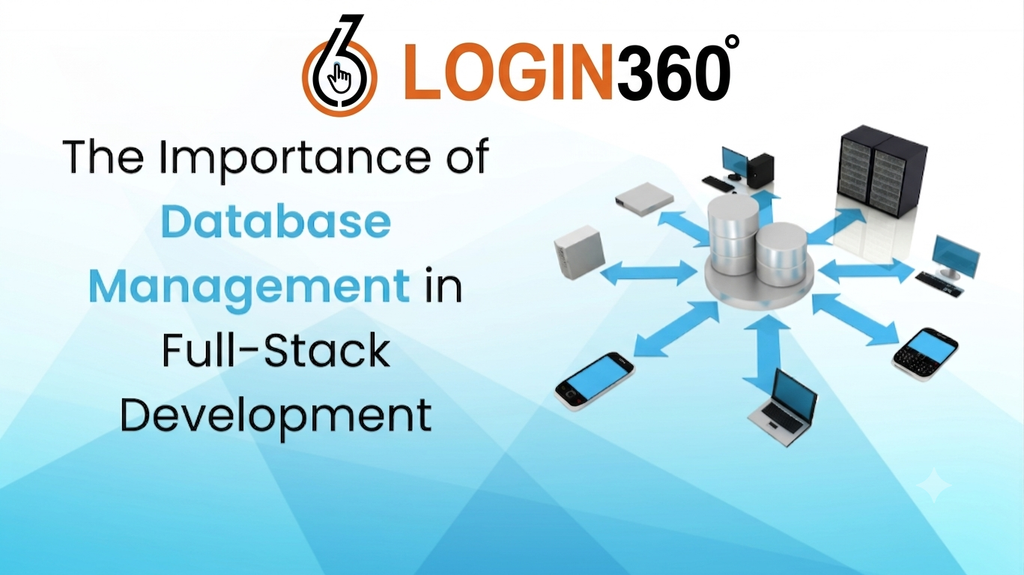
Database Essentials Every Full Stack Developer Should Understand are a critical area to learn if one is interested in full-stack development. In today’s world, most web applications rely on databases to hold data related to clients, products, orders, payments, and bookings. This makes knowledge about databases useful for full-stack developers because it enables them to develop applications that are dynamic, secure, scalable, and fast. Given that full-stack development entails both frontend and backend technologies, it is crucial to know about databases since they help in handling application logic, APIs, and authentication.
-
What Is a Database?
A database is a well-organised repository for efficiently holding data. Websites and web apps use databases to hold crucial data like customer information, products, employee data, blogs, and accounts. For instance, an e-commerce site stores information about product descriptions, prices, quantity, and orders by using a database. It becomes important for a full-stack developer to learn about Database Essentials Every Full Stack Developer Should Understand. Every full-stack developer must have some knowledge about databases.
-
SQL and NoSQL Databases
The first essential thing that needs to be known by a developer is the difference between SQL and NoSQL databases. This is one of the database essentials every full-stack developer should understand. SQL stands for the Structured Query Language. In general, a relational database is made up of tables with rows and columns. On the other hand, NoSQL databases use different data structures from those used in relational databases, and thus they have the advantage of flexibility during schema design. Some of the NoSQL databases include MongoDB, Cassandra, and Redis.
-
Tables, Rows, and Columns
A table is the basic unit of a relational database. Developers using SQL need to be familiar with terms such as tables, rows, and columns.Generally, columns indicate the type of information in a table. For instance, a Users table may have the following columns:
- User ID
- Name
- Phone Number
-
Primary Keys
A primary key is a column that contains a unique value for every row in a table. For instance, the Users table mentioned above may have a User ID column. Each user will have their own unique ID, which is important for cases where two users have the same name.Primary keys guarantee that there will be no duplicate rows in a table. They are extremely important and should be understood by any full stack developer.
-
Foreign Keys and Relationships
Most of the time, web applications and sites require more than a single table. This is why foreign and primary keys are so important in establishing relationships between tables. The foreign key in a table points to the primary key in another table, thus creating a relationship.
For instance, if an e-commerce site has two tables – Customers and Orders – the Customer ID column in the Orders table acts as a foreign key. It points to the primary key (also Customer ID) in the Customers table, thus establishing a relationship.
A full stack developer should understand how different relationships (one-to-one, one-to-many, and many-to-many) work and how to implement them in practice.
-
CRUD Operations
CRUD means create, read, update, and delete, which are the four basic operations in managing database data.
- Create- Creating new data in the database.
- Read – Fetching existing data from the database.
- Update – Updating existing data in the database.
- Delete- Deleting data in the database.
-
SQL Queries
SQL queries are the primary means of interacting with a relational database. Developers should know the basic structure of an SQL query and the most common elements. A few of the most common SQL queries are as follows:
- SELECT – retrieving data
- INSERT – inserting or adding data
- UPDATE – updating data
- DELETE – deleting data
- WHERE – specifying conditions
- ORDER BY – sorting query results
- GROUP BY – grouping rows
- JOIN – joining or combining tables
Developers should know how to write basic queries and understand how the database works. Of course, one does not have to memorise all the elements mentioned above. However, it is critical to understand what queries are and how they enable a database to perform particular operations.
-
Database Normalization
Normalisation of a database helps to arrange the information in the database so as not to duplicate data and simplify the queries. Knowledge about normalisation is one of the Database Essentials Every Full Stack Developer Should Understand , particularly when dealing with relational databases. Suppose there is duplicate information on the same customer in a database, and there is a need for changes to it. In this case, developers will have to make changes in all copies of the information. As you can see, there is a risk of making mistakes here. Normalisation will help to store data in the best possible way without duplication.
-
Indexing
Indexes allow faster retrieval of information from a database.Let’s say that a database has over 100,000 user records. A query looking for a particular set of data may scan through hundreds or thousands of irrelevant records before it finds the information it needs. An appropriate index will significantly speed up the process.However, indexes require disk space, and improper use of indexes may hinder write operations (update/delete/insert). A full stack developer should understand the trade-offs that indexing entails.
-
Database Transactions
Database transaction refers to a unit of activity consisting of one or more database activities. In most cases, transactions can be made up of one or two activities.Transactions are very important in the context of a financial application. For instance, let’s say a user starts a transaction whereby money is transferred from one account to another. In the event where the transaction is not successful, both the accounts should be updated with respect to the problem. But if transaction controls are not properly done, the activities are likely to fail.It is important for the developer to be aware of transaction basics such as ACID properties.
-
Data Validation
Data validation is the process of checking whether user input meets specific criteria. For instance, an email address should match the pattern email@domain, whereas a number should only contain digits.
Validation can be done at different levels (on the front end, on the back end, and on the database). However, one should never rely on client-side validation only, since users can view and edit the front end however they want. Instead, data validation should be done on the server side and in the database.
-
Database Security
The information contained in databases is sensitive, which is why database security is paramount. There are several aspects to database security, including credentials, permissions, encryption, connections, validation, and SQL injections.SQL injection is a common type of database attack where attackers try to take advantage of improperly sanitized input fields. Basing database queries on user-supplied input may allow attackers to execute unauthorized queries on the database. Developers should know how to prevent SQL injections using prepared statements and parameterized queries.Database security is a big topic, and one should be well-versed in database security concepts and practices.
-
Backend and Database Connection
A full stack developer should understand how the front end, backend, and database communicate. For example, when a user logs in, the front end sends their credentials to the backend, which communicates with the database to verify them. Understanding this process helps developers build dynamic applications and quickly identify errors when something goes wrong.
-
APIs and Databases
APIs act as a bridge between the front end and database, allowing applications to request and retrieve data through the backend. For example, when a user searches for products, the API sends the request to the database and returns the matching results to the front end. Full stack developers should understand basic API concepts and HTTP methods such as GET, POST, PUT, PATCH, and DELETE, which are commonly used to retrieve, add, update, and remove data.
-
Database Performance
As an application increases in size, performance of the database decreases, causing the application to become slow. This can be enhanced through efficient querying, effective indexing, retrieving only needed data, and caching. Caching is when the commonly accessed information is stored in order to reduce the number of database queries.
-
Backup and Recovery
Data is the most valuable asset of any organization or application, which is why database backups are so important. There are different types of backups (cold, hot, warm), and databases should have a solid backup strategy to ensure data safety.Developers should understand database recovery concepts in general and know how to design a reliable backup strategy.
-
Cloud Databases
Cloud databases are the future, and full stack developers should have at least an understanding of how cloud databases work. Cloud providers offer managed database solutions that scale automatically. They provide monitoring, analytics, and backup services, among others.A beginner full stack developer should understand how cloud solutions work and how their applications can communicate with databases via the cloud.
-
Why Database Skills Matter for Full Stack Developers
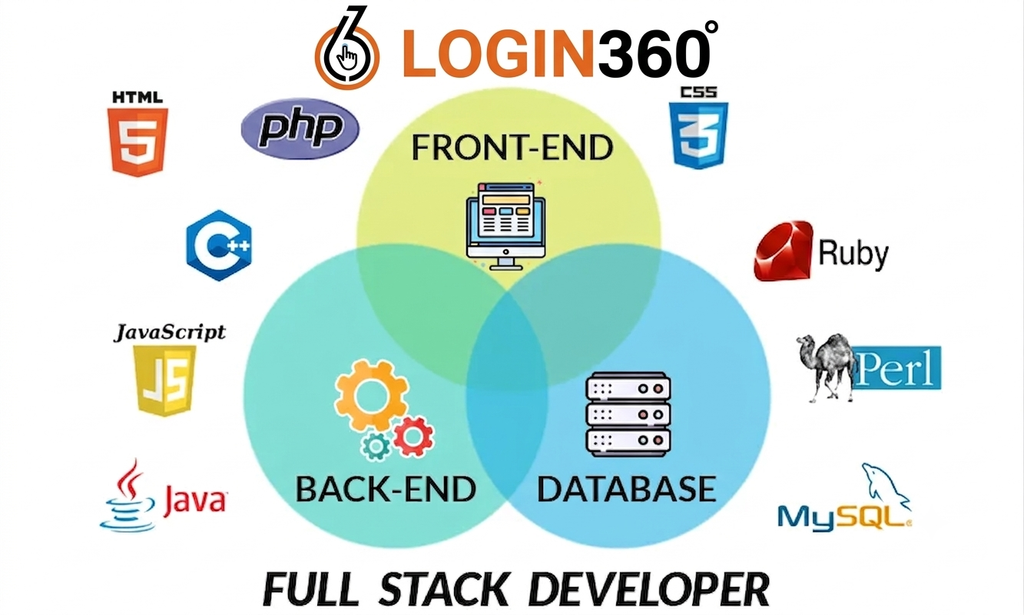
Databases are the heart of any dynamic web application. Thus, possessing knowledge of databases makes a full-stack developer more productive when creating and supporting applications. Knowing the database essentials every full-stack developer should know is also necessary to comprehend the back end and general application functionality. In other words, having database skills allows a full-stack developer to “think big”. Knowledge about database administration gives an advantage to the developer, because he will be able to create efficient, secure, scalable and dependable applications. This knowledge is especially needed while working on real-life projects, because every business application has a database at its core.
Conclusion
However, databases form an essential part of any web app; this means that any full stack developer needs to have knowledge of databases. The 17 database principles listed above are included in Database Essentials Every Full Stack Developer Should Know and will guide the developer in starting with databases. Any developer who is just getting into development needs to start with the basics of SQL and database structuring. Afterwards, the developer can advance to learn about database management, such as normalization, relationships, indexing, and security.
If you intend to make a career in full stack development, some hands-on training will go a long way in showing how these topics apply in actual projects. The Career Oriented Technology Training by Login360 is aimed at equipping the learner with hands-on skills that will help them venture into the industry. Visit Login360 to train on Full Stack Development.