

Table of Contents
Introduction
In the field of digital marketing, Search Engine Optimization (SEO) is crucial if you want to increase the visibility of your website and draw in organic traffic from search engines. A key component of SEO is the use of backlinks, which are links from one website to another. If a trustworthy and relevant website links to your content, this helps search engines to realise that your website is offering useful information. Backlinks can also generate referral traffic, enhance brand visibility, and contribute to your overall SEO strategy. Nevertheless, achieving success in building backlinks is not just a matter of obtaining a large number of them; rather, the quality, relevance, and natural positioning of the links are far more important. The purpose of this blog is to explain what backlinks are, why they are important, the various types of backlinks, their benefits, and the effective methods for building high-quality backlinks.
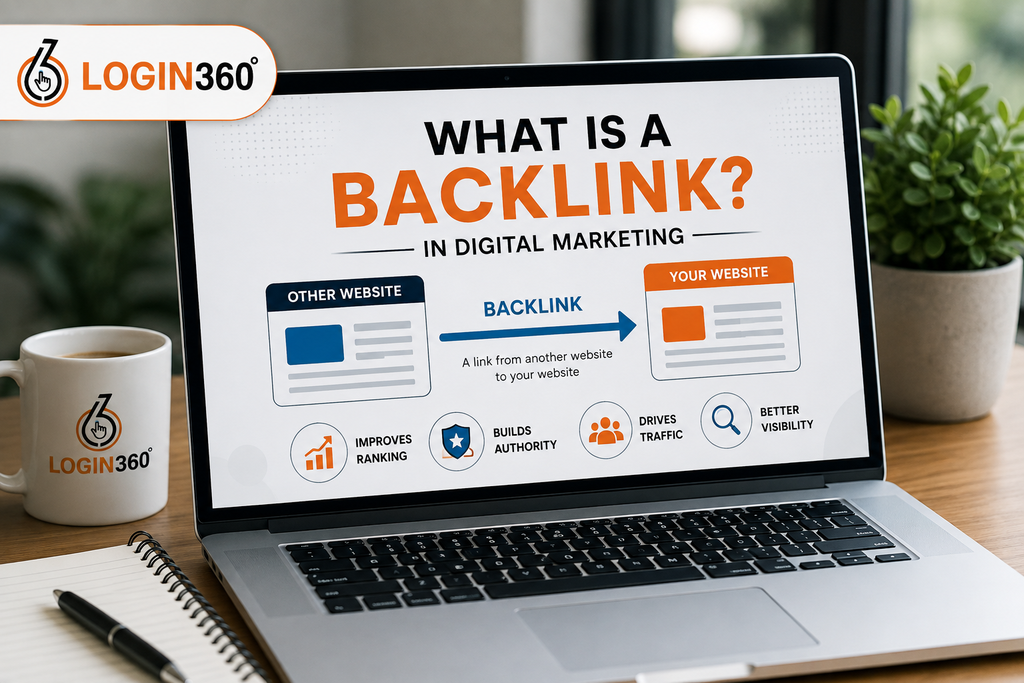
What is a backlink?
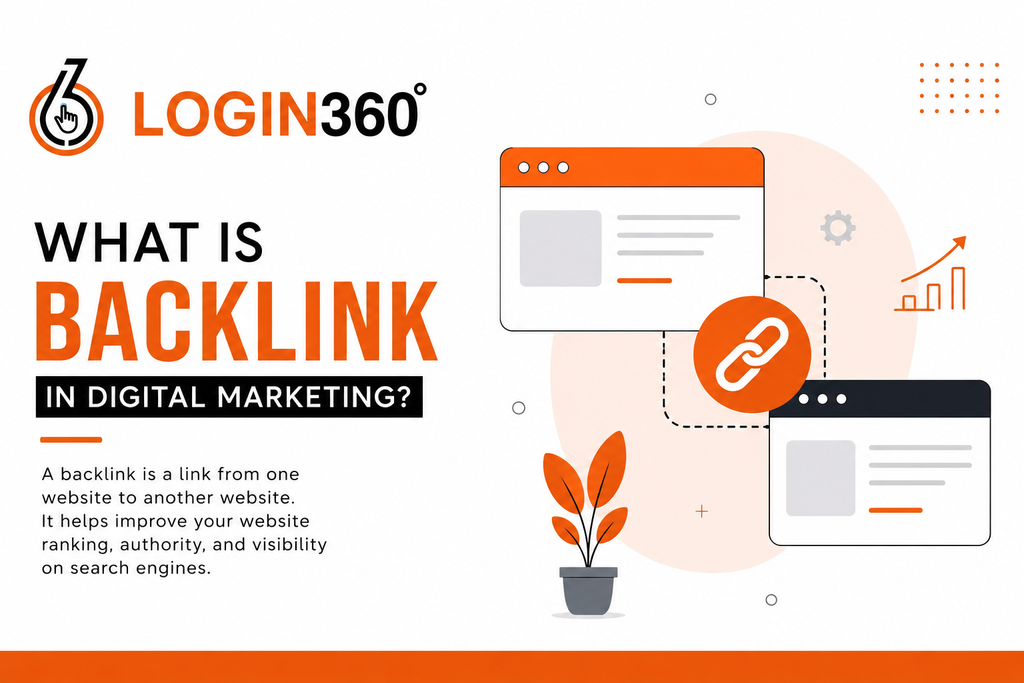
A backlink is a hyperlink which leads from one website to another website; it is also referred to as an inbound link or an incoming link.
For instance, if a website engaged in digital marketing writes an article on SEO and includes a link to your website, then your website will receive a backlink.
Simple example:
Website A → Backlink → Website B
In this case, Website A is the one that refers to the page, and Website B is the one that receives the backlink.
Backlinks allow users to navigate from one relevant website to another and they also enable search engines to discover and understand the relationships between web pages.
What is the importance of backlinks for SEO?
Backlinks are an important element of SEO since they allow search engines to find pages and to understand their relevance and the relationships between them.
If relevant and reliable websites link to your website, then your online visibility can be improved and you may gain referral traffic.
For instance, should you have a website which provides digital marketing courses in Kochi and an education website relating to your subject links to one of your useful articles, then visitors on that other website might come across your content.
Backlinks can help with:
Website visibility
Referral traffic
Content discovery
Brand awareness
SEO performance
What is more important when creating backlinks is quality than quantity.
What Constitutes a High-Quality Backlink?
A backlink of a high standard is one that is obtained from a website which is relevant, reliable, and useful.
Some important factors include:
Relevance
The site that links to you should preferably be one that is related to your industry or content.
Authority
Links from reputable and well-known websites are of value.
Natural Placement
The backlink should be incorporated into useful content rather than being put in randomly.
Relevant Anchor Text
The text that is clickable should give a clear description of the page it is linking to.
Potential Referral Traffic
An effective backlink can indeed bring genuine visitors to your website.
So rather than attempting to build hundreds of backlinks, concentrate on obtaining links that are relevant, natural, and useful.
Backlinks vs. Referring Domains
Backlinks are links from other websites that point to your site. Referring domains are the number of unique websites that link to you. For example, if one website links to your site ten times, you have ten backlinks from one referring domain. If ten different websites each link to your site once, you have ten backlinks from ten referring domains. Search engines often value links from many different domains more than many links from the same site. This is because links from a variety of sources can mean your content is trusted by a wider audience.
Backlinks and referring domains are two distinct terms in the field of SEO.
A backlink is a single link that points to your website, and a referring domain is the other website that provides those links.
For example:
Website A → 5 backlinks
Website B → 3 backlinks
Website C → 2 backlinks
You have:
There are 10 backlinks from 3 different domains.
Understanding the difference enables you to analyze your website’s backlink profile more effectively.
Types of Backlinks
There are various kinds of backlinks and link attributes that are used in SEO.
Dofollow Links
A standard link can transmit ranking-related signals from one page to another.
No follow Links
A link which is no follow has the rel=”nofollow” attribute and this causes search engines to treat the link in exactly the same way as a regular followed link.
Yet,nofollow links can still bring about referral traffic and brand exposure.
Sponsored Links
Paid or sponsored links must be properly identified by means of appropriate link attributes.
UGC Links
UGC is an acronym for User-Generated Content, and such links are usually connected with things like forum posts and comments.
If you understand the various types of links then you’ll be in a better position to create a more natural and well-managed backlink profile.
What counts as anchor text?
The text that is used in a hyperlink and which is clickable is known as anchor text.
For example:
Learn more about digital marketing SEO
In this instance, the anchor text is “digital marketing SEO”.
Anchor text should make it clear to users what will happen when they click on the link.
Common types of anchor text include:
Branded anchor text
Exact-match anchor text
Partial-match anchor text
Generic anchor text
Naked URL
Descriptive anchor text
Do not use the same keyword over and over again as an anchor text. A natural backlink profile should include a variety of relevant anchor texts.
Benefits of Backlinks in Digital Marketing
Backlinks help a website rank higher in search engines. When other sites link to your pages, search engines see your content as trustworthy and important. This can drive more visitors to your site.
Backlinks also help users discover your website. If someone reads an article and finds a link to your page, they might click it and learn more about your business.
Good backlinks can set your website apart from competitors. If your site has more links from trusted sources, you may have an edge in search results.
Building backlinks can also create opportunities for partnerships with other businesses. Reaching out for links can lead to new relationships and shared projects.
Finally, backlinks can make your site easier for search engines to find and index. This means your new content shows up faster in search results.
Backlinks can offer a number of advantages as part of an overall digital marketing and SEO strategy.
Increase Website Visibility
Backlinks can help your website to gain exposure on other relevant websites.
Generate Referral Traffic
People have the option of clicking on backlinks in order to go directly to your website.
Support SEO
Links can assist search engines in finding out and understanding web pages.
Build Brand Awareness
If other websites refer to your brand, then more people will become acquainted with your business.
Strengthen Online Presence
Frequent references and links from appropriate sources can help to increase your online presence.
They should therefore be seen as one element of an overall SEO strategy not as a quick way to achieve higher rankings.
How to Obtain High-Quality Backlinks
If you want to build high-quality backlinks then you should take a long-term view of the situation and, rather than obtaining links by chance, concentrate on making content that other websites really want to refer to.
Create Valuable Content
Publish:
Detailed guides
Original research
Statistics
Tutorials
Case studies
Checklists
Helpful resources
Guest Contributions
Prepare useful content for websites that do accept real contributions.
Digital PR
Produce information that is both valuable and newsworthy so that publishers may want to refer to it.
Broken Link Building
Look for broken links and, where suitable, offer a useful alternative resource.
Resource Pages
Check out the resource pages that are relevant and where your content actually provides value.
The best way to proceed is to concentrate on valuable content, relevance, relationships, and consistency.
What Makes a Backlink Valuable?
A backlink is valuable when it comes from a trusted site with a good reputation. Links from well-known sites are more helpful than links from unknown or low-quality sites. The page that links to you should also relate to your content. If the topics match, search engines see the backlink as more helpful.
The spot where your link appears matters, too. Links in the main part of a page are better than those in a footer or sidebar. The words used in the link, called anchor text, should make sense for your page. Clear and relevant anchor text helps search engines understand what your page is about.
Backlinks from new domains are often better than many links from the same site. Links that are earned naturally, without payment or schemes, are also more valuable. Finally, backlinks from pages with a lot of their own links may not help as much. Too many links on one page can lower the value passed to your site.
The value of a backlink is based on a number of factors and you should not evaluate a backlink simply by the number of links that a website has.
Consider:
Is the website that is linked related to your topic?
Is the website trustworthy and of use?
Context: Does the link match the content?
Can readers readily find and make use of the link?
What is the destination? Does the link take you to a page that is relevant and useful?
Can the link possibly attract genuine visitors?
A back link that is relevant and naturally suited to useful content is often more valuable than a large number of irrelevant or low-quality links.
Backlink Mistakes to Avoid
Your SEO strategy can be adversely affected by poor backlink practices. Do not create links just in order to manipulate search rankings.
Common mistakes include:
Buying large quantities of low-quality backlinks
Creating irrelevant backlinks
Excessive keyword-rich anchor text
Spammy blog comments
Automated link-building schemes
Creating links from unrelated websites
Excessive link exchanges
Creating content only to generate backlinks
Rather, you should concentrate on producing content that puts people first and on acquiring links since your content is truly useful.
How to Check Your Backlinks
Keeping an eye on your backlinks regularly can help you get a better understanding of your website’s link profile.
SEO tools can help you identify:
Websites linking to your pages
Referring domains
Most-linked pages
Anchor text
New backlinks
Lost backlinks
Competitor backlink opportunities
Tools like Ahrefs are useful for carrying out backlink analysis and for competitor research.
It should be understood that third-party SEO metrics are to be used as analytical tools not as direct Google ranking scores.
Conclusion
In digital marketing, a backlink refers to a link from one website to another, and such backlinks can be important for SEO since they help search engines to find out about content and at the same time bring in referral traffic and boost online visibility. Nevertheless, it is not a good idea to simply gather as many backlinks as one can. The proper approach should be to obtain a large number of high-quality, relevant, natural and trustworthy backlinks from websites that offer value to your audience. If you produce useful content, build real industry relationships, use ethical methods when building backlinks, and keep a regular watch on your backlink profile, you will be able to establish a more solid and sustainable SEO strategy. In the end, a combination of quality content and quality backlinks can contribute to a stronger online presence and to long-term digital marketing success.
Want to Master SEO & Build High-Quality Backlinks?
Learn Digital Marketing with Login360 and turn your knowledge into real-world skills.
Start Your Digital Marketing Journey Today!”