

Table of Contents
Introduction
Data science has quickly become one of the most popular data science career paths for students and professionals alike, and it’s easy to see why. As businesses across every sector generate massive amounts of data every single day, the need for people who can make sense of that data has grown just as fast. Raw numbers alone don’t help anyone it takes skilled professionals to turn that information into insights that actually guide decisions. But with so much buzz around the field, a fair question to ask is: is Data science truly the right career for you, or is it simply riding a passing trend? It’s a valid concern, especially for students and career-switchers who don’t want to invest years into something without long-term stability. This blog takes a closer look at what a data science career really involves, breaking down the role beyond the buzzwords.
What is Data Science?
Data science involves extracting meaningful insights from raw data using statistics, programming, and domain knowledge. It combines mathematics, computer science, and business understanding to solve real problems. A data scientist usually works with large datasets, cleans and organizes them, applies statistical models, and builds predictive systems. The goal is not just to analyze numbers but to help organizations make better decisions. This could mean predicting customer churn, optimizing supply chains, or personalizing user experiences. For those new to the field, data science career acts as a bridge between raw information and business strategy.
Why Data Science is in High Demand Right Now
Almost every industry today, from healthcare to retail to finance, generates data at an unprecedented scale. Companies now see this data as a valuable asset rather than just a byproduct of operations. This shift has led to a significant need for professionals who can interpret data and turn it into strategy. With the rapid growth of AI and machine learning, data science has changed from a nice-to-have skill to an essential business function. In India, especially, there’s been strong job growth in this area. Cities like Bangalore, Chennai, and Coimbatore have consistent job postings for data-related roles across startups and large companies.
Data Scientist Salary in India
- Salaries in data science are one of the biggest attractions to the field. Entry-level data analysts or junior data scientists in India usually start in the ₹4–7 LPA range, depending on the city and size of the company.
- With 2–4 years of experience, professionals can expect ₹8–15 LPA, especially if they have solid skills in Python, SQL, and machine learning. Senior data scientists and specialists in areas like NLP or deep learning can earn ₹20–30 LPA or more in product-based companies.
- While pay varies by city and industry, the overall trend in this field is upward, making it a financially rewarding option for those willing to develop the right skills.
Pros of Choosing Data Science as a Career
- Strong job security – Data-driven decision-making is now common across industries, meaning the demand for skilled professionals will likely remain strong.
- High earning potential – As shown above, salaries rise with experience and specialization.
- Cross-industry flexibility – Skills gained in data science apply to healthcare, finance, e-commerce, logistics, and more, allowing professionals to switch industries without starting over.
- Constant learning and growth – The field evolves quickly, keeping the work interesting for those who enjoy solving problems.
- Remote and hybrid opportunities – Many Data science roles offer flexible work locations, which is increasingly important for today’s workforce.
Challenges You Should Know About
- Steep learning curve – Data science requires knowledge across statistics, programming, and business context, which can feel overwhelming for beginners.
- High competition – The popularity of the field means that entry-level roles often have many applicants, making it important to stand out.
- Continuous upskilling required – Tools and techniques change frequently, so professionals need to keep learning to stay current.
- Not always immediately high-paying – Freshers may start with analyst-level roles before moving into full data scientist positions.
- Requires patience with messy data – A large part of the job involves cleaning and preparing data, which isn’t always as exciting as building models.
Skills Required to Become a Data Scientist
- Before getting started, it’s helpful to understand the practical skills needed for the role. Data scientists usually learn Python or R for coding and analysis since these languages are vital for nearly every data workflow.
- This includes cleaning raw datasets and building machine learning models. Additionally, SQL is crucial for querying databases because most organizational data is still stored in structured relational systems that must be accessed and filtered efficiently.
- Statistics also plays a key role. It helps professionals interpret patterns, test hypotheses, and avoid misleading conclusions from data. Without a solid understanding of statistical concepts, even the best models can result in poor business decisions.
- Beyond the technical skills, knowing visualization tools like Power BI or Tableau is increasingly important. These tools turn complex analyses into clear, easy to understand insights that non-technical stakeholders, such as managers or executives, can quickly act on without needing to know the underlying code.
- Finally, many roles now expect at least a basic understanding of machine learning, as companies shift from simple reporting to predictive and automated decision-making.
Career Opportunities in Data Science
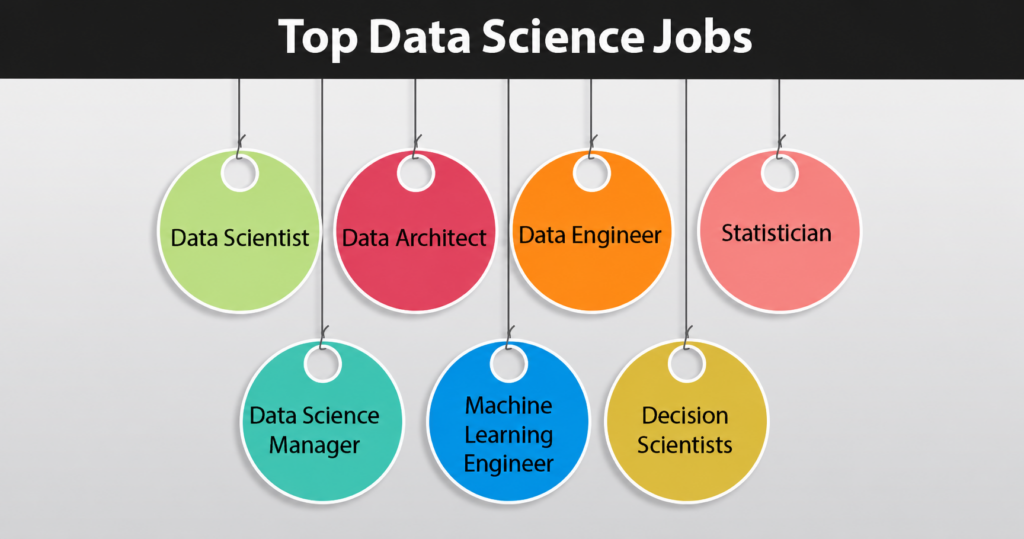
- Data Analyst – works with existing data to find patterns and create reports. This role focuses more on interpretation and less on building models.
- Data Scientist – goes a step further by building predictive models using ML and statistics to forecast outcomes, not just report on the past.
- Machine Learning Engineer – takes those models and prepares them for production. This means integrating them into real apps and systems so they run at scale.
- Business Intelligence (BI) Developer – builds dashboards and visual reporting tools. This allows leadership and non-technical teams to make quick, data-based decisions.
How to Get Started (Even as a Beginner)
- You don’t need a computer science degree to enter data science. A structured, practical approach can work just as well.
- Start by learning the basics of Python and SQL, then move into statistics and visualization tools.
- Creating a small portfolio of projects, even simple ones like analyzing public datasets, helps showcase applied skills.
- Practice on real world case studies or Kaggle competitions to build problem solving skills employers actually look for.
- Networking with data science communities, LinkedIn groups, or local meetups can open doors to referrals and mentorship opportunities.
- After that, pursuing an internship or a beginner friendly certification course can help close the gap between learning and getting hired.
Conclusion
So, is data science a good career choice? Considering the high demand, salary growth, and long-term relevance, the answer is strongly positive but with a few honest caveats. It offers strong job security and competitive pay as experience grows. It requires a real commitment to learning due to the fast pace of the field and the need for continuous development. It rewards those who enjoy problem-solving and working with unpredictable, messy real-world data. It is accessible to beginners if they follow a structured learning path rather than trying to learn everything at once. If you’re ready to consistently put in the effort to build your foundation, Data science career can be a genuinely rewarding long-term career path.